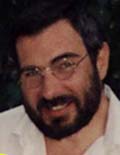
Giorgio Pacchioni wrote about this Folia:
I was inspired to write two follias because the bass grounds (Follia, Ciaccona, Passacaglia) are the archetype of my musical roots and it is important for me to frequent these tunes. The first eight bars are composed on the classic bass ground (public domain till the 18th century) personally harmonized with some dissonance, the second group of eight bars of the bass ground (9-16) is based on the 'Partite di follia per flauto' into the manuscript 'sinfonie di varii autori' ms. Parma Italy. The year of the manuscript is not known, but this large manuscript (22 compositions) probably was the property of a flutist in the first half of the 18th century.
 |
Duration: 4'37", 43 Kb. |
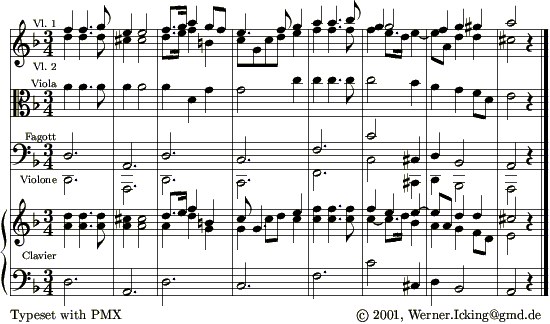
| Opening of 'Varie partite sopra la Follia per archi, Opus 30 nr. 1' |
© G. Pacchioni, used with permission |
|---|---|
|
|
- Pacchioni, Giorgio (for midi instrumentation)
- Released 1997 by Manuscript
- Duration: 4'37" (size 43 Kb)
- Recording date: 1997 in Italy
- You can find more about this composer and his oeuvre at http://members.fortunecity.com/gpacch

This set of 8 variations and da coda originated from the same source as mentioned above, a manuscript called 'Partite di follia a flauto e basso'. Notice that there is a clear deviation in chord-progression in every variation from bar 9 till 14.
|
|
Duration: 4'31", 14 Kb. |
- Pacchioni, Giorgio (for midi instrumentation)
- Released 1997 by Pacchioni
- Duration: 4'31" (size 14 Kb)
- Recording date: 1997 in Italy
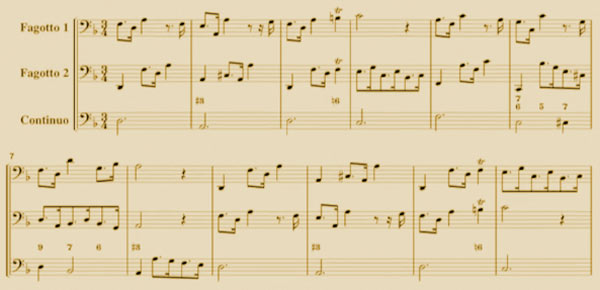
| Opening of 'Follia, op.64 n.8 for two bassoons and continuo |
© G. Pacchioni |
|---|---|
|
|
- Pacchioni, Giorgio (electronic devices).
La Folia for 2 Bassoons and Continuo.
Duration: 6'05" direct link to YouTube
© 2012 by Giorgio Pacchioni- Released at YouTube Augustr 2012 by Giorgio Pacchioni
- Duration: 6'21"
- Recording date: September 2, 2012
- For questions about the sheet music http://www.gardane.info/
- Ronnes, Robert (bassoon I and II, continuo by electronic devices).
La Folia for 2 Bassoons and Continuo.
Duration: 6'33" direct link to YouTube
© 2012 by Robert Ronnes- Released at YouTube September 2012 by Robert Ronnes
- Duration: 6'21"
- Recording date: September 2, 2012
 You can find a midi of the composition at the library of Petrucci.
 |
The sheet music 5 pages for personal use (non-commercial use only) |
- Pacheco, John Manuel
- Title: Chorale Prelude on 'La Folia'
- Released 2010 by John Manuel Pacheco
- Duration: c.2'05"
- Recording date for midi-file for the Petrucci library: March 5, 2012
- More about John Manuel Pacheco at the page of the Petrucci library
- Copyright photo by Zachary Kaufman
|
The sheet music for personal use (non-commercial use only) |
- Pacheco, John Manuel
- Title: Theme and Variations on the Folia
- Published 2011 by John Manuel Pacheco
- The complete score (22 pages pdf 2012) can be downloaded or the theme and variations seperately (10 files in pdf, 2011)
- Duration: c.5'30"
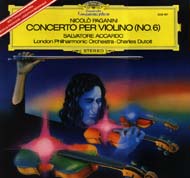
The third and last part of the concerto (after the Risoluto [1] and Adagio [2]) starts off with the Folia-theme in 16 bars. Than the theme is twisted and mutated till it appears again in its pure form halfway the composition as a reminder for continuing changes.
- London Philharmonic Orchestra, conductor Dutoit, Charles with Accardo
Salvatore violin 'Concerto für violine e-moll op. posth. (Nr.6)'
Edward Neill wrote for the cover:The Concerto in E minor, hitherto unpublished, was only recently discovered, and the manuscript is now in the possession of the Instituto di Studi Paganiniani in Genoa. It bears on its title page the words Grande Concerto / Di / Nicolò Paganini. There is no indication of the date of composition, nor can this be discovered from Paganini's extensive correspondence. From the chronicle of Pietro Berri, however, it appears likely that Paganini performed this work on the 26th May 1815 at the Theatro alla Scala, and repeated it on the 8th September of the same year at the Teatro S. Agostino in Genua.
The last movement (Rondò or Polonese) is characterized by its liveliness and verve, derived from the rhythm of the Polonese, the favourite dance of composer-violonists of the early 19th century. Two episodes - the second of which takes up the inspiration of the first - alternate gaily in the mainly high-lying solo part, until in the recapitulation they are played in thirds, almost suggesting the sound of horns.- Released 1974 by Deutsche Grammophon, Polydor International GmbH LP 2530 467
- Duration: 11'15"
- Recording date: 1974
- Orchestra da Camera Italiana, conductor and soloist Accardo, Salvatore
'The complete violin concertos'
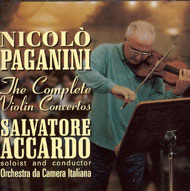
- Title: Violin Concerto N. 0 (zero) in E major
- Released 1999 by EMI compact disc (3 cd-set) 5 56 902 2
- Orchestration by F. Mompellier
- Duration: 11'47"
- Recording date: October 1998 and February 1999
- Orchestra da Camera Italiana, conductor and soloist Accardo, Salvatore
'Violin Concertos N. 0 & 2'
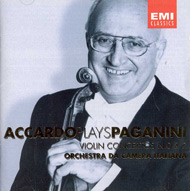
- Title: Violin Concerto N. 0 (zero) in E major
- Released 2001 by EMI compact disc 7243 57150 29
- Orchestration by F. Mompellier
- Duration: 11'47"
- Recording date: October 1998 and February 1999
- Orchestre Philharmonique de Monte-Carlo, conductor Foster, Lawrence. Violin Alexandre
Dubach 'Niccoló Paganini, violin concertos (complete)'
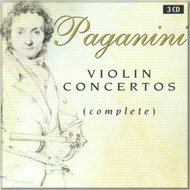
- Title: Violin Concerto No. 6 in E minor, Rondo ossia Polonese
- Released 1999 by Brilliant Classics 3 cd-set 99562. Licensed from Claves Records Switzerland
- Cadanzas by Alexandre Dubach
- Duration: 11'30"
- Recording date: 1991-1994
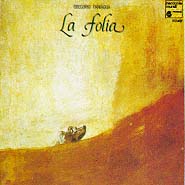
- Atrium Musicae de Madrid/Paniagua, Gregorio 'La Folia de la Spagna'
Paniagua made some nice 'fantasy'arrangements of anonymous scores like the opening track 'Fons vitae' where a manuscript for salterio solo is used dating back to 1764. His 'Parsimonia aristocraciae' for harpsichord is actually the Folías graves dated 1721. Some early Folias are hidden in track 10: De pastoribus can be traced back to the melody of Rodrigo Martinez (1490) like the fragment of Audaces fortuna juvat. Esquites fortis armaturae is in fact a folia by Juan del Enzina called Hoy comamos y bebamos (c.1520)
Some old instruments, like crumhorns are used in other variations to give the 'late' folia-chord progression and melody a medieval flavour. Unfortunately the original sources for the music are not mentioned in the documentation of the recording.
Variations over a Portugese dance from the middle ages that is played on every thinkable and unthinkable instrument and non-instrument. While playing people suddenly start discussing or shouting mantras. Machines starts and stops. Pure madness that is recorded with a lot of humor.
The recording is made in 1980 and has maybe been most known on LP where it often has been used to show how natural a recording may be. The transfer to CD is quite good and it has not been too 'produced'. One clearly hears where and what the 'instruments' are. More about this extraordinary recording in the chapter "Best recordings as introduction to the later Folia?". In fact it is one of the best recording available, especially the documentation in the LP-version is excellent although the interesting parts were unfortunately omitted in the slipcase of the compact disc version (folia sources and instrumentation in detail).- Released 1982 by Harmonia Mundi LP HM 1050 & compact disc HMC 901050
- Duration: 17'10" (just the folia-themes and variations) 41 variations
- Recording date: June 1980
Only the first 8 bars of La Folia are being used in a repetitive style without introducing the folia melody. In the first line the V7-chord (bar 8) is repeated to make it 9 bars altogether while in the second line the normal Folia-structure is used. Unfortunately Vangelis forgot to mention that his theme was based upon the La Folia chord-progression (3/4 time, key of d-minor and chord-progression): all music composed, arranged, produced and performed by Vangelis, to quote the slipcase.
I really don't understand why the least interesting Folia in a musical context is probably florishing in popular culture.
The film music by Papathanassiou
|
|
|
Duration: 4'52", 51 Kb. |
| Theme of Conquest of paradise | edited and arranged by Icking/Gabler |
|---|---|
 |
|
- Astral 'Arte sin Fronteras'
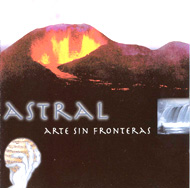 Astral is the name of a Folkgroup from Ecuador with the members: Victor
Valle: flauta china, flauta traversa quena, quenachos. Darwin Gaza: zamponas,
sicus. Mauricio Trávez: zamponas, sicus. Carlos Chacon: teclados,
guitarras, fluata de pan, quenachos, zamponas
Astral is the name of a Folkgroup from Ecuador with the members: Victor
Valle: flauta china, flauta traversa quena, quenachos. Darwin Gaza: zamponas,
sicus. Mauricio Trávez: zamponas, sicus. Carlos Chacon: teclados,
guitarras, fluata de pan, quenachos, zamponas
- Title: Conquest of Paradise
- Released 2000 by Carlos Chacon compact disc without an ordernumber
- Duration: 4'25"
- For contacting: telephone 010/4981806 Germany and 05932/657171 Ecuador
- Herkenhoff, Ulrich 'Zauber der Panflöte Vol. 2, symphonic cimema classics'
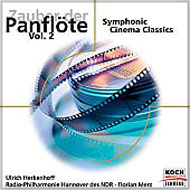
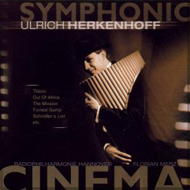
- Title: Conquest of Paradise
- Released 1999 by Universal and 2006 by Koch compact disc
- Duration: 5'36"
- Recording date: unknown
- Vangelis with Bruno Manjarres & Pepe Martinez
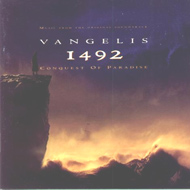
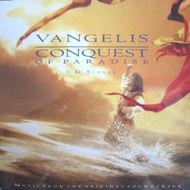
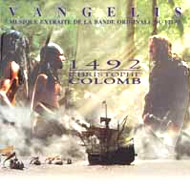 (spanish guitar and
voices), Francis Darizcuren (mandolin and violin), Didier Malherbe (flutes),
Guy Protheroe and English Chamber Choir (vocals) '1492 conquest of
paradise' music from the original soundtrack.
(spanish guitar and
voices), Francis Darizcuren (mandolin and violin), Didier Malherbe (flutes),
Guy Protheroe and English Chamber Choir (vocals) '1492 conquest of
paradise' music from the original soundtrack.
- Released 1992 by East West, Warner Musik U.K. Ltd. compact disc 4509-91014-2
- Duration: 4'20" (Conquest of paradise) and 4'47" (Twenty eight parallel)
- Recording date: 1992 at Epsilon Laboratory, Paris
A great Folía by one of the youngest composers ever who mastered the technique of variations. An inspiration for others!
 |
Duration: 3'23", 15 kB |
|
|
The sheet music 2 pages of La Folía de España, seis variaciones |
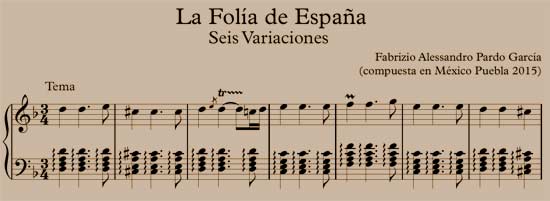 |
The opening of the sheet music by Fabrizio Alessandro Pardo García |
Fabrizio Alessandro Pardo García wrote about his arrangement in an e-mail August 2015:
Hola, mi nombre es Fabrizio Alessandro Pardo García y me gustaria contribuir con su pagina sobre "La Folía".
yo he compuesto seis variaciones y me gustaria que fueran publicadas en su pagina, le comparto la partitura y un archivo midi
Soy Mexicano y no hablo muy bien el ingles Tengo 14 Años de edad vivo en Puebla, México esta obra la compuse en el presente año 2015 y naci en el año 2000
Hi, my name is Fabrizio Alessandro Pardo García and I would like to contribute to your webpage about "La Folía".
I have composed six variations and would like them to be published on the website. I agree with making available both the score and the midi file.
I'm Mexican and did not speak very good English. I am 14 years old I live in Puebla, México this work was composed in 2015 and the year I was born was 2000.
- Pardo García, Fabrizio Alessandro
- Arranged and published by Fabrizio Alessandro Pardo García
- For piano or two instruments (guitar)
- 2 pages, 64 bars
- Size: 29x21 cm
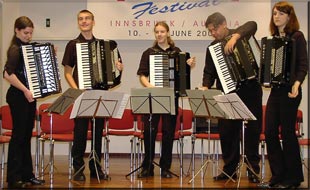 This is an arrangement of the famous Follia by Vivaldi for 5 accordions following rather closely the original score.
|
|
Duration: 8'59", 47 Kb. |
Werner Partner wrote about his arrangement in an e-mail March 2006:
I have played accordion since I was 12 years, had a pause and began again in the 80's.
I was able to conduct an accordion orchestra, and I founded an accordion circle in my hometown (see more:
http://www.akkordeon-herten.de)
I give accordion lessons, and I'm very enthusiasted seeing how children can develop when they understand how to play the accordions, and,
if they play well, create moments where art is existing. In the moment all my musical work is declining because I started other things, but I like
to collect my students to ensembles in 4 oder 5 persons and I try to help them getting aquainted with the great literature of our and past centuries.
So we played some tunes by Piazzolla, of course Bach, Bartok (for children), a wonderful Ricercare by Pachelbel, Fiddlers by Rautavaara, and we started
with Vivaldi's Concerto Grosso d-minor.
The reason I did the Follia piece was that I heard one piece for accordion by Bargielski (or Przybylsky?), later I heard a version by four recorders,
and I thought it would be something for my quintet. The original Follia by Vivaldi is written for two violins with continuo, and violoncello ad libitum.
My arrangement is based on an arrangement which wrote out the continuo numbers and has so two violin voices, a two hands continuo part and a
violoncello bass line without duplication with continuo. I arranged the violin voices, so that the first violin does not do everything -
the virtuosic parts are shared by the two violins. In my score you can see that the accordion 3 often has chords - this reflects the story of the continuo
(harpsichord), but I tried to expand such things, if possible.
- Partner, Werner
- Arranged and published by Werner Partner
- For 4 accordions and bass
- 26 pages, 319 bars
- Size: 29x21 cm
- More about Werner Partner (who is a psychotherapist with specialization on behavior therapy, non-directice therapy, and music therapy) at http://www.sonoptikon.de/praxis-mt/index.php
Since it is very difficult to establish which recordings refer to which set (sometimes variations of different sets are mixed) all recordings found are listed and classified primary on title of the piece (and not the number of variations).
Pasquini is one of the few composers, like Carulli, who did write more than one set of variations (see the next items for the sets with three and four variations).
The score is found in a 424-page manuscript identified as 'Berlin Deutsche Staatsbibliothek manuscript L.215' p.229. This manuscript was compiled starting in 1690 at the latest finished in 1702. The most likely date these variations were entered, based on its position in the manuscript, is 1697 as stated by Silbiger's introduction to the facsimile.
Kurt von Fischer wrote in The New Grove Dictionary for the subject variations:
Pasquini's harpsichord variations take a middle position between the older contrapuntal techniques and the later, more homophonic variation type with fixed harmonies. The bass and harmony are usually fixed in his variations, and the ornamentation, often very rich, is embedded in a chordal framework. Indeed with Pasquini the history of variations alla maniera Italiana begins .....
Willi Apel wrote in The History of Keyboard Music to 1700 about Pasquini:Pasquini's best known variation work is his Partite diversi di Follia (IV, no. 61), in which the famous folia theme is presented fourteen times. Several variations, especially nos. VII-XII, are base on the repeated use of a characteristic two-measure formula, but it is treated with enough freedom to avoid the danger of monotony.
|
8 page in pdf-format,137 kB |
|
The sheet music |
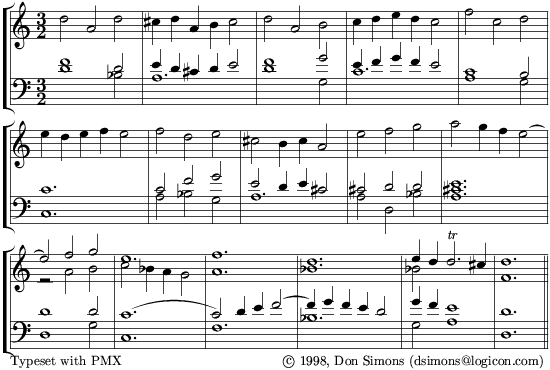
Partite diverse di follia in a graphical score of the voices
|
|
|
Duration: 0'28", 03 Kb. |
| Theme of Partite diverse di Follia | Silbiger-edition, Vol. 7 |
|---|---|
 |
|
- Bellotti, Edoardo (organ)
- Title: Partite diverse di follia
- Broadcasted by RAI3 (Italy) in the program I Concerti del Mattino
- Duration: 8'03"
- Recording date: April 20, 2008 in the Cathedral of Maria Vergine of Belgrado
- Organ built by Johann Erasmus Kindermann
- Bellotti, Edoardo (organ)
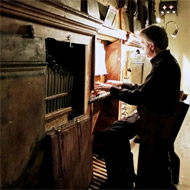
Partite diverse di follia by Edoardo Bellotti
Duration: 8'27" direct link to YouTube
© 2013 by Edoardo Bellotti- Title: Partite diverse di follia
- Broadcasted at YouTube November 8, 2013 by Smarano Organ Academy
- Duration: 8'27"
- Recording date: unknown
- Bellotti, Eduardo and Salerno, Maurizio (organs) 'Pasquini : Due organi in concerto - Organi Mascioni di S. Maria della Passione, Milano - Parte Prima: Composizioni dai manoscritti di Londra e Berlino'
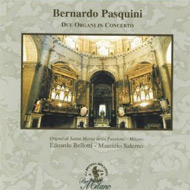
- Title: Partite diverse di follia a due organi
- Released 2004 by La Bottega Discantica compact disc order number BDI 109
- Duration: 8'09"
- Recorded at the Organi Mascioni di S. Maria della Passione, Milano, Italy
- Blank, Lydia Maria (harpsichord) 'Bernardo Pasquini. Suites and Variations'
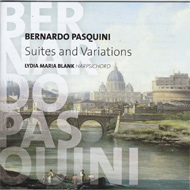
- Title: Partite diverse di Follia in d
Maria Lydia Blank wrote about the Folía in the documentation:Pasquini's variations cout among his most attractive works. He was able to draw here on all of his imagination and characterization skills, and to reveal his virtuoso side. The Partite diverse di Follia in D minor are the best known of Pasquini's several sets of variations on this popular theme, and rightly so. The exquisitely shaped Aria is followed by fourteen variations that at first tend to build on the principle of intensification of the movement (up to Variation VI); then follows a series of extremely varied character pieces that challenge the performer's expressive capacities. Variations IX, XI and XII are particularly charming, as is the chromatic Variation XIII.
- Released 2015 by Etcetera Records compact disc order number KTC 1532
- Duration: 7'47"
- Recorded April 2009 in Ehem, Piaristenkloster, Krems an der Donau
- Title: Partite diverse di Follia in d
- Bonn, James (Flemish harpsichord) 'Klavier Variations on La Follia'
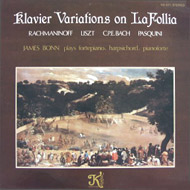
Partite di Follia by James Bonn
Duration: 5'00" direct link to YouTube
© 1982 by James Bonn
Maurice Hinson wrote for the documentation of the vinyl recording:
Pasquini's gift and individuality unfold dearly and freely in his variations, suites, and song and dance like pieces. The harpsicord, rather than the organ, was the instrument on which he felt at home and for which he wrote many attractive works. No other composer of the 17th century was as active in the field of variations as Pasquini. He wrote twenty?two such works, including the Follia twice: Partite di Follia and Partite Diverse di Follia. His best known variation work is his Partite Diverse di Follia, in which the famous follia theme is presented fourteen times. It excels in its natural simplicity and "correctness" of melodic invention. Several variations are based on the repeated use of a characteristic two-bar formula, but it is treated with enough freedom to avoid the danger of monotony. Pasquini exhibits a tendency toward precise, energetic formulations, which derive from the violin music of the late 17th century. An interesting variety is provided in this performance where four variations from the longer Partite Diverse set is transposed to the key of the shorter Partite de Follia and added at its conclusion.
- Title: Partite di Follia
- Released 1982 Klavier Records LP KS-571
- Duration: 5'00"
- Recording date: not indicated in the documentation
- See also the page Recommended Folia-recordings
- Ceballos, Horacio, editor of the music
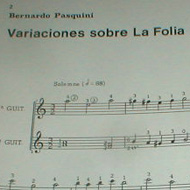
- Title: Variaciones sobre La Folia
- Published by Ricordi in Argentina
- Transcribed for two guitars
- Pages: 11
- Chapelet, Francis (organ) 'Danses de la Renaissance aux orgues & au clavecin'
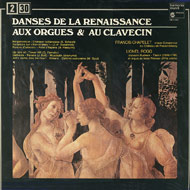
- Title: Partita sur 'La Folia d'Espana
- Released by Harmonia Mundi France 1970 LP nr. HM 2465
- Duration: 2'24"
- Recorded at the historical organ Compenius of the castle of Frederiksborg, Danmark
- Forma Antiqva:
Pablo Zapico (Baroque guitar),
Daniel Zapico (theorbo)
Aarón Zapico (harpsichord) 'Concerto Zapico'
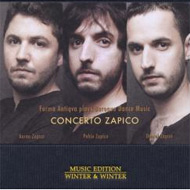 This is an arrangement of the composition by Pasquini for Baroque guitar, theorbo and harpsichord.
- Title: Partite diversi di follia
- Released 2010 by Winter & Winter compact disc 910 173-2
- Duration: 6'02"
- Recording date: June 2010 at Sala de Cambra, Fundació Auditori Palau de Congressos, Girona, Spain
- Galvez, Genoveva (harpsichord) 'Espana en la Musica Europa de los Siglos XV al XVIII'
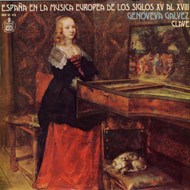
In the documetation was written by Genoveva Galvez:Duration: 6'30" direct link to YouTube
FPartite Diverse di Follia as played by Genoveva Galvez
© 1977 Genoveva GalvezLa «Folía» es una danza portuguesa, cuyo origen se remonta a tiempos muy antiguos. Ya Pedro 1, al Justiciero, de Castilla, en el 1350, gustaba de bailarla, A partir de 1500 se leen alusiones frecuentes a esta danza en tratadistas de música como Salinas, en literatos (Gil Vicente, Cervantes .. . ), encontrándose, por otro lado, gra'n cantidad de ejemplós musicales de ella en vihuelistas y cancioneros. A principios del siglo XVII, se pone de moda en toda Europa, con el nombre de «Folía de España» ; casi todos los compositores escribieron sobre este tema, baste decir que, en tiempos más modernos, hasta Liszt y Rachmaninoff han utilizado el tema de la «Folía» en sus composiciones.
Bernardo Pasquini (1637-1710) figura entre los más insignes compositores italianos de tecla del siglo XVII. En sus «Sonate per Gravicembalo», que incluyen toda clase de obras, desde «Toccatas » o «Tastatas» a «Ricercares» y Variaciones, muestra su fácil invención melódica, así como una escritura a menudo influenciada por la música violinística de la época. Su amor a la melodía, a la suave cantabilidad italiana, influirá en Handel, que trabajÓ con él en Italia.- Title: Partite Diverse di Follia
- Recorded 1977 by Hispavox HHS 10-474 (LS)
- Duration: 6'30"
- Recording date: not mentioned in the documentation
- See also recommended recordings
- Garcia Martin, Jorge (organ) '3o Concorso Organistico Internazionale: Organi Storici Del Basso Friuli'
- Title: Partite diverse di follia
- Released 2013 by Bongiovanni 2 cd-box ordernumber 5173
- Duration: 7'49"
- Recording date: unknown at Marano Lagunare, Italy
- Ghielmi, Lorenzo (organ) 'Bernardo Pasquini, Opere per Organo e Clavicembalo'
- Title: Partite diverse di follia
- Released 1990 by Nuova Era compact disc 6890
- Duration: 7'16"
- Recording date: March 7-8 1990 at Organo della Chiesa (1640) di Morcote, Schwitzerland
- Götz, Roland (organ) 'Organ works from Burgenland' (in corporation
with Menger, Reinhardt: organ)
- Title: Partite diversi di follia
- Released 91 by FSM in Studio XVII Augsburg two compact discs FCD 96512/13
- Recording date: 1989 in Purbach Pfarrkirche Sankt Nikolaus
- Haagen, Frans (carillion) performer and editor of the sheet music
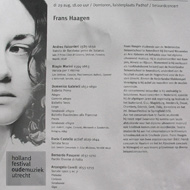
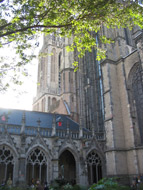
program carillion-concert
Click picture for magnificationDomtoren Utrecht
as seen from Padhof
Frans Haagen wrote about his arrangement for carillion:
Lately I performed this piece at several carillions such as in Lier (Belgium), Kampen and Almelo (both in the Netherlands) but it has not been recorded (yet). What strikes me about the field recording, apart from the poor equipment (mp3-player) to register the sound as you already mentioned, is the lack of registration the discant quality of the carillion of the Domtoren.

Duration: 4'38", 820 Kb. (16 Kb/s, 12000Hz)
The middle section (9 variations) of Partite Diverse di Follia as recorded by an amateur mp3-player
© 2006 Frans Haagen, used with permission- Title: Partite Diverse di Follia
- Part of a carillion recital with transcriptions of pieces by Andrea Falconieri, Biagio Marini, Domenico Gabrieli, Dario Castello and Arcangelo Corelli.
- Duration: c.8'20"
- Recording date: August 29, 2006 at the Domtoren, Utrecht, The Netherlands during the Holland Festival Oude Muziek (Ancient Music) Utrecht, and it was also performed August 18, 2006 in Almelo (see the page http://www.beiaardkringkampen.nl/page9.htmlAlmelo of the Beiaard Kring Kampen)
- Laganà, Ruggero (harpsichord) 'Follie, bizzarrie e stravaganze in musica, dal '500 all '800'
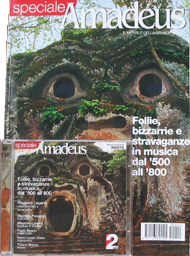 Source: Staatsbibliothek Berlin Preuäischer Kulturbesitz, Landsberg 215 - Parte III
- Title: Partite diversi sopra Follia (ca. 1697)
- Released 2005 by Amadeus Darp, Milano, Italy double compact disc AMS 092-2 DP together with a magazine special devoted to the Folia Theme (April 2005)
- Duration: 7'24"
- Recording date: August 18-19 and November 15-19, 2004 in Chiesa di S. Maria Incoronata, Martinengo (Bg), Italy
- All variations nicely indexed
- See also the page Recommended Folia-recordings
- Laganà, Ruggero (harpsichord) 'Folías italianas'
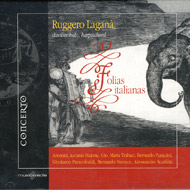
- Title: Partite Diversi di Follia
- Released 2010 by Concerto compact disc CD 2058
- Duration: 6'39"
- Recording date: October 2009 Bartok Studio, Bernareggio (Mi), Italy
- See also the page Recommended Folia-recordings
- Loreggian, Roberto (harpsichord) 'Bernardo Pasquini, Sonate per gravicembalo'
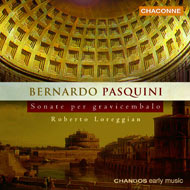
Quoting the slipcase:Partite diverse di follia by Roberto Loreggian (harpsichord)
Duration: 6'41" direct link to YouTube
© 2004 by Roberto LoreggianAs far as Pasquini's approach to the techniques of variation form is concerned, the first thing thing to note is that in multi-sectional forms he has a preference for the use of bipartite thematic ideas whose harmonic structure is similar to that of the dances, in which an initial transition from tonic to dominant is followed promptly by a return to the home tonality of the piece. An interesting exception is presented by the set of variations based on the "follia", whose surprising similarities with Corelli's more famous violinistic exercise can perhaps be explained by the long association between the two composers.
- Title: Partite diverse di follia
- Released February 2004 by Chandos compact disc Chan 0704
- Duration: 6'41"
- Recording date: August 8-10, 2002 in Villa Beatrice, Baone (Padua), Italy
- Rambaldi, Silvia (harpsichord) 'Variationi e Partite (1702)'
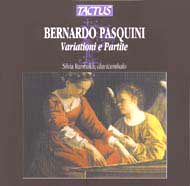 Piero Gargiulo wrote for the slipcase about the Partite diverse di Follia:
An immediate melodic transparency envelopes the theme, which is freely transformed throughout the 14 partitas with great variety of development and an extraordinarily rich rhythmic treatment. Pasquini's openly declared homage to Corelli can be found in the employment in the 9th partita of energetic - almost violinistic - passages, the ternary meter from the 10th partita onwards, and the use of chromaticism in the 13th. Of particular interest, in partitas 7-12, is the repeated application of a concise formula of two bars.
- Title: Partite diverse di Follia in re
- Released 1988 by Tactus compact disc TC 631801
- Duration: 7'17"
- Recording date: June 1997 in Padova, Italy
- Ruiz-Pipo, Antonio revised and adapted the original score for two guitars.
- Published 1972 by Madrid Union Musical Espanola
- Score 4 p., 33 cm
- Sartori, Egida Giordani (harpsichord) 'Egida Giordani Sartori, harpsichord'
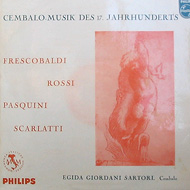
Duration: 1'21", 131 Kb.( 128Kb/s, 44KHz, mono recording)
2 Variations, featuring the use of registers
© Philips mid 1950's- Title: Partite diverse di follia
- Released by Philips mid 1950's LP A 00334 L
- Duration: 8'13"
- Recording date: mid 1950's (not mentioned in the documentation)
- More about Egida Giordani Sartori at the website http://jsebestyen.org/sartori/
- Sartori, Egida Giordani (harpsichord) 'Harpsichord Masters of the 17th Century'
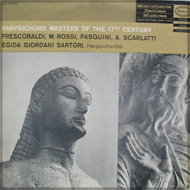
Partite diverse di follia
Duration: 8'22" direct link to YouTube
© mid 1950's by CBS- Title: Partite Diverse di Follia
- Released by Epic (a product of CBS) in the series 'Monumenta Italicae Musicae' without indication of year LP LC 3480
- Duration: 8'13"
- Recording date: mid 1950's
- More about Egida Giordani Sartori at the website http://jsebestyen.org/sartori/
- Scandali, Luca (organ) 'La Partita'
- Title: Partite diverse di Follia
- Released 1998 by La Bottega Discantica compact disc order number 034
- Duration: 7'05"
- Recording date: unknown in Chiesa Parrocchiale S. Agostino, Italy
- Build by Gaetano Callido Op. 118 - 1776. The St Agostino organ had two stops added in 1845 but sounds in pristine conditions (it was last restored in 1988).
- Sebestyén, János (organ) 'Pasquini: Composizioni per Organo'
Partite diverse di follia
Duration: 7'00" direct link to YouTube
© 1978 by János Séestyén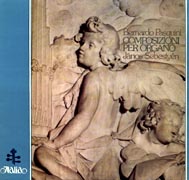 Lorenzo Tozzi wrote for the cover of the vinyl:
Moreover he was already setting forth eighteenth century differences in this stylistic distinctions between harpsichord and organ writing (in this he was a forerunner of Domenico Scarlatti) and especially in his exceptional mastery of the technique of ornamental variation (i.e., rhythmic-melodic rather than metrical-harmonic) of which his 'Partite diverse di Follia' based on the famous Iberian dance air used as a theme for variations by Frescobaldi, Corelli, D'Anglebert, A. Scarlatti, Vivaldi and Geminiani, is deservedly the most famous example.
- Title: Partite diverse di follia
- Released by Italia LP ITL 70062
- Duration: 7'00"
- Recording date: August 8-11, 1978 in Ernen, Switzerland
- Silbiger, Alexander editor of the fascimile of the manuscript
- Published as Volume 7 in the series '17th Century Keyboard Music'
- Published by Garland Publishing, Inc. New York and London, 1988
- Stella, Simone (spinet) 'The Italian Spinet'
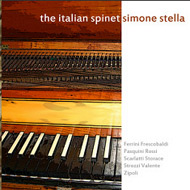
- Title: Partite diverse di Follia
- Released 2009 by Simone Stella in mp3-format
- Duration: 8'48"
- Recording date: unknown
- Stolz, Ernst (harpsichord)
4 Partitas diverse di follia by Ernst Stolz (harpsichord)
Duration: 6'41" direct link to YouTube
© 2013 by Ernst Stolz, used with permission- Title: 4 Partitas from the Follia (only for variations are chosen)
- Published 2013 at YouTube by Ernst Stolz
- Duration: 6'41"
- Recording date: March 2013 in the Netherland with a harpsichord sampler
- Venturini, Matteo as part of Sonatori Fiorentini (Antonio Aiello: violin, Andrea Landi: cello, Matteo Venturini: organ)
'Diavolo e Follia'
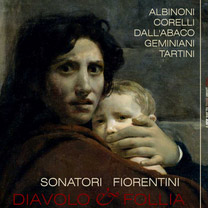
- Title: Partite diverse di Follia, from Sonate
- Released 2014 by OnClassical compact disc order number OC30B
- Duration: 8'22"
- Recording date: 2009 in Chiesetta di San Miniato, Pisa, Italy
Pasquini is one of the few composers, like A. Scarlatti and Carulli, who did write more than one set of variations (see previous item for the theme and 14 variations and next item for the theme and 4 variations).
The original score is found in a manuscript identified as 'British Library manuscript Add. 31501, Volume II, p.21. The compositions in the London manuscript are dated between 1703 and 1704. A definitive and exhaustive chronology of Pasquini's keyboard work, however, remains a difficult one to be certain about, although Silbiger, the editor of the facsimile thinks it was likely that the variations have been entered in the manuscript in 1704.
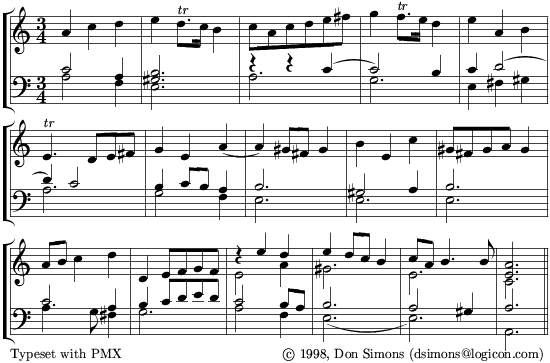
|
2 page in pdf-format,45 kB |
|
|
Duration: 0'26", 03 Kb. |
| Theme of Variatione sopra la Follia | Silbiger-edition, Vol. 8 |
|---|---|
 |
|
- Bolliger, Albert (organ) 'Historische Orgeln in Österreich III'
- Title: Variazioni sopra la Folia
- Released 2002 by SINUS compact disc
- Duration: 3'12"
- Recording date: unknown
- Recorded at 'Die Franz Mitterreither-Orgel (1718) der Stiftskirche zu Leoben-Göss', Autria
- Power-Biggs, E. (organ) 'Historic organs of Italy'
Variazioni sopra la Follia
Duration: 1'57" direct link to YouTube
© by E. Power-Biggs- Title: Variazioni sopra la Follia
- Released by Columbia Masterworks CBS LP MS 7379
- Duration: 1'57"
- Recording date: not mentioned in the documentation of the LP
- Recorded in the Chiesa di San Carlo, Brescia, Italy. Organ, Antegnati, 1636.
- Power Biggs, E. (organ) 'Historic organs of Italy: organs of Bologna,
Brescia and Bergamo'.
- Released by CBS 1968 LP 72810
- Duration: 1'06"
- Silbiger, Alexander editor of the facsimile of the manuscript
- Published as Volume 8 in the series '17th Century Keyboard Music'
- Published by Garland Publishing, Inc. New York and London, 1988
This third set of Folia-variations by Pasquini is from a manuscript of which the original is conserved as Ms 964 in the 'Bibliotheca Pública e Arquivo Distrital' in Braga, Portugal. (see the previous items for the sets with 3 and 14 variations)
Kaddee Crottier wrote in the Spring of 2000 for the recital 'Music before 1750 by Spanish composers' of Luther College Collegium Musicum:
Partite sopra La Aria della Folia da Espagna (Partita on the Melody Folia da Espagna) consists of a theme with four variations. While the chord progression remains the same, the easily recognizable melody enjoys ornamental variations. The theme and first variation place the melody in the right hand with a simple chordal accompaniment in the left hand. In the second and third variations, the melody starts in the bass, but it occasionally swiches to the treble. The final variation introduces triplets as a new rhythmic component to the variation.
|
|
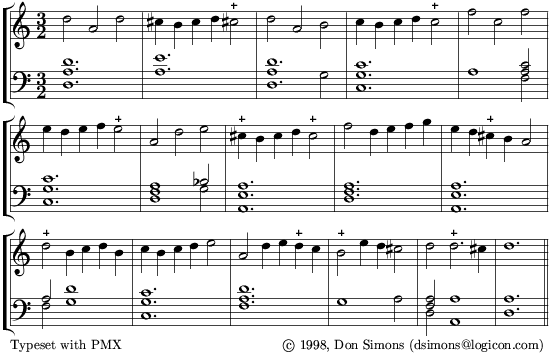
Duration: 2'04", 07 Kb. |
|
3 page in pdf-format, 65 kB |
|
The sheet music |
| Theme of Partite sopra la Aria della Folia da Espagna | Source unknown |
|---|---|
 |
|
- Águeda, Sara (arpa doppia solo)
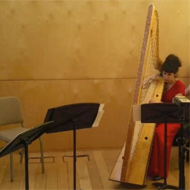
Duration: 3'46" direct link to YouTube
Sara Águeda plays Partite sopra la Aria della Folia da Espagna
© Sara Águeda- Title: Partite sopra la Aria della Folia da Espagna (in an arrangement for arpa doppia solo)
- Released January 2014 on YouTube by Sara Águeda
- Duration: 3'46"
- Broacasting date: January 27, 2014
- Becker, George (organ solo)
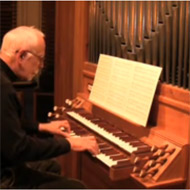
George Becker wrote about the organ:The organ, tuned in Kellner, is ideally suited to old Spanish, Dutch and North European music
Duration: 2'14" direct link to YouTube
George Becker plays Partite sopra la Aria della Folia da Espagna
© George Becker, used with permission- Title: Partite sopra la Aria della Folia da Espagna
- Released on YouTube by George Becker (sfbonedoc)
- Duration: 2'12"
- Broacasting date: January 25, 2009
- A. David Moore tracker organ
- Benson, Joan (clavichord) 'Works of Haydn and Pasquini'
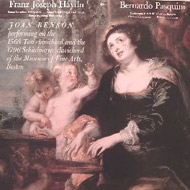
- Title: Partite sopra la aria della folia da Espagna
- Released c.1982 by Titanic Records, Cambridge Mass. compact disc Ti-96 and LP
- Duration: 1'35"
- Recording date: March 1980 at the Museum of Fine Arts, Boston
- Clavichords: by Tosi (1568) and Schiedmayer (1796), from the Musical Instruments Collection, Museum of Fine Arts, Boston
- Bisquer, Luis Galindo (organ solo) 'Organos de la catedral deAlquezar, Agüero, Roda de Isábena'
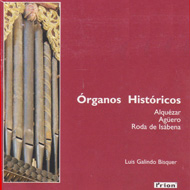
- Title: Partite sopra la Aria della Folia da Spagna
- Released 2004 by Geaster compact disc Prion 1097
- Series: Organos Hístoricos
- Duration: 2'34"
- Recorded at Organ de la Colegiata de Sante María, Alquezar
- Bolliger, Albert (organ solo) 'Valère, Die alteste Orgel der Welt'
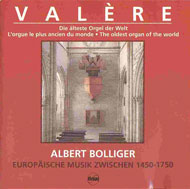
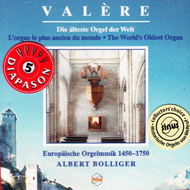
- Title: Partite sopra la Aria della Folia da Espagna
- Released by Ex Libris 1987 as compact disc CD 6064, later released as Sinus CD 4002 Sinus and as cassette ex libris CAS 8565
- Series: Europaische Musik zwischen 1450-1750
- Duration: 2'09"
- Recorded at 'der gotischen Orgel (um 1390) der Kathedrale Notre-Dame de Valère zu Sitten, Switserland'
- Boulay, Laurence (harpsichord solo) 'Les instruments precieux du Musée du
Conservatoire. Vol. 1'
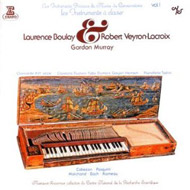
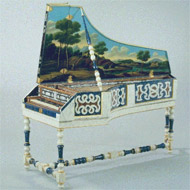
- Title: Partita sopra la aria della folia da Espagna
- Released 1978 by Erato STU 71134 , re-relased (and remastered) by Erato 2009 compact disc (ADD) LC 04281 5050466-5705-2-9
- Duration: 1'53"
- Recording date: April 1977
- No features of the instrument were mentioned in the poor documentation of the compact disc (Harpsichord builder Faby in Bologne (1677). Inventory classification E.224. Description of the musée: Etendue : 4 octaves do-do * Boîte extérieure peinte en faux marbre * Couvercle peint à l'intérieur * Rose polychrome en bois et parchemin découpé * Clavier en ivoire gravé et ébène incrusté *)
- Bravo, Francesco (organ solo) 'Opus Joseph Bonatti Xni 1713'
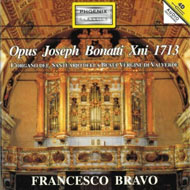
- Title: Partite sopra la Aria della Follia da Espagna
- Released 2003 by Phoenix Classics compact disc 03912
- Duration: 2'37"
- Recording date: April 28 and 29, 2003 at Santuario della Beata Vergine di Valverde, Rezzato, Italy
- Organ built by Giuseppe Bonatti 1713, restored by Giorgio Carli in 2002
- Carmina (ensemble) 'Na Trilha do Novo Mundo'
- Title: Partite Sopra la Aria Della Folia da Espagna
- Released 2006 by CPC-UMES compact disc 1601973
- Duration: 1'49"
- Recording date unknown
- Carol, Henri (organ solo)
- Title: Partite sopra la folia d'Espagne
- Released by REM November 1983 compact disc 311117
- Recording date: unknown at Monte Carlo in the Saint Charles
- Chapelet, Francis (organ solo) 'The art of the organ Vol.1'
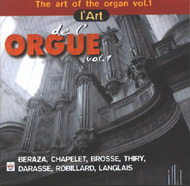 In the slipcase is written:
Bernardo Pasquini (1637-1710) is a perfect example of Italian art and his variations on the highly popular Folies d'Espagne give pride of place to the theme: the solo stops being the cornet and trompette. This theme will inspire during all the music history a lot of composers (Marin Marais, Geminiani, Carl-Philipp-Emmanuel Bach ...).
- Title: Variations sur les Folies d'Espagne
- Released 2001 by Arion compact disc Arion 60540 (AR080)
- Duration: 2'16"
- Organ of Malucène
- Recording date and organ location not mentioned in the slipcase(!)
- Cominetti, Ennio (organ solo) 'Bernardo Pasquini: Organ Works'
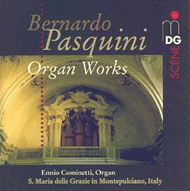
- Title: Partite sopra la Aria della Folia da Espagna
- Source used: M.S. Kastner's Silva Ibérica Vol. I, p. 17-19
- Released 1997 by Musikproduktion Dabringhaus und Grimm, Detmold compact disc 606 0646-2
- Duration: 2'05"
- Recording date: October 1995
- Organ: Church of S. Maria delle Grazie in Montepulciano, Siena
- Doderer, Gerhard (organ solo) 'Musica vocal e musica de orgao dos sec. XVI,
XVII e XVIII'
- Title: Partite sopra la Aria della Folia da Espagna
- Released by EMI Voz do Dono 1976 LP nr. 11C 073 40427
- Duration: 3'47"
- Recording date: January 8/9, 1976 at Sao Vicente de Fora, Lisboa
- Dudman, Michael (organ solo) 'Historical organs of Sydney'
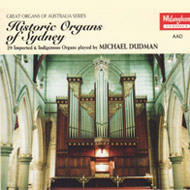 In the slipcase Kelvin J. Hastie wrote about the organ:
The organ, although not imported to Australia until 1915, is Sydney's oldest instrument, having been built in 1796 by Robert and William Gray of London. Recent research has dispelled some of the myths surrounding the early history of the organ, although it was owned, prior to importation, by the Wiveliscombe Congregational Chapel in Somerset. After spending a short period in a variety of Sydney locations, the organ was installed here in 1920.
In 1965 some repair work was carried out by Roger H. Pogson of Sydney, who replaced the nonoriginal Gamba with a new Mixture Ill. The instrument has been the subject of other modifications over the years: a pedal clavier and pipes have been added, the GG keyboard has been altered to eliminate the 'short -oclave' arrangement, and the pitch has been altered through transposition of pipes and the fitting of tuning slides. Most of the original pipework, however, appears to have survived, together with the key and stop actions and the diminutive stop knobs with domes engraved in copperplate script.- Title: Variations on 'La Folia' (= Partite sopra la Aria della Folia da Espagna)
- Released 1995 by Walsingham Classics 3 cd-box
3 WAL 8023 (AAD). Original sound recordings © 1982, 1983 & 1984
Australian Broadcasting Corporation - Duration: 2'22"
- Recording date: May 27, 1983
- Organ: Robert. & William. Gray, London, 1796 St Peter's Anglican Church, Watsons Bay
- Gifford, Gerard (organ solo) 'Organ music from the National Shrine of Our Lady Walsingham'
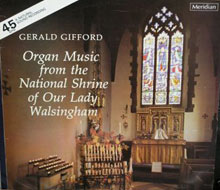
- Title: Partite sopra la aria della folia da Espagna
- Released by Meridian LP PRM 45 nr. E 4577057.
- Duration: 1'57"
- Recording date: August 1982 in the Chapel of Reconciliation, Walsingham
- There is a large organ and chamber organ in that chapel and 'La Folia is played on the large organ, like most of this recital.
- Goebels, Franzpeter edited the sheet music
From the preface:Out of the wealth of Follia compositions traceable from the late 15th century up to the turn of the 20th, we are publishing three salient works for the keyboard. Our edition is based on a critical revision of the source material.
- Title of volume: Variationen über die Follia für Klavier. (incl. A. Scarlatti & C.P.E. Bach)
- Title: Partite sopra la Aria della Folia da Espagna: theme and 4 variations
- Published by Schott, Mainz 1970 (first edition in 1953?)
- Publisher No. ED5775
- ISMN: M-001-06326-5
- Goede, Therese de (harpsichord solo) radiobroadcasting of concert with
Velden, Mieneke van de (viola da gamba)
- Title: La Folia (identified as the 'Partite sopra la Aria della Folia da Espagna')
- Recorded & broadcasted by De Concertzender, Amsterdam
- Duration: 1'50"
- Recording date concert: February 23, 1993 at the English Reformed Church, Amsterdam
- Date of broadcasting: March 28, 1993
- Imbruno, Matteo (organ solo ) 'Grandi Maestri dell'organo Italiano'
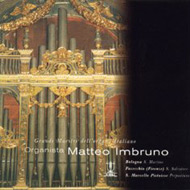
- Title: Partite sopra l'aria de Folia de Espagna (ms. 964 - archivio distrital - Braga/Portugal)
- Released 1997 by Juval compact disc
- Duration: 2'07"
- Recording date unknown at Fucecchia San Salvatore, Bologne San Martino, San Marcello, Pistocese, Italy
- More about Matteo Imbruno at his website http://www.antenna.nl/matteo.imbruno/
- Josefer, M (harpsichord solo) 'Harpsichord reveries'
- Title:Partite sopra la Aria della Folia da Espagna
- Released April 2010 by Amie Street mp3 320 kbps format
- Duration: 3'33"
- Recording date unknown
- Harpsichord by William Hyman built in 1965
- Kastner, Macario Santiago edited the sheet music 'Silva Ibérica
de música para tecla de los siglos XVI, XVII y XVIII' Volume I, p.
17-19
From the preface by Kastner:Das sehr alte und bekannte portugiesisch-spanische Thema - schon 1526 rief der portugiesische Dichter Gil Vicente in seiner 'Tragicomédia do Templo de Apollo' aus: 'Cántadme por vida vuestra en Portuguesa folia' (Für euer Leben, singt mir in portugiesischer Foliaweise!) - benutzte der italienische Meister mehrmals zu Variationszyklen. Von den uns bekannten scheint uns dieser einer der schlichtesten zu sein. Er ist, soweit wir erkunden konnten, bislang noch nicht im Druck erschienen. Ob Braga überhaupt jetzt die einzige Quelle für diese Foliaversion Pasquinis ist, war ebenfalls noch nicht mit Sicherheit festzustellen.
- Title: Partite sopra la Aria della Folia da Espagna: theme and 4 variations
- Published by Schott & Co., London c. 1954
- Publisher No. 4215
- Lagace, Mireille (organ solo)
- Title: Partita sopra L'aria della follia d'Espagna
- Released by Titanic TI 37
- Recording date: 1978 in New York Church of Saint John the Evangelist
- Laganà, Ruggero (harpsichord) 'Folías italianas'
- Title: Partite sopra la Aria della Folia de Espagna
- Released 2010 by Concerto compact disc CD 2058
- Duration: 1'35"
- Recording date: October 2009 Bartok Studio, Bernareggio (Mi), Italy
- See also the page Recommended Folia-recordings
- Lernia, Francesco Di (organ solo) 'Victoria Missa Ave Regina' highlighted by sections for solo organ
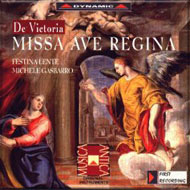
- Title: (Anonymous) Partite sopra la Aria della Folia de España (from Ms. 964 Biblioteca Publica e Arquivo Distrital Braga, Portugal, attributed to Bernardo Pasquini)
- Released 2000 by Dynamic Italy compact disc CDS 261
- Duration: 3'16"
- Recording date: May 14-16, 1999 on the Luca Neri organ (dated 1650) in the St. Antonio's Oratory at L'Aquila, Italy
- More about Francesco di Lernia at his website http://www.antenna.nl/francesco.dilernia/
- Mazzanti, Alexandra (organ solo) 'The joy of dance in organ music'
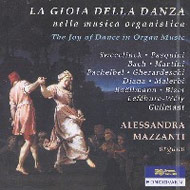
- Title: Partite sopra la Aria della Folia da Espagna
- Released 2004 by Bongiovanni compact disc GB5139-2
- Recording date: unknown
- Novenko, Michal (organ solo) 'Great European Organs Vol 76''
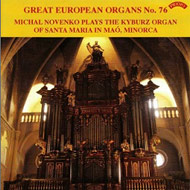
- Title: Partita sopra La Folia de Espagna
- Released 2009 by Priory compact disc PRCD 878
- Duration: 2'05"
- Recording date: May 11 and 12, 2006 in Santa Maria in Maó, Minorca
- Paiva, Rui (organ) 'Kastner, Organos Historicos en Aragon Vol. VII'
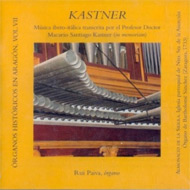
- Title: Partite sopra la aria della Folia da Espagne
- Released 2006 by IFC compact disc DD00748
- Duration: 2'38"
- Recording date: unknown in Almonacid de La Sierra. Iglesia parroquial de Ntra. Sra. de la Asuncion
- Organ: Bartholome Sanchez (Zaragoza, 1733)
- Pol, Wijnand van de (organ solo) 'Organi Nacchini e Dacci di Udine'.
- Title: Folia de Espagna: Partita
- Released by Bongiovanni, January 2, 1994 as compact disc GB 5038
- Polonska, Elena (Irish harp) 'L'art de la harpe, Vol 2'
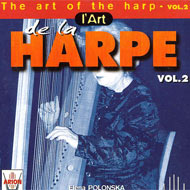
- Title: Partita sopra la aria della folia da Espagna
- Released 1996(?) by Arion compact disc ARN 60 371
- Duration: 3'09"
- Recording date: 1995
- Power-Biggs, E. (organ solo) 'Historic organs of Spain' (MS 7109) and 'Organ music of Spain and Portugal' (MS 5167)
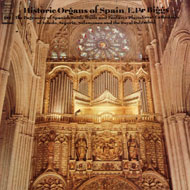
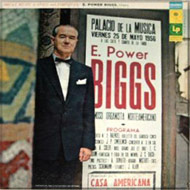
Partita sopra la aria della folia
Duration: 3'20" direct link to YouTube
© by E. Power-Biggs- Title: Partita sopra la aria della folía de Espagna
- Released by Columbia Masterworks LP MS 7109 and Columbia Masterworks LP KL 5167
- Duration: 3'20"
- Recording date: not mentioned in the documentation of the LP but according to the original cataloque number it should be 1968
- Recorded on the organ at Segovia
- Rose, John (organ solo) 'John Rose plays the Beckerath Organ at Pomona College'
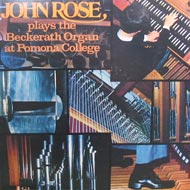 John Rose wrote about the Partite diverse di Follia:
Pasquini was another well-known Italian composer of his day, and he utilized this Spanish-Portuguese theme as the basis for several compositions
- Title: Partite sopra la Aria della folia de Espanga
- Released by Towerhill Records 1979 lp T-1002
- Duration: 2'03"
- Recording date: not mentioned in the documentation
- Rosenhart, Kees (organ solo) 'Kees Rosenhart speelt voor het restauratiefonds
van de Waalse- of Begijnenkerk te Haarlem op de kabinetorgels van het
Coen Cuserhuis en de Oud Katholieke kerk te Haarlem, Vol. 4'.
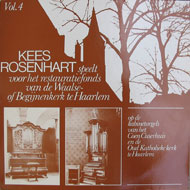
Partite sopra la Aria della Folia by Kees Rosenhart
Duration: 2'01" direct link to YouTube
© by Kees Rosenhart- Title: Partite sopra la Aria della Folia da Espagna
- Source used: M.S. Kastner's Silva Ibérica Vol. I, p. 17-19
- Released 1979 as LP by Stichting Voor en met Orgel (sort of Foundation for the promotion and conservation of small organs) No. 6812 884
- Duration: 2'01"
- Recording date: April 1979
- Organ: 'de Oud Katholieke kerk (Old Catholic church) Sint Anna en Maria in Haarlem, The Netherlands (organ built around 1775)
- Schultheiss, Margit (Baroque harp) 'Europa Mediterránea en el s. XVIII'
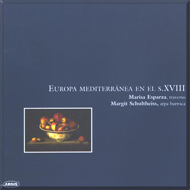 In the slipcase is written:
Pasquini was a contemporary of Corelli, with whom he maintained a great professional relationship, holding meetings and concerts through the 'Academia de la Arcadia' formerly the 'Academia de literatos of which both, among many others were members. He composed various operas, cantatas, oratorios, profane and sacred music, although his most important production is that dedicated to the keyboard. Much of it was never published in his time although it transcended great presentation through his manuscripts.
In our version with harp on folias, the musician has selected certain variations, leaving the music in a more spinet language and adding others from anonymous authors of the same theme from two harp music manuscripts. He was particularly sensitive about this theme on 'las folías de España' as were many of his contemporaries until the end of the 18th century, always using the harmonic base and making variations to this same bass from its repetition.- Title: Partite sopra la aria de la folia da Espagna
- Released 2004 by Arsis compact disc Arsis 4184
- Duration: 5'26"
- Recording date: not mentioned in the documentation (the place of the recording isn't mentioned either)
- Schwarzer, Egon (recorder) and Mihajlovic, Egon (harpsichord and organ) 'Vivi felice - Musik des 15.- 18. Jahrhunderts aus Italien, Spanien und Dalmatien'
- Title: Partite sopra la Aria della Follia da Espagna
- Released 2004 by Cybele compact disc 200.403
- Duration: 1'23"
- Recording date: unknown
- Schwarzer, Egon (recorder) and Mihajlovic, Egon (harpsichord and organ) 'Cybele Records, klassik der zukunft, SACD-sampler'
- Title: Partite sopra la Aria della Follia da Espagna
- Released 2004 by Cybele compact disc SACD 400.101
- Duration: 1'23"
- Recording date: unknown
- Sgrizzi, Luciano (organ solo) 'Le Clavecin Baroque: deux siècles de
musique en Italie'
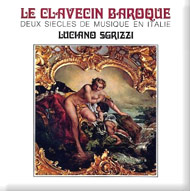
- Title: Variations on La Folia
- Released by Cycnus/Bam 4-LP set Calb 72-75, Cycnus 9021-9024
- Duration: 2'15"
- Recording date: mid 1960s
- More about the oeuvre and life of this harpsichord player at http://jsebestyen.org/sgrizzi/
- Stolk, Ru (harpsichord solo) 'Het Italiaanse kinder quint clavecimbel'
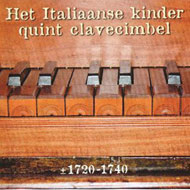
- Title: Partite sopra la Aria della folia da Espagna: theme and 4 variations in d minor
- Released by Clavigram 2001 compact disc CLG.01-1
- Duration: 2'24"
- Recording date: unknown at Leerdam, The Netherlands
- harpsichord 1720-40 Italian Quint Harpsichord, restauration 1999-2000 Hugo van Emmerik
- Tramier, Brigitte (harpsichord), Robert, Jean Michel (lute) ‘Musique
baroque pour luth, chitarrone et clavecin’
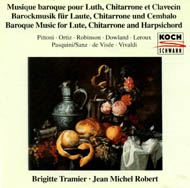 This is a nice medley of the authentic score for keyboard by Pasquini
with a lute-part added and the authentic score for guitar (in this case
lute) by Sanz with a harpsichord-part added. And that's not all. Every
variation of Pasquini is immediately followed by a variation of Sanz and
every variation of Sanz by a Pasquini-variation till all variations have
been played.
This is a nice medley of the authentic score for keyboard by Pasquini
with a lute-part added and the authentic score for guitar (in this case
lute) by Sanz with a harpsichord-part added. And that's not all. Every
variation of Pasquini is immediately followed by a variation of Sanz and
every variation of Sanz by a Pasquini-variation till all variations have
been played.
- Title: Variations sur "Les Folies d'Espagne"
- Released by Koch Schwann compact disc 3-1544 2
- Duration: 3’33"
- Recording date: October 1991 dans la salle de concerts, Centre Culturel de Valprivas, France
- Werner, Hans Martin (whistle) and Martin Schmeding (organ) 'Virtuoses Pfeifen, Hans Martin Werner'
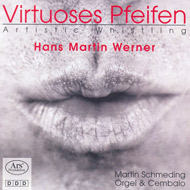
- Title: Partite sopra la Aria della Folia da Espagna (arr. H.M. Werner)
- Released 2002 by Ars Produktion compact disc FCD368412
- Duration: 2’20"
- Recording date: July 21-23, 2000
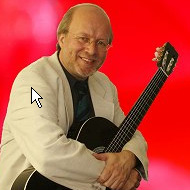
Ralph Paulsen-Bahnsen wrote about his Folia For A Gang:
La Folia"- kaum eine andere harmonisch-melodische Formel übte auf klassische Komponisten eine derartige Faszination aus wie diese. Variationen über Folia wurden überwiegend im 17. und 18. Jahrhundert angefertigt, allerdings werden sie auch heute noch gern als Übung im Fach Komposition genommen. Charakteristisch für "La Folia" ist die harmonische Folge I-V-VII-III / III-VII-I-V-I. Dazu erklingt in der Regel erst eine aufsteigende, danach eine absteigende melodische Linie. Ursprungsland ist Portugal bzw. Spanien, allerdings war "La Folia" auch in Italien (als "fedele") und in Frankreich sehr beliebt.
In "Folia For A Gang" habe ich die Folia-Formel in eine zeitgemäße Tonsprache umgesetzt. Das Stück hat durch die dorischen Wendungen einen leicht herben Charakter erhalten. Dennoch bleibt der Bezug zur Tradition unverkennbar. Die Komposition besteht aus Thema, 6 Variationen und einem Zwischenspiel (Interludium). Der Schwierigkeitsgrad ist Mittelstufe.
- Paulsen-Bahnsen, Ralph
- More about the oeuvre of Ralph Paulsen-Bahnsen at http://www.paulsen-bahnsen.de/en/index.htm
- Published 2004 by Peer Hamburg ordernumber 12157
- Duration: unknown
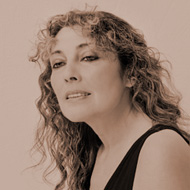
Opera commissionata dal Ensamble Barcelona Nueva Musica
|
© phote Neos-music |
Marcela Pavia wrote in an e-mail October 8, 2012:
The piece is based on the theme of La Follia but it is in contemporary style. It was composed in 2004. It is neither recorded or published. The instrumentation is that one indicated: flute, sax soprano, 7 strings guitar and violoncello. The duration must be checked, I don't remember exactly.
In some of my compositions I use to fuse different styles in a contemporary context (ancient music or argentine music mainly or even a jazz flavour) I chose the Follia Theme because of the multiplicity of echos it may evoke but treated in a very contemporary way; only at some points it is perceivable.
- Pavia, Marcela
- Opera commissionata dal Ensamble Barcelona Nueva Musica
- Duration: unknown
- Not recorded or published yet
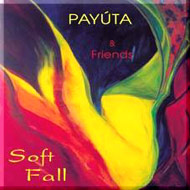
You can hear the inner singing of the Folia in the sitar with its harmonics in these six variations. A subtle and delicate bending of strings on the 7th and 15th bar of the variation gives a rather bluesy feeling to several variations. The sound of the harp as a continuo blends nicely in the melody lines of the sitar.
| |
Duration: 0'57", 282 Kb.( 40Kb/s, 22KHz) |
The Folia-melody was expressed on sitar and Bettina Erragihi harmonized the chords on baroque-harp. For this tune I was looking for something new in in my musical development and I tried to combine it with an unusual constellation of instruments. This combination of the indian sitar and the harp on a baroque theme was one point and very attractive for me. I loved the interwoven timbre of this two extremely different instruments of separated cultures.
- Payuta, Harry (sitar), Erragihi, Bettina (baroque-harp) 'Soft Fall'
- More about the oeuvre of Harry Payuta at http://www.payuta.de/
- Released 2000 by ON-Records compact disc 003699, distribution by Jaro-Medien
- Duration: 2'49"
- Recording date 2000 in Studio-Hire, Ottersberg, Germany
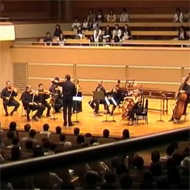
Carlo Pedini wrote in an e-mail July 10, 2014:
I composed "La follia" in 2007-2008, the piece was commissioned by the string orchestra "ISolisti di Perugia" and is dedicated to Hiroshi Isaka, director of the Kusatsu Summer Music Festival. The score is published by Casa Musicale Sonzogno of Milan. It's seven Variations upon the harmony from the famous theme by Corelli, and I tried to use various playing techniques of the modern Strings. The last variation is in a major key and it is a Rondo "impazzito" (crazy) in homage to the Corelli's title. I conducted myself the first execution in Kusatsu - Japan.
La follia , I tema: introducione e danza |
La follia , II Pizzicato Scherzando |
La follia , III Idea fissa, IV Adagio |
La follia , V Fuga |
La follia , VI Anni '80 |
La follia , VII Rondò impazzito |
- Solisti di Perugia conducted by Carlo Pedini
- Published October 13-14, 2009 at YouTube by Carlo Pedini and the score is published by Casa Musicale Sonzogno of Milan.
- Duration: 6'57" (I Tema), 3'30" (II Pizzicato Scherzando), 4'47 (III Idea fissa, IV Adagio), 2'56" (V Fuga), 6'11" (VI Anni '80), 6'35"(VII Rondò impazzito)
- Recording date: August 21, 2008 in Kusatsu International Concert Hall, Japan
- The website of Carlo Pedini http://www.carlopedini.org
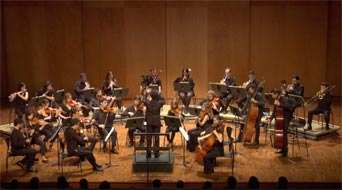
The theme inspired by Rodrigo's Folías appears slowly and grows into full exposure after 9 minutes.
Tomàs wrote about the piece as brief program notes:
Folías is inspired by a version of the popular Barroc tune La Folía. That is the homonymous guitar piece by the Spanish composer Gaspar Sans (1640-1710). I approached this composition as an observation of Sans' original from different perspectives and distances. A walk-through revealing deconstructed places within the piece.
- Orquestra de Cambra de Penedés (OCP) conducted by Marius McGuinness
- Commission by the Orquestra de Cambra de Penedés (OCP)
- Premiered on March 26th 2017 by OCP in Auditori de Vilafranca del Penedès
- Duration: 11"13'
- The sound file can be heard on https://soundcloud.com/tomas-peire/folias
- More music by the composer http://tomaspeire.com/
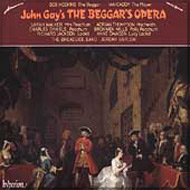 This opera was commissioned by the Lincoln's Inn Field Theatre Impressario
to Pepusch. He basically arranged existing songs of the time, composing himself
the introduction symphony and the orchestral part drawing influences from
Purcell and Händel. This is considered to be the first ballad Opera of
Modern Times.
This opera was commissioned by the Lincoln's Inn Field Theatre Impressario
to Pepusch. He basically arranged existing songs of the time, composing himself
the introduction symphony and the orchestral part drawing influences from
Purcell and Händel. This is considered to be the first ballad Opera of
Modern Times. - Accademia Monteverdiana (chorus and orchestra) directed and edited by Denis Stevens 'Gay-Pepusch: Songs of the 'Beggar's Opera'
Ballad opera in 3 acts ; music based on pre-existing melodies. Sung in English; includes German narration written and spoken by Hanns Dieter Hüsch. Angela Jenkins ; Shirley Minty ; Nigel Rogers ; Edgar Fleet ; Margaret Cable ; John Noble
The performance notes say regarding some alterations that were adopted: 'No. 63, based on La Folia, called for a slight extension so that the final chord would move naturally to the beginning of No. 64'- Title: Air 63: If thus - a man can die (Joy to great Ceasar)
- Released 1991 by Koch International Schwann 2 cd-set 314056 K2
- Duration: unknown
- Recording date: August 1978 in the Music Room at Cleveland Lodge, Dorking
- The Broadside Band directed by Jeremy Barlow 'The Beggar's Opera'
This recording of The Beggar's Opera is based on the new performing edition, edited and arranged from 18th-century sources by Jeremy Barlow and published by Oxford University Press, 1990.- Title: Air 63: If thus - a man can die (Joy to great Ceasar)
- Released 1991 by Hyperion set of 2 compact discs CDA66591/2
- Duration: 0'13"
- Recording date April 21-25 1991
- Ensemble La Stravaganza directed by Svetlana Shivelova, Anatoly Ponomarev (tenor) as Macheath
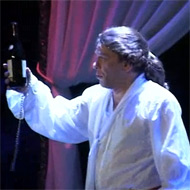
Ensemble La Stravaganza directed by Svetlana Shivelova
Duration: 1'26" direct link to YouTube
© 2008 by Ensemble La Stravaganza- Title: La Folia
- Published at YouTube by Beggop May 4th, 2008
- Duration: 1'26"
- Recording date 2008 in Moscow, Russia
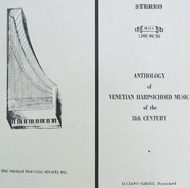
Only in the opening chord progression the last 8 bars of the Folia are displayed and they are not repeated in the Largo or the other movements of the Sonata (Allegro and Presto).
| |
Duration: 1'20", 1878 Kb.( 128Kb/s, 44100Hz) |
- Released without indication of year by The Musical Heritage Society Inc., New York, recorded by Erato 3 LP-set MHS 1348(/49/50)
- Duration: 3'02"
- Recording Date: not mentioned in the documentation
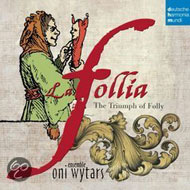 With lots of flageolets this small piece is the aftermath of the Follia compact disc of Ensemble Oni Wytars
- Ensemble Oni Wytars 'La Follia, the triumph of Folly'
- Title: Follia d'Arcangelo
- Released 2013 by Deutsche Harmonia Mundi compact disc 88765449782
- Duration: 1'20"
- Recording date: October 1-3, 2011 in Kurtheater, Bad Kissingen, Germany
- See also recommended recordings
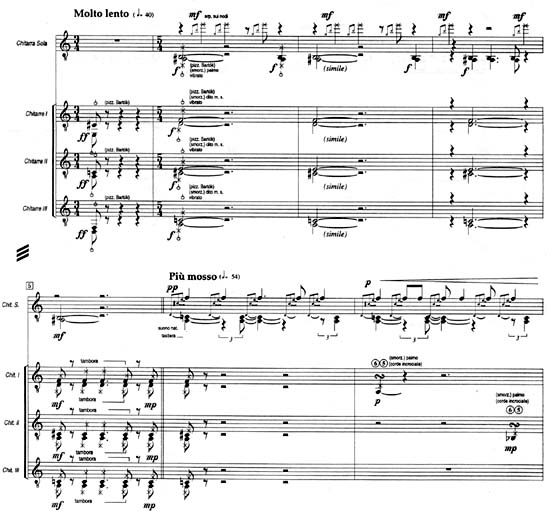
A concerto in three movements for guitar and guitar ensemble, based on the La Folia theme and the name B.A.C.H.
| |
Duration: 1'23", 409 Kb.( 24Kb/s, 11KHz) |
| Opening of Bachs Folia Konzert | © Pessina, used with permission |
|---|---|
 |
|
- Marchione, Carlo and the ensemble of guitarists (conducted by Roberto
Pinciroli)
- Written for Chitarrissima 1997 (Scuola di Alto Perfezionamento Musicale di Saluzzo), an annual stage for guitar-orchestra playing.
- Performance August 31, 1997 in Saluzzo (north-west Italy)
- Duration: approximately 20 minutes
- not published yet
- The website of Carlo Marchione is to be found at http://www.carlo-marchione.de
| |
Duration: 1'15", 294 Kb.( 32Kb/s, 16KHz) |
| Opening of Variazioni su Les Folies d'Espagne | © Pessina, used with permission |
|---|---|
 |
|
- Rogliano, Marco (violin)
- Written for the prize-giving of the 3rd Concorso di Composizione 'Franco Evangelisti'
- Performance: May 20, 1990 Palazzo Ru-spoli - Sala del Pattinaggio in Nemi (Rome, Italy)
- Duration: approximately 8 minutes
 Only distant fragments of the Folía theme are there. Perhaps it is better to say that the repetitive intervals remind the listener of a variation technique similar to the Folía. Perceptively hinting at possibilities to recall fading memories and lost times at the touch of a key.
- Alberti, Alfonso (piano solo) 'Dispositions furtives'
- Released 2009 by Col Legno compact disc WWE 1CD 20285
- Duration: 3'07"
- Recording date: December 11-14, 2008 in Bartók Studio, Bernareggio, Milano, Italy
Sandrine Chantron plays Folies d'Espagne for harp |
- Chatron, Sandrine (harp solo) 'Le salon de musique de Marie-Antoinette'
- Released 2009 by Ambroisie Naïve compact disc NA 179
- Duration: 8'39"
- Recording date: June 2008 in the Musée de la Musique, Cité de la Musique, Paris, France
- Harp built by Erard, single-action, 1799. This instrument entered the collections of the Musée de la Musique in 1981.
In the slipcase of La Simphonie du Marais 'André Philidor, Marches, Fêtes et Chasses pour Louis XIV' released by Virgin Veritas compact disc 7243 5 61778 26 is stated:
André Philidor's music does not seek to be inventive, aiming instead to be appropriate to the circumstance; it reflects in form and style the influence of Lully. In Les Folies d'Espagne written in collaboration with Lully on the fashionable air of La Folia which inspired so many composers, the eight-bar ostinato theme of adjacent notes is taken up in six couplets, or variations, the fourth and fifth including a nimble diminution for bassoons
| |
Duration: 11'21", 10.640 Mb (128Kb/s, 11500 Hz) |
Folia à 2 for alto and tenor recorders is comprised of nine variations in a wide variety of style and moods. The last variation is a chaconne and is thus a set of variations within a larger set. I have composed a number of Folia settings including one for alto recorder with piano, for recorder trio (SAT) and recorder quartet (SATB - this won a prize in the 2007 American Recorder Society Composition Contest in Chicago), a symphonic setting for concert band, variations and fugue for organ, and a vocal version (soprano & alto) to the text of Ps.117, Laudate Dominum. A setting for recorder and guitar is in progress.
Apart from my attraction to the inherent beauties of the Folia, I enlist it because audiences and performers are engaged by music which offers something familiar and at the same time, paradoxically, something different, which of course variations are by their very nature. I would like to appear in the Guiness Book of World Records for having composed the greatest number of Folia variations, but fear that ultimately, I am too lazy for so lofty a goal.
I composed the Folia à 2 in February 2008 and recorded it in my home studio on 28 May of the same year with my colleague, Scott Paterson. Scott teaches recorder at the Royal Conservatory of Music in Toronto. By training, I am an oboist, but like many oboists, am able to manage the recorder when pressed.
.
- Anthony St. Pierre (tenor recorder) and Scott Paterson (alto recorder)
- Duration: 11'21"
- Recording date:May 28, 2008 Canada
- Further information about the composer/performer Anthony St. Pierre can be found at http://pages.ca.inter.net/~abelc/astpstudio.html
William O'Meara plays La Folia Variations & Fughetta for Organ |
- William O'Meara
- Duration: 8'37"
- Composed 2004 in Canada
- Performed on the Casavant Opus 3907 organ at St. Michael's RC Cathedral, Toronto, 3 manuals, 56 stops, 76 ranks (Casavant frères, organbuilders 2015
- Date 22 May 2022
- You can find this composition at YouTube
https://www.youtube.com/watch?v=M048YREJoGY - Score available from IMSLP: https://imslp.org/wiki/La_Folia_Variations_%26_Fughetta_for_Organ_(St._Pierre%2C_Anthony
 Folia variations for a recorder-quartet where voices and theme shift in time.
| |
Duration: 7'12", 6.772 Mb (128Kb/s, 44100 Hz) |
I composed this quartet for the Chicago Chapter of the American Recorder Society in 2007. There are seven variations, but some are conjoined such that one perceives an extension of one into the next, rather than an altogether new variation. Some of the variations are rather traditional; others are more adventurous with respect to harmony and metre.
- Anthony St. Pierre (soprano recorder), Scott Paterson (alto recorder), Tatsuki Shimoda (tenor recorder), Takayo Shimoda (bass recorder)
- Duration: 7'12"
- Performed and recorded 28 December, 2009 in Canada
- Further information about the composer/performer Anthony St. Pierre can be found at http://pages.ca.inter.net/~abelc/astpstudio.html
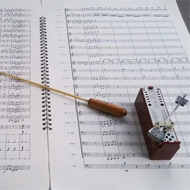 Folia variations to perform for a standard concert band with variations which take all sorts of moods from playful to mournful, from bombastic monumental to intimate and cosy and all shades in between.
The Metropolitan Winds (Toronto) conducted by Travis Grubissi |
This set of nine symphonic Folia variations with a coda is for a standard concert band. As in all my Folia settings, I have aimed for variety in tempi, tonality, texture, meter etc. rather than the mesmerizing continuity one associates with traditional Folias. If you listen carefully, you'll discern the English Royal Anthem (God Save the King/Queen). The score and parts are available for performance or recording by contacting me at astpierre@ca.inter.net
- The Metropolitan Winds (Toronto) conducted by Travis Grubissi
- Duration: 9'15"
- Composed in 2004 in Canada, performed 28 January 2024 at the Meridian Arts Centre, Toronto, Canada
- Further information about the composer/performer Anthony St. Pierre can be found at http://pages.ca.inter.net/~abelc/astpstudio.html
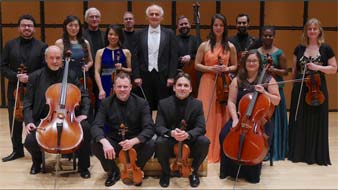 La Folia appears along with fragments of tunes by J.S. Bach, F. Couperin and Ravel
- Sinfonia Toronto, conducted by Nurhan Arman
- Duration: 21'35"
- Composed in 2021 in Canada
- You can find this composition at https://www.reverbnation.com/anthonystpierrecomposer/song/32978402-fanfare-folia-forlane--furia
- Recording generously funded by Kurt and Maura Jung
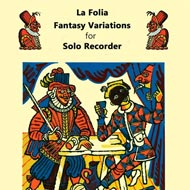
- Anthony St. Pierre (studio devices)
- Duration: 5'36"
- Composed in 2019 in Canada
- You can find this composition at YouTube
https://www.youtube.com/watch?v=rqpcOc-97kE - Further information about the composer/performer Anthony St. Pierre can be found at http://pages.ca.inter.net/~abelc/astpstudio.html
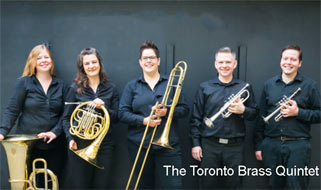
The Toronto Brass Quintet plays Brassafolia |
- The Toronto Brass Quintet: Michael Fedyshyn, Robert Weymouth (trumpets); Jesse Brooks (horn); Megan Hodge (trombone); Jen Stephen (tuba)
- Duration: 9'01"
- Composed 2020 in Canada
- Recorded in the Winchester Street Theatre (Studio C), Toronto on 30 October 2021 with a stereo pair of AKG 414 microphones
- You can find this composition at YouTube
https://www.youtube.com/watch?v=Vf3RNvH5Qkc - Score and parts available at https://imslp.org/wiki/Brassafolia_(St._Pierre,_Anthony)
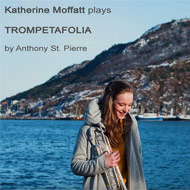
Katherine Moffat plays Trompetafolia for trumpet solo |
- Katherine Moffat
- Duration: 6'36"
- Composed 2021 in Canada
- You can find this composition at YouTube
https://www.youtube.com/watch?v=vZJDxFMrXYA
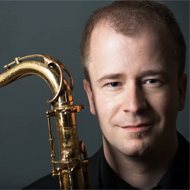
Mike Wark plays Sassofolia |
- Mike Wark
- Duration: 6'44"
- Composed in 2021 in Canada
- You can find this composition at YouTube
https://www.youtube.com/watch?v=JTHrsdjdhGA
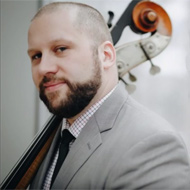
Jesse Dietschi plays Bassafolia |
- Jesse Dietschi
- Duration: 7'56"
- Composed in 2021 in Canada
- You can find this composition at YouTube
https://www.youtube.com/watch?v=31IT8orxy1I
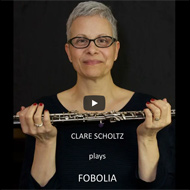
Clare Scholtz plays Fobolia |
- Clare Schotz
- Duration: 6'53"
- Recorded on 13 August, 2022
- Composed in 2022 in Canada
- You can find this composition at YouTube
https://www.youtube.com/watch?v=mLH8DPA3pqU - Score available through IMSLP: https://imslp.org/wiki/La_Fobolia_(St._Pierre%2C_Anthony
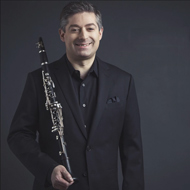
Peter Stoll plays 5 variations on 'La Folia' |
- Peter Stoll, unaccompanied clarinet and bass clarinet
- Duration: 6'16"
- Composed in 2022 in Canada
- Recorded on 10 July, 2022
- You can find this composition at https://www.youtube.com/watch?v=CevIH4AhGW8
- Music available at IMSLP
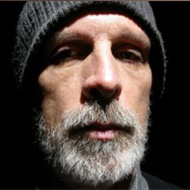
Anthony St. Pierre plays Bassafolia |
- Anthony St. Pierre
- Duration: 5'56"
- Composed in 2021 in Canada
- You can find this composition at https://www.reverbnation.com/anthonystpierrecomposer/song/32758105-follies-faciles
- Music available at IMSLP https://imslp.org/wiki/Category:St._Pierre%2C_Anthony

Dan Murphy percussion instruments |
- Dan Murphy
- Duration: 7'57"
- Composed in 2021 in Canada
- You can find this composition at YouTube
https://www.youtube.com/watch?v=8aF5Vz-vKAY - Music available at IMSLP https://imslp.org/wiki/Category:St._Pierre%2C_Anthony
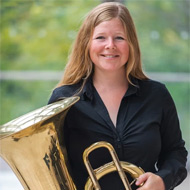
Jen Stephen plays unaccocompanied F tuba |
- Jen Stephen
- Duration: 7'14"
- Composed in 2021 in Canada
- Recorded 25 July 2021 in Church of the Ascension, Don Mills, Ontario
- You can find this composition at YouTube
https://www.youtube.com/watch?v=YiQr4-OG5JQ - Music available at IMSLP https://imslp.org/wiki/Category:St._Pierre%2C_Anthony
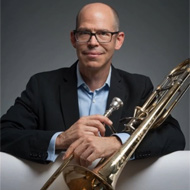 David Pell is the principal trombonist of the Hamilton Philharmonic Orchestra and bass trombonist of the National Ballet Orchestra. He teaches trombone at the University of Toronto's Faculty of Music.
David Pell plays Trombofolia |
- David Pell
- Duration: 8'06"
- Composed in 2023 in Canada
- Recorded 3 June 2023, Toronto
- You can find this composition at YouTube
https://www.youtube.com/watch?v=ycpl0M3gqf4 - Music available at IMSLP https://imslp.org/wiki/Category:St._Pierre%2C_Anthony
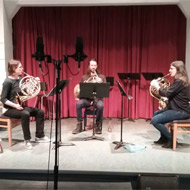
Jessie Brooks, David Quackenbush, Christine Passmore play La Folia a Trè Corni |
- Jessie Brooks, David Quackenbush,Christine Passmore
- Duration: 6'01"
- Composed in 2022 in Canada
- Recorded 8 April 2022 in Heliconian Hall, Toronto
- You can find this composition at YouTube
https://www.youtube.com/watch?v=QNqRMbAvupE - Music available at IMSLP https://imslp.org/wiki/Category:St._Pierre%2C_Anthony
Anthony St. Pierre |
- Anthony St. Pierre
- Duration: 12'17"
- Composed in 2021 in Canada
- You can find this composition at YouTube
https://www.youtube.com/watch?v=rqSLujejopo
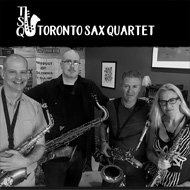
Toronto Sax Quartet |
- Toronto Sax Quartet (Colleen Allen, soprano; Andy Ballantyne, alto; Jeff King, tenor; Pol Coussée, baritone)
- Duration: 12'10"
- Composed in 2021 in Canada
- Recorded in the Array Space studio, Toronto in March 2022 using a stereo pair of AKG 414 microphones.
- Score & parts available from: https://imslp.org/wiki/Saxofolia_(St._Pierre%2C_Anthony
- You can find this composition at YouTube
https://www.youtube.com/watch?v=VGWXWAnK6yY
Anthony St. Pierre introduces each variation with a prelude for solo alto recorder (variation 1), sopranino recorder (variation 2) and soprano recorder (variation 3).
| |
Duration: 1'57", 1.8 Mb (128Kb/s, 44500 Hz) |
| |
Duration: 1'02", 1.2 Mb (96Kb/s, 44500 Hz) |
| |
Duration: 2'01", 1.9 Mb (128Kb/s, 44500 Hz) |
.Pentafolia is a set of three brief trio variations for recorders of La Folia
using pentatonic scales. The diatonic pentatonic scale is characteristic of Celtic folkmusic. The five “black notes”
of the keyboard octave, or their transposition to white notes, form such a scale. This scale may be formed from any five
consecutive tones of the circle of fifths. It contains no semitones. The second variation uses a hybrid scale composed of elements of various oriental scales. (Kumoi, Slendro, and Hirojoshi) Semitones are present in these scales.
The first and third variants employ the diatonic pentatonic scale and juxtaposed transpositions of it. In the
first and second variations, only the melody is strictly pentatonic; however
pentatonicism predominates in the accompanying voices of the third. Preceding
each variation is a brief unaccompanied variant introducing the scale of the
ensuing ensemble variation.
The composer performs the prefatory solos. In variation I, the players are: Anthony St.Pierre,
alto/Janos Ungvary, tenor/ Takayo Shimoda, bass, and in variations 2 and 3:
Scott Paterson, alto/Anthony St. Pierre, tenor/Takayo Shimoda, bass(2) & great bass(3). The recording
took place in the home studio of the composer in October and November 2008.
.
- Anthony St. Pierre (tenor and alto recorder), Janos Ungvary (tenor recorder), Takayo Shimoda (bass and great bass recorder), Scott Paterson (alto recorder)
- Duration: 5'00"
- Composed in the home studio of the composer 2008 in Canada
- Further information about the composer/performer Anthony St. Pierre can be found at http://pages.ca.inter.net/~abelc/astpstudio.html

Anthony St. Pierre & Lawrence Green recorded 8 November 2014 |
Corelli’s famous Folia was the inspiration for my Pholia for alto recorder and piano(2006). The purpose for composing it was to provide a modern alternative to the Corelli, which, although composed for the violin, has long been a staple of the recorder repertoire. (The edition for recorder appeared just two years after the original violin version.)
Although not quite as lengthy, the Pholia offers a wider variety of keys, modes, harmonies, textures, and meters than the Corelli. The piano is not subordinate to the recorder in the Pholia, but participates in a capacity equal to the recorder's.
- Anthony St. Pierre (recorder) & Lawrence Green ( piano)
- Released 2014 by Anthony St. Pierre
- Duration: 8'42"
- Recording date: 8 November 2014 in the Church of the Ascension, Don Mills, Ontario, Canada
- The website of the composer https://anthonystpierre.wordpress.com/compositions/
Theme and two variations for harpsichord
| |
Duration: 1'09", 1091 Kb.( 128Kb/s, 44100Hz) |
|
2 page in pdf-format, 315 kB |
.I have enjoyed writing these variations of "La Folia" almost or just as much as many other composer(s). It is a piece that dates back hundreds of years, and it is a honor to write a variation off this progression. I also enjoy this piece because this progression has so much potential and inspiration, and it is a basic sign to composers all around the world, the endless possibilities there are in music. In my version, I added an extra measure/chord value in addition to the original version (The N6/ Neapolitan Chord) before the dominant. In my music, every piece of mine which consists in a minor key has to include the N6 chord, and having that in the La Folia I have written has a fun, and beautiful way to distinguish my style and interpretation of this piece. I am a classical musician and ongoing student of composition looking to write for all kinds of music and La Folia has been a great start. I encourage all young and amateur composers to study this form to get a lot of practice and appreciation for writing music. Enjoy this short arrangment of "La Folia" .
- Released by Stephen Pine 2010
- Duration: 1'09"
- Recording Date: 2010
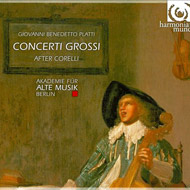
In this very short piece the first 8 bars of the Folia theme are included halfway the piece hidden between the lines of its own theme. You have to have your ears tuned for the Folia to hear the theme emerge. Maybe it is no coincidence to quote the Folia theme since the Concerti Grossi were based upon Opus 5 by Arcanglo Corelli (of which no. 12 is the famous Follia).
The Vivace starts at 7'13", the theme emerges 8'08"-8'16" |
Andrew Siegel wrote in an e-mail 24 June 2016:
I believe that I have found a Folia theme in a piece of music that is not listed on your web site. The composer is Giovanni Benedetto Platti. The album that I have is called "Platti: Concerti Grossi after Corelli. Track 20 is the one of interest. This is the fourth movement, the Vivace, of his Concerto Grosso No. 5 in G Minor. It is a short movement, but it works the first few notes of the late Folia theme into its melody many times. It is noticeable from the beginning, but is most obvious starting at 0:56. It is not derived from the Corelli variations; as far as I know, it is unique.
- Akademie für Alte Musik, Berlin, directed by Georg Kallweit 'Concerti Grossi after Corelli'
- Released 2008 by Harmonia Mundi compact disc 901996, re-released 2013 by
- Duration: 1'28"
- Recording date: unknown
In the compact disc 'Altre Follie' by Hespèrion XXI the composer John Playford is mentioned as the composer of Farinell's Division, because it was published by John Playford. All other performers indicate Farinel(li) as the composer of this piece.
Savall is rather consequently with these labels because his previous arrangement of a performance by an anonymous keyboard Folia collected by Antonio Martín y Coll was labeled as a composition by Martín y Coll as most performers do.
Obviously based upon the variations and fugue by Manuel Maria Ponce, but the electric guitars makes an entirely different approach to this small piece.
- Pizzarelli, Bucky & John 'Generations'
- Released 2007 by Arbors records compact disc ARCD 19345
- Duration: 1'28"
- Recording date: May 17, 2006 at Nola Recording Studios, New York City, USA
- the original manuscript is conserved at The Private Library Spencer in London
In 1929 Andres Segovia sent the theme to Ponce with the request to write 12 or 14 'brilliant' variations for classical guitar.
There is some confusion about the exact manuscript of Ponce's variations, but Angelo Gilardino has sorted things out.
First of all the impression might arise that Ponce wrote a lot more variations but only 20 were published together with a fuga for instance according to the slipcase of the HMV Segovia Double CD set of 78 rpm recordings: there is a separate Postlude that Segovia recorded, which according to the sleevenotes is one of those variations originally rejected by Segovia. However Segovia recorded that Postlude one year after having recorded the cycle of Variations.
Angelo Gilardino published in the mailinglist cguitar-list@eskimo.com February 2000:
The piece is published by Ediciones Musicales Yolotl and everybody
can read it and judge how it can be related to the Variations.
Besides, the original manuscript of Ponce's Variations was lost in the Segovia's
'fugue' from Barcelona at the beginning of the Spanish civil war on 1936.
At that epoque, the work had already been published by Schott, and it was
customary of Segovia to forward to the publisher only the manuscripts of his
own editions, and not the original ones: then, we may have little or no hope
to rescue something from Ponce's hand in the Schott archives.
I believe that the work has been published with no restrictions, because its form is perfect as it stands: you have in fact the unique variation which is not in either major or minor D key, placed exactly at the middle of the cycle: the 11th variation, is in fact a Siciliana in C major - not casually placed at that point in order to break in two even halves the persistence of the tonics in D.
Segovia did a lot of editing on the text - Gilardino has counted and re-addressed no less than 100 details - but he is pretty sure Segovia did not suppress any variation: Where he did that - in the 'Théme varié et Finale'
- there is an evident problem of musical form (of this piece we have the Ponce
manuscript anyway and we can see the construction originally conceived by
the author).
Secondly there is some confusion about the theme because in some literature
is mentioned that Segovia asked Ponce for a more elaborate theme after receiving
the manuscript, because the Segovia recording of 1930 does not include the
Ponce's theme but rather a conventional setting closer to Arcangelo Corelli
than to Ponce.
Ponce did cover a lot of different guitar techniques in these variations.
Only theme & variations 1, 2, 3, 4, 15, 16, 19 and 20 directly recognizable as being derived from the theme (the rest is more elaborate) IMHO but who cares? It's great music which emphasizes colour and expression of the Folia-theme with some remote variations.
|
|
Duration: 25'46", 55 Kb. |
| Theme of Variations sur 'Folia de España' et Fugue | Doigtèe par Andrés Segovia |
|---|---|
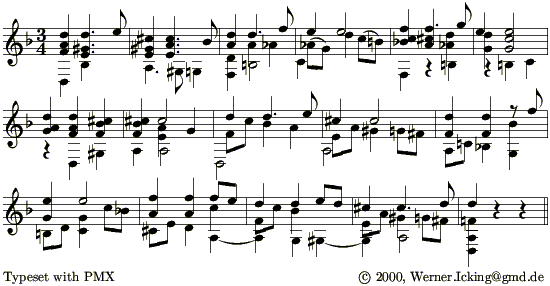 |
|
- Abiton, Gerard (guitar) 'Guitare +, Vol 27 Manuel M. Ponce - Complete Guitar Works (3)
- Variations et Fugue sur 'Folías de España'
- Released 1998 by Mandala compact disc MAN 4926 (Distribution Harmonia Mundi HMCD 78)
- Duration: 26'33"
- Recording date: April 1995
- Artzt, Alice (guitar) 'Guitar music by Manuel Maria Ponce'
John W. Duarte wrote in 1982 for the vinyl recording:
The theme of the 20 Variations and Fugue on 'La Folia de España, used by uncounted composers from Corelli, through Liszt to Rachmaninov, is quintessentially Iberian - and far older than the flamenco now popularly regarded as typically Spanish. The Folia(s), essentially a ground (harmonic progression) carrying a somewhat varying melody, appears to have originated in Portugal, dating from the late 15th century and connected with singing and dancing. Evidence of its adoption in Spain dates from the early 16th century and, early in the 17th century, it was established as a popular dance supported by singing and, instrumentally by five-course guitars and sonajas - metal discs attached to a metal frame, distantly related to the tambourine and still used in Mexico. In 1611 Covarrubias commented in his Tesoro de la lengua castellana o espanola that, so noisy and energetic were the proceedings, the name 'Folia' (madness) was appropriate. In its earlier form the Folia had a stress pattern that implied a hemiola (3/3 versus 3/4 or6-8) but the later one, that used by Ponce and most other composers, has one which the accent falls on the first beat of the (consistently) 3/4 bar and follows the harmonic scheme now familiar through numerous sets of variations. Ponce, like other post-baroque composers, treats the theme with more dignity than abandon and, in line with the character of the succeeding variations, provides it with un-traditional harmonies. The 20 variations are built on melodic elements and/or variants of the original harmonic framework, exploiting what amounts to a statement of the guitar's conventional capabilities. The fugue has a subject that paraphrases the melodic line of the Folia, proceeds to a three-voice stretto and a pedal point that ascends, with mounting tension, almost to the upper limit of the fingerboard, before descending to a final, triumphant statement of the subject and a brief coda. This work has been fittingly described as the 'Old Testament' of the guitar's 20th-century repertory.
- Title: 20 variations and fugue on 'La Folia' de España (1929)
- Released 1982 by Meridian LP E77041
- Duration: 23'40"
- Recording date: 1982 at Meridian Studios, Sussex
- Attademo, Luigi 'Folías; Sanz, Giuliani, Ponce, Gilardino, Sor,
Ohana'
 Luigi Attademo wrote for the slipcase (translation by Maya Bodo):
Ponce is another non-guitarist composer connected to Andrés Segovia’s figure, whose compositions are of great relevance. He is surrounded by a traditional musical language, and this makes harmony the real core of his expression. He makes the effort to compose a monumental work, that is inspired by piano compositions, and that ends - not by chance - with a fugue. He re-composes the theme again and again in several different ways, broadening its shape. The result of this process is a synthesis of his musical know how melded with some kind of poetry of Segovian origin, which can be considered a milestone in the way guitar sound has been conceived.
- Released 2001 by the Magazine 'Guitart' compact disc GUIT 2026
- Duration: 25'35" All variations indexed
- You can listen to a fragment in MP3 at the website of Luigi Attademo http://www.luigiattademo.it/
- Recording date: March 25 and 29 2001 at Quality Audio, Vercelli, Italy
- Guitar by Carlo Raspagni, 1996
- See also the page Recommended Folia-recordings
- Blanco, Diego (guitar) 'Manuel Ponce, music for the guitar'
- Title: Variations on Folias de Espagna
- Released 1993 by BIS compact disc CD-255
- Duration: 27'35"
- Recording date: 1976
- Bungarten, Frank (guitar) 'Frank Bungarten spielt Barrios & Ponce'
Frank Bungarten (translation by Christopher Oakden) wrote for the cover about this piece of Ponce:Unlike Barrios, Manual Ponce was first encouraged to compose for the guitar by Andres Segovia, whose influence is clearly discernible in the numerous works written as a result. With the Folia-Variations arose a work which, in its demands and range, surpassed everything hitherto written for the guitar, and which embraced numerous historical implications and aspects concerning the instrument.
In this context the use of the ancient melody 'La Folia' is significant. Ideally suited to variation technique, as musical history has confirmed on many occasions, it is also connected with the guitar in that both have their common roots in Spain. The original key of D minor was retained, but already the theme appears in a harmonisation spiced by chromatic alteration and certain individual variations allow the characteristic span of the theme to shine through only very distantly.
Ponce, whose well-versed, contrapuntal manner of writing combines baroque, late romantic and folkloristic elements of style with the utmost ease, reveals a wide range of mood and expressive gesture in twenty character-variations bringing the work to a climax with in a triumphant final fugue.
Techniques specific to the guitar, such as Rasgueado and Tremolo are employed to musical, dramatic ends instead of merely for effect and contribute to proving the guitar an instrument worthly in the whole spectrum of it's expressive possibilities.- Released 1982 by Teldec 'Telefunken-Decca' Schallplatten GmbH Hamburg LP DSM 68701
- Duration: 27'35"
- Recording date: April 1982 in the FAR Studios
- Guitar built by Yuichi Imai 1981, played with Aranjuez strings
- Carlevaro, Abel (guitar) 'Bach: suite pour luth, Ponce: Variations et fugue sur la Follia de Corelli, Guitar Recital by Abel Carlevaro'
- Title: Variations et fugue sur la Follia de Corelli
- Released by Ducretet-Thomson LP 300C122
- Duration: unknown
- Recording date: unknown
- Carlevaro, Abel (guitar) 'Recital de Guitarra: Manuel Ponce, Federico Moreno Torroba, Isaac Albéniz'
- Title: Variaciones sobre la "Folia de España" y "Fuga"
- Released c. 1960 by Antar Hi-Fi (Recorded in Uruguay) LP ALP 1002
- Duration: unknown
- Recording date: unknown
- Carlevaro, Abel (guitar) 'Compositores Americanos del Siglo XX'
- Title: Variaciones sobre "Folía de España" y Fuga
- Released 1980 (p&c) by Sondor compact disc 4.120-2 (although the compact disc as a medium was effectively introduced in 1984!)
- Duration: 21'20"
- Recording date: not mentioned in the slipcase
- Chivers, Dana (guitar) The Chivers collection, masterpieces for guitar'
- Title: Variations sur "Folias de España" et Fugue:
- Released 2012 by Pleaides compact disc
- Duration: 21'08"
- Recording date: unknown
- Clerch, Joaguín (guitar) 'Las Folias de España'
Quoting the slipcase:A lot of things can be said about: 'Las Folias de España' but I will only repeat what Segovia said: This work is as important for the guitar as Bach's Chaconne in D minor is for the violin'
- Title: Variaciones sobre 'Las Folías' de Espagne'
- Released by Stone, Czech Republic compact disc AH 0008-2131
- Duration: 28'54"
- Dieci, Andrea (guitar)
- Title: Variations sur 'Folia de España' et Fugue
- Released as compact disc MAP - cd g 0024
- Dienhart, Petra (guitar) 'Variations'
 Quoting the slipcase:
The monumental Folias de España of Ponce has long been a tour de force, taxing the player’s technique and powers of interpretation. Responding to a request from Segovia, Ponce produced a work of such scope it has been referred to as the guitar's Old Testament . . . Tansman repeatedly referred to the musical heritage of various generations. . . it is possible to trace in his works patterns borrowed from the Baroque, classicism, and romanticism, from Polish folklore and popular music. . . oriental music, jazz, as well as various other musical styles of the 20th-century.
- Title: Variations and fugue on "La Folia de España"'
- Released 1997 by FSM compact disc FONO FCD 97262
- Duration: unknown
- Recording date: unknown
- Eskelinen, Ismo (guitar) 'Manuel Ponce: Guitar works
- Title: Variations sur 'Folia de España et Fugue'
- Released by ALBA Finland, compact disc ABCD 185
- Duration: 24'48" specified: 1 Theme Lento 1'12", 2 Var. I Poco vivo 0'46", 3 Var. II Allegretto mosso 0'47", 4 Var. III Lento 1'23", 5 Var. IV Un po agitato 0'36", 6 Var. V Andantino 0'47", 7 Var. VI Allegretto espressivo 0'37", 8 Var. VII Andante 1'28", 9 Var. VIII Moderato 0'46", 10 Var. IX Andantino affettuoso 1'43", 11 Var. X Prestissimo 0'34", 12 Var. XI Andantino 1'29", 13 Var. XII Animato 0'55", 14 Var. XIII Sostenuto 1'23", 15 Var. XIV Alegro non troppo 0'35", 16 Var. XV Allegro moderato energico 0'47", 17 Var. XVI Moderato 1'21", 18 Var. XVII Allegro ma non troppo 0'40", 19 Var. XVIII Allegro scherzando 0'48", 20 Var. XIX Vivo e marcato 0'51", 21 Var. XX Andante 1'40", 22 Fuga Moderato 3'30"
- Recording date: unknown
- Fernandez, Eduardo (guitar) 'Ponce Variations'
- Released ?
- Fisk, Eliot (guitar) 'Eliot Fisk Guitar Virtuoso, Latin American Guitar'
- Title: Folias de España, 20 variations and fugue for guitar
- Released 1981 by Musical Heritage Society, Tinton Falls, N.J. LP MHS 4233
- Duration: 26'59"
- Recording date: unknown
- Fisk, Eliot (guitar) 'The Latin American Guitar'
 Eliot Fisk wrote on the backside of the cover:
The folia is a popular piece of unparalleled longevity preserved in more than 1000 sources. As with most things popular, it is much used and very old. The origin of this music is unknown, much of its history obscure' (source: John Ward in The Vihuela da Mano and its music. Unpublished Ph. D. dissertation New York University, 1954)
At some point in its early history the folia (sometimes spelled with one 'l', sometimes with two, sometimes under a variety of altogether different names) became associated with Spain and hence described as the 'Folia de la España' (in French, 'folies d'Espagne'). I have always been tempted to see in this title a distant relationship to the principal modern use I know of the word folies - that of the infamous Parisian dance hall, the 'Folies Bergère' This association is not based wholly on irrelevance, for forms similar to the folia - the chaconne, passacaglia, and sarabande for example, were forever coming under the sternly disapproving glare of 16th- and 17th-century ecclesiastical authority. Gradually these forms lost something of their original character and settled down to a more sedate and stylized existence. The hypnotic power power of the folia has captured the imagination of a great many musicians in all times and places, including Dowland, D'Anglebert, Handel, J.S. Bach, Corelli, and Liszt. And so it could hardly be appropriate that the Mexican composer Manuel Ponce (1882-1948) should turn to this ancient source when composing a work for the Spanish virtuoso, Andres Segovia.
Ponce musical language is one of great subtlety and understatement. Especially notable is his treatment of meter (only six of the variations share the triple meter of the theme). Phrase lengths are also freely altered - six, seven, or even 10 measure groups replacing the 2+2+4=8 symmetries of the theme. In addition, Ponce's harmonic vocabulary is richly endowed with chromatic chords which mediate against the potentially monotonous, ubiquitous tonality of D minor, the tonality of all but four of the variations. Throughout, Ponce reveals a tendency to migrate from the A B A structure. Ponce's exploration of contrapuntal possibilities is evidenced in his treatment of the opening theme, in which four individual parts may be isolated, in the two canonic variations (five and thirteen), and, climactically, in the noble Fuga which crowns his monument to the 'folia'.- Title: Tema, 20 Variaciones y Fuga sobre La Folias de la España
- Released 1981 by Music Masters LP Stereo MM 20008
- Re-released 1993 by BMG compact disc 01612-67127-2
- Duration: 27'00"
- Source: Schott & Sons
- Fostier, Johan (guitar) 'Guitar recital'
 John W. Duarte wrote for the slipcase:
In December 1929 Segovia wrote to Manuel Ponce, asking him to write a set of variations on the theme of the Folias, the earliest form of which, he said, was Spanish and for the lute. In fact the Folias originated in sixteenth-century Portugal as a wild street dance and in passing into Spain it evolved into a stately dance with changed rhythmic and harmonic structure. Thence it travelled to Italy and, taken by guitarists of whom Francisco Corbetta was one, to France. Its history in this later form is somewhat complex and reflects its wide popularity. Together with the above letter Segovia sent the score of Corelli’s famous variations and suggested that if Ponce did not wish to put his name to the work they might attribute it to Giuliani. Ponce succeeded briefly in ‘passing for’ Weiss - but for Giuliani? Fortunately it was never put to the test.
.
In Segovia’s recording of 1932 the theme is given in a ‘bare-bones’ period form but in the published edition it was adorned in chromatic dress, as it appears in this and all later recordings. Though Segovia had asked for twelve to fourteen variations there are only nine in his recording. As the published edition contains twenty variations it seems that the recording was made whilst the work was still evolving. Moreover, while the earlier (recorded) variations clearly follow the harmonic ground of the theme, the later ones diverge, suggesting that Ponce’s imagination had by then adventurously moved into new pastures. The Postlude, recorded in 1931, is overtly based on the harmonic ground, which indicates that there may have been other variations which Segovia set aside but re-titled. The subject of the extensive fugue, complete with pedal point and stretto, is based on the first note in each of the opening bars of the theme. Segovia asked that the variations should explore a wide range of musical and guitaristic textures; they do so and, in its totality, this work has been fitly described as ‘The guitar’s Old Testament’- Title: Variations on Folia de Espana and Fugue
- Released 2002 by Naxos compact disc 8.557039
- Duration: 25'37"
- Recording date: April 26-30, 2002 at St. John Chryssostom Church, Newmarket, Ontario, Canada
- Freire, Joaquim (guitar) 'Ponce, Villa-Lobos, Ginastera'
- Released 1990 by Leman Classics compact disc LC 42601
- Duration: 25'04"
- Recording date: July 1990
- In the slipcase is mentioned that the variations were composed in the year 1928.
- Galbraith, Paul (6-string guitar) 'Music for solo-guitar by Manuel M.
Ponce'
- Variations and fugue on 'Las Folias de España (1929)'
- Released 1990 by Watercourse Eclectic Records compact disc
- Ghiglia, Oscar (guitar) 'Variations sur Folias de Espana et Fugue - Sonatina
Meridional - Sonata III - 4 Piezas'
- Title: Variations sur 'Folias de Espana' et Fugue
- Released June 2000 by Stradivarius compact disc STRAD33568 - 8011570335685
- Duration:
 01 Thème - Lento 1'09"
02 Variation I - Poco vivo 0'57"
03 Variation II - Allegretto Moso 1'09"
04 Variation III - Lento 1'45"
05 Variation IV - Un po' agitato 0'58"
06 Variation V - Andantino 0'58"
07 Variation VI - Allegretto expressivo 0'58"
08 Variation VII - Andante 1'29"
09 Variation VIII - Moderato 1'04"
10 Variation IX - Andantino affettuoso 1'40"
11 Variation X - Prestissimo 0'46"
12 Variation XI - Andantino 1'59"
13 Variation XII - Animato 0'59"
14 Variation XIII - Sostenuto 1'15"
15 Variation XIV - Allegro non troppo 0'44"
16 Variation XV - Allegro moderato energico 1'14"
17 Variation XVI - Moderato 1'59"
18 Variation XVII - Allegro ma non troppo 0'49"
19 Variation XVIII - Allegro scherzando 1'00"
20 Variation XIX - Vivo e marcato 1'00"
21 Variation XX - Andante 1'44"
22 Fugue - Moderato 3'42"
- Recording date: June and July, 1999 place unknown
- Gloeden, Everton (guitar) 'Recital'
- 20 Variaciones y fuga sobre la Folia de Espana (1929)
- Released 1995 by EGTA compact disc 107.622 EGTA
- Duration: 23'47"
- Recording date: July 16-19, 1995 in Teatro Carlos Gomes, Blumenau, SC.
- Sheet music: B. Schott's Sohne, Heidelberg
- Gregory, Paul (guitar) 'Tango'
- Title: Theme, twenty variations and fugue on Folia de Espana
- Released compact disc CC 4319-2
- Duration: 27'30"
- Holmquist, John (guitar) 'Las Folias de España'
- Released 1981 by Mendota Heights, MN Cavata LP CV 5001
- Duration: 25'07" (arrangement B. Schott's)
- Recording date: July-August 1980 and January 1981 in Hamline United Methodist Church St. Paul Minnesota
- Guitar built by Manouk Papazian, New York, 1968
- Hoppstock, Tilman (guitar) 'Manuel M. Ponce, variations and sonatas'
 Only variations 1, 2, 4, 7, 10, 9, 14-16, 6, 12, 18, 17, 19 and the fugue
are played in this performance.
Only variations 1, 2, 4, 7, 10, 9, 14-16, 6, 12, 18, 17, 19 and the fugue
are played in this performance.
Hoppstock wrote in the slipcase:Manuel Ponce created his variations [...] in 1929, making impressive use of a wide range of composing techniques. The 'character variation', a certain deracination of the thematic material as used by Reger, is brought to perfection here. An early Segovia recording presented only 10 variations and the fugue. It is interesting to note how very simple the theme was harmonized on this recording. At Segovia's prompting, for the printed edition Ponce then rewrote the theme in radically changed form actually a variation in itself - to form the basis for the 20 variations. Because I feel that the entire cycle is somewhat overlong and that not all the variations are of the same compositional quality, I have followed Segovias example and taken the liberty of cutting the work down to 14 variations and fugue. This then necessitated resequencing the variations more meaningfully. I have attempted to establish an inner cohorence in the way the work develops by grouping smaller blocks of variations together.
And at this juncture I must admit to using a technical trick. In my opinion, the heading Allegro non troppo does not adequately characterize the nature of Variation VII (originally no. 14). In order to present my idea of the tempo satisfactorily, I have performed bars 1-7 and 15-22 in tamba technique with a tuning fork. The fast alteration of normal plucking and striking with the tuning fork is not practicable in concert. The effect can only be created with the aid of modern mixing techniques.
It would certainly be of immense importance if the composer's manuscripts of the two major cycles, Sonata III and the La Folia variations were to be published some day, for only access to source documents makes it possible to fairly assess a performer's rationale for altering the original form of a work. At this point, I would like to express my heartfelt thanks to my friend, the great artist Angelo Gilardino, who kindly made the original manuscripts available to me.- Title:Variationen & Fuge u¨ber 'La Folia de España (Paris 1929)
- Released 2000 by Signum compact disc SIC X114-00
- Duration: Theme - Lento 0'57", 14 variations 12'01", Fuga - moderato 3'39"
- Recording date: January 01, 1998
- Guitar built by Kolya Panhuyzen
- Kavanagh, Dale (guitar) 'Britten & Ponce'
- Released 1995 by FSM Audio FCD 97 768
- Duration: 24'12" (including fugue of 3'22")
- Recording date: March 1995 at the Exaudio Studio, Cologne, Germany
- Guitar built by Kolya Panhuyzen
- Kavanagh, Dale (guitar) '20th Century variations'
- Released 2007 by Hänssler Classic
- Duration: 27'35" (including fugue of 3'22")
- Recording date: March 1995 at the Exaudio Studio, Cologne, Germany
- Guitar built by Kolya Panhuyzen
- Korhonen, Timo (guitar) 'Manuel Ponce guitar works, Timo Korhonen guitar'
- Released January 1, 1992 by Ondine compact disc ODE 770-2
- Duration: 25'06"
- Marchionda, Stephen (guitar) 'Manuel Maria Ponce, complete variations,
24 preludes'
John Duarte wrote for the slipcase:Stephen Marchionda plays 20 variations and fugue
Duration:26'21" direct link to YouTube
© 2001 ASV
In december 1929 Segovia wrote to Ponce urging him to write variations on Las Folias, which he believed to be of Spanish origin: in fact it began in Portugal, passed through Italy, by which time it had undergone major transformation, and thence to France. What Segovia sent to Ponce was a copy of the variations by Corelli, which he had recently heard and very much liked. Christopher Columbus was Italian, his request for financial support for his transatlantic venture was rejected by the Portugese - and finally accepted by the Spanish. The same 'triumvirate' thus lay at the roots of the proposed variations. It seems that Ponce wrote more variations than the 20 in the published edition, which forms the basis of today's performances. Why Segovia did not adopt them all is unknown. The Variations are based on meldoic elements and/or variations of the original harmonic framework. The Fugue,whose subject parafrases the melodic line of the Folias, proceeds to a three-voice stretto and a pedal point that ascends with growing tension before descending to a final triumphant statement of the subject and a coda. This work has been aptly described as the 'Old Testament' of the guitar's 20th-century repertory.[ ....]The form of theme and variations is one that suits the guitar well in that it allows the instrument to demonstrate the available range of textures and idiomatic effects. Ponce took advantage of the fact in four works, of which his treatment of Las Folias is the jewel in the crown.
- Based upon the Schott edition
- Released 2001 by ASV compact disc 43625 62492
- Duration: 25'08"
- Recording date: July 18-20, 2000 in the Parish Church of the Holy Trinity, Weston Hertfordshire
- Neuburger, Matthias (guitar) 'Transatlantico, Weiss and Ponce'
- Released 1998 by Ana Records
- Duration: 29'09"
- Recording date: not mentioned in the slipcase nor the date of the recording session
- Pizzarelli, Bucky & John 'Generations'
Obviously based upon the variations and fugue by Manuel Maria Ponce, but the electric guitars makes an entirely different approach to this small piece.
- Savijoki, Jukka (guitar) 'Manuel Ponce: Music for the Guitar'
- Released October 1, 1993 by Bis Records compact disc 255
- Scharrón, Eladio (guitar) 'Manuel M. Ponce, complete works for
guitar Vol. 1'
- Title: Folias de España, 20 variations and fugue for guitar
- Released 2000 by Centaur compact disc CRC 2487
- Duration: unknown
- Recording date: unknown
- Segovia, Andres edited and commissioned variations upon La Folia
- Published by B. Schott's Sohne c.1960 New York - Mainz.
Originally published B. Schott's Sohne 1932 Mainz - Score 22 p., 31 cm
- Publisher No. B. Schott's Sohne 33082, Series: Gitarren-Archiv 135
- Published by B. Schott's Sohne c.1960 New York - Mainz.
- Segovia, Andres (guitar) 'Recordings, 1927-1939'
Andres Segovia playing Ponce's Variations and Fugue on 'La Folia' in a 1932 recording. Segovia plays a truncated version of the piece in which many variations are removed and others are not in their proper place.
Duration:14'36" direct link to YouTube
© 1988 EMI- Title: Folies d'Espagne. Theme, variations et fugue
- Re-released 1980 & 1988 by EMI 2 compact discs mono, digitally remastered analogue recordings CDH 7 61048 2 -- CDH 7 61049 2 Series: Great recordings of the century.
- Duration: 14'35"
- Recording date: October 6 and 7, 1930 (still with the original theme which was adapted according to the rest of the (rather dark) variations by request of Segovia later that year).
- Segovia, Andres (guitar) 'The Young Segovia - Froberger, J. S. Bach, Tarrega,
et autres'
- Released Augustus 1, 1996 by Iron Needle compact disc (Mono) 1347
- Segovia, Andres (guitar) 'Andrés Segovia, portrait'
- Title: Folia de Espagna. Theme, variations with fugue
- Re-released 2003 by OSA TIM, The International Music Company AG 3 compact discs 221484-349/C
- Duration: 14'35"
- Recording date: October 6 and 7, 1930 (still with the original theme which was adapted according to the rest of the (rather dark) variations by request of Segovia later that year).
- Segovia, Andres (guitar) 'Andres Segovia, The EMI Recordings 1927-1939'
- Title: Folies d'Espagne, theme and variations and fugue
- Released 1979 by ANGEL 2-LP-set ZB 3896 (mono)
- Duration: 14'35"
- Recording date: October 6 and 7, 1930 (still with the original theme which was adapted according to the rest of the (rather dark) variations by request of Segovia later that year).
- Storms, Yves (guitar) 'Variations Folia de España'
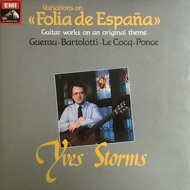 Peter Pieters wrote as introduction to Folies d'Espagne on the inside
of the cover:
Peter Pieters wrote as introduction to Folies d'Espagne on the inside
of the cover:
In our own times the Mexican Manuel Ponce, who wrote principally for the guitar, also composed some Follies; indeed, his most important work comprises no less than 20 variations followed by a majestic fugue.
- Title: Variations sur la Folia D'España (1930)
- Released 1983 by EMI Belgium 1A 065 1651791
- Duration: 29'23"
- Recording date not mentioned in the documentation
- See also the page Recommended Folia-recordings
- Szendrey-Karper, László (guitar) 'Guitar recital: Farkas, Huzella,
Kováts, Petrassi, Ponce'
Márta Sz. Farkas wrote as introduction to Folies d'Espagne on the backside of the cover:
Manuel M. Ponce (1882) was the founder of the national school of composition in Mexico, and the specific character of his work is due mainly to his use of the rich Mexican folklore elements. These features also prevail in his work Variations sur 'Folia de Espana' et Fugue (1930). Ponce dedicated this composition to Andrés Segovia. The Folia, a slow dance in ¾ rhythm and of Spanish-Portuguese origin, has served as the theme for many series of variations ever since the 17th century. Ponce, too employs it in this function. The theme introduced with classical simplicity, is followed by twenty variations. The last variation of the basic theme forecasts in outline the fugue that follows, and its theme - this fugue may also be regarded as a considerably enlarged variation.
- Title: Variations sur 'Folia de Espana' et Fugue (1930)
- Released after 1970 by Hungaroton LP LPX 11 629
- Duration: 26'20"
- Tursi, Sante (guitar) 'Manuel Ponce 4 piezas, Folia de Espana'
- Title: Theme, variations and fugue on Folias de Espana for guitar
- Released March 24, 1998 by Phoenix Classics, Italy compact disc 9703
- Williams, John (guitar) 'John Williams plays Ponce'
- Title: Folia de España and Fugue
- Released 1978 by CBS LP Columbia M 35820
- Duration; 24'14"
- Recording date: April 10-12, 1978 in the AIR Recording Studios, London England
- Williams, John (guitar) 'Latin American Guitar Music by Barrios and Ponce'
John Williams wrote for the slipcase:
The variations on Folia de España must (also) be described as a homage in particular to the inspiration of Andres Segovia, to whom the work is dedicated and in general to the guitar itself for affording such a variety of mood and colour to the composer in constructing his work of twenty variations and a fuge on this old, simple and dignified tune.
La Folia, as it is sometimes called, has its origins in Portugal and Spain and, like the Sarabande, was probably quite lively in its original dance form but settled to a slower pace as an instrumental piece of music with increasing ornamentation. Its strong rhythmic character and simple eight-bar melody make it ideal for variations and it is no suprise that, like the Chaconne - its companion from the Iberian peninsula - it has been used by composers ever since its discovery in the 16th century, including Gaspar Sanz for guitar , Corelli for violin, Rachmaninoff for piano and Bach, Scarlatti, Liszt etc.
Ponce's 'Folia' is very diverse, each variation having its own distinct character and in turn leading to the mood of the next: sometimes the relationship to the original tune is remote but there is always a common thread eighter melodic, harmonic or rhythmic. A technical analysis would reveal many interesting features but give entirely the wrong impression of music which rests mainly on colour and expression.- Title: Folias de España
- Released June 9, 1992 by Sony Classical Essential Classics compact disc 47669
- Duration; 24'14"
- Recording date: April 10-12, 1978 in the AIR Recording Studios, London England
- Williams, John (guitar) 'Portrait of John Williams'
- Released by CBS compact disc CBS37791
- Yamashita, Kazuhito(guitar) 'Asencio, Colectici Intim, Ponce, Variations
sur 'Folia de España' et Fugue, Viñas, Fantasia Original'
- Title:Variations sur 'Folia de España' et Fugue
- Released 1984 by RVC corporation RCA Red Seal LP RCL-8398 (JRL1-2265)
- Duration: 20'15"
- Recording date: April 3 and 4, 1984 in Iruma Public Hall, Saltama, Japan
 As part of the film music 'The Merchant of Venice'
- Baroque String Quartet (Siobhhain Armstrong harp, Harry Keogh guitar, Elizabeth Kenny lute, Pamela Thorby recorder)
'The Merchant of Venice'
- Released November 2004 by Decca Classics compact disc 475 6367
- Duration: 1'06"
- Recording date: June and July 2004 in Air Studios, Lyndhurst, London, England
Manuscript in the private library of R. Spencer, London England source: Tyler
Josef Zuth wrote about Porro:
Französischer Gitarrenmeister, lebte seit 1783 in Paris als Lehrer seines Instruments, gab 1787-1803 eine Zeitschrift für Gitarre ('Journal de guitare', Paris, l'auteur) heraus, schrieb eine Gitarrschule ('Tableau méthodique ou instruction nouvelle poure apprendre la Guitare et le Lyre', op. 31) und eine Reihe von Kompositionen für Gitarre allein u. in Verbindung mit andern Instrumenten und errichtete schliesslich eine Musikalienhandlung.
The Grove Dictionary of Music mentioned that Porro was active during the transition from the five-course Baroque guitar to its Classical counterpart with six strings.- Tyler, James
- Source of Porro mentioned in literature
- 'The early guitar, a history and handbook, early music series 4'
- Published 1980 by Oxford University Press, London
- page 137
Tomas Vitek wrote about his discovery of this Folia-composition:
Hambly Potter (sorry - it's just too much of a name similarity with a certain Harry to pass up for a pun) studied with Beethoven in Vienna 1818-19, so I hypothesize off the cuff that there may be a connection with Salieri's 26 Variations on "La Follia di Spagna" for orchestra from 1815-1816.
It's mere conjecture on my part, but it seems strange for someone to compose a symphonic work based on the folia after Salieri's grand treatment just on the spur of sudden enthusiasm for the folia harmonies and theme at a time when most pre-baroque and baroque music was buried deep down in dusty library archives.
Whether there's any connection can probably only be established by reading one of the biographies about Potter and/or comparing the scores of Salieri and Potter to see if there are similarities.
The Grove Dictionary online states that the Concertante was composed in 1829, but the autograph MS in the British Library says "August 1832," so that is more likely to be the completion date. Potter's Concertante has been neither published nor recorded, though some of Potters' symphonies have had a revival in our times.
- Potter, Philip Cipriani HamblyGiovanna
- Title: Concertante for violin, cello, double bass, piano and orchestra on Les folies d'Espagne
- .Available at the British Library, Add MS 31784, requests: http://www.bl.uk/catalogues/searcharchives/requesting.html
- Printed works published in London, MSS of unpublished works in GB-Lbl, unless otherwise stated
- Not yet published sheet music or acoustic recording
- Duration: unknown
- More information about Cipriani Potter at https://en.wikipedia.org/wiki/Cipriani_Potter
In a catalogue was mentioned:
Questa mia folia (per due harpe), premiere in Montepulciano (Italy), Auditorio August 9, 1978 together with the Folia by Carluccio.
Fortunately the composer himself wrote me a message from Brunei on February the 19th, 2002 to correct the facts properlyI came across the above mention on your site dedicated to
La Folia. Although the title accredited to my composition 'Questa mia folia'
to me now seems appropriate it is in fact inaccurate. The composition was
called, at its first performance, simply 'La Folia' and was indeed performed
at the Cantiere di Montepulciano in 1978. The major theme of the 1978 Cantiere
was Spain and one of the recurring sub themes was la folia in its many different
manifestations. Unfortunately, I don't have the programme with me otherwise
I could tell you the performers. However, it was recorded by the local radio
station - although I suspect that after 20+ years the recording is now lost.
Written in the style of the solo Sequenzas of Luciano Berio it emphasized
the percussive qualities of the two harps. The 'La Folia' of the title had
a real and an inner meaning for me. The famous ground bass tune is hidden
in the dense texture of the music while the music's tempestuous qualities
comment on a personal episode which at that time was of great importance
to me. As I said initially, the title accredited to the work, in the light
of this second aspect of the music, seems entirely appropriate and I am
happy that it should be known by this name as an alternative.
Sadly for me, like so much other contemporary music, it has not had a second
airing'.
- Unknown performers
- Premiere August 9, 1978 in Montepulciano Italy
La Folia based upon Corelli
a short version |
La Folia based upon Corelli longer version
|
Andreas Prittwitz wrote in an e-mail November 2010:
In La Folia, the sax and guitar solo are completely improvised. I am German and live in Spain since 32 years. I started my musical career with recorder and early music, but then I spent a lot of time playing jazz, rock, studio musician and Artistic Producer. This project "Looking Back" is the union of my favorite music with my favorite instruments. We have a lot of sucess in Spain but we just started to try to move more international. That is why I feel so ilusioned when people like you, in Europe, give me a positive feedback of our music.
P.S. I saw in your page Gregorio Paniaguas Cd La Folia, I recorded it when I was very young and there is a lot of improvisation in it from my part. It was a very special experience, Gregorio Paniagua is a very special guy.......
- Andreas Prittwitz (soprano sax and recorders),.Sergio Martínez (percussion), Laura Salinas (viola da gamba), Antonio Toledo (spanish guitar), Ramiro Morales (baroque Guitar and theorbo)
'Looking Back over the Baroque'
- Title: La Follia
- Released 2010 by Irina Records-Canarian Islands compact disc
- Duration: 6'02"
- Recording date: March -June 2010 at "Valle del Arco studio", Cercedilla, Spain
- More about the project "Looking Back" and for buying the compact disc http://www.lookingback.eu