Manuscript LBII II. nr. 40 (Library of Leuven?)(Folie des Spanie)
A small introduction of the carillon as an instrument might be handy because it is not that familiar to a larger audience. The instrument is built around a number of bells in a church-tower and with an ingenious system of levers and wires the player is able to let the differently tuned bells ring using his fist to depress the clavier's wooden keys and his feet to control the pedals. Dynamics is possible because the amount of force applied, controls the loudness.
Jeff Davis, the university carillonist of Berkeley, enlightened me about the developments of the instrument:
Originally from Belgium and The Netherlands, the carillon is found throughout the world and is experiencing a real golden age at this point in history. There are close to 200 instruments in North America alone, and the performers are frequently superb virtuosi on the instrument. A modern carillon is capable of extraordinary sensitivity to touch and has, in the latter part of the 20th century, become a true concert instrument. There are national schools in The Netherlands (Amersfoort), Belgium (Mechelen), and France (Douai). In North America, while there is no national school, there are two large centers of carillon study: the University of Michigan at Ann Arbor, and at Berkeley. The difficulty in playing comes not from the delay between striking the note and the sound of the bell (that is minimal in a modern instrument), rather the real difficulty comes in controlling such a large collection of very heavy weights and still taking care with voicing and other musical matters
For further reading about this instrument http://www.ls.berkeley.edu/dept/music/carillon.html, http://www.msu.edu/~carillon/batmbook/index.htm Chapter 7. and http://carillon-museum.nl/
John Gouwens has published a nice introductionary method about playing the carillon at http://faculty.culver.org/gouwenj/Methodbook.asp
It was known that the melody of the Folies d'Espagne as a popular tune was used in the mechanical carillon music at least in Belgium. In the slipcase of the cd by Luc Rombouts (see below) three of those sources are mentioned (De Gruytters V.- fel. 23 (13/6/1745) Wyckaert, nr. 36 (12/8/1692) (La Folie d'Espagne) and Van Belle. without a number (La Folie D'espagne) The melody was played in some of the clockworks of churches too by the beiaardiers in Belgium and the Netherlands. Some sources mention ocasionally that the La Folia-theme was part of the program to get the appointment of beiaardier.
The Leuven manuscript is not just a simple transcription (although some passages are transcribed literally) of the melody because several variation are written specifically to meet the demands and features of this peculiar instrument.
- Assche, Koen van (carillon-beiaard) 'Matthias Vanden Gheyn: Preludia'
- Title: Les Folies d'Espagne
- Released 1997 by SABAM compact disc GH1
- Duration: 13'46"
- Recording date: November 20, 1997
- Carillon of the town of Veere (Netherlands)
- Assche, Koen van (carillon-beiaard) 'Musica Reservata, endangered sounds II'
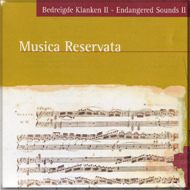
- Title: les folies d'Espagne (1755)
- Released after 1998 (not indicated but some tracks are recorded in 1998) by the Alamire Foundation compact disc without order number
- Duration: 2'28" (this should be an excerpt of the original manuscript)
- Recording date: not mentioned in the slipcase
- Compact disc is a compilation. As a source is mentioned the compact disc 'Preludia, Matthias Vanden Gheyn' SABAM TM HG 1, 1998 (all the spellings and year of release are as written in the slipcase!)
- Rombouts, Luc and Huybens, G. (editors)
- Released in 'Het liedeken van de Lovenaers. Een 18de-eeuws Leuvens beiaardhanschrift' (translation: the songs of the Lovenaers. A manuscript for Carillon dated back to the 18th century, found in the Belgium city of Leuven)
- Published in facsimile 1990 in Belgium
- total: XLV and 115 p. (size and number of pages Folies d'Espagne unknown)
- ISBN 90 6186 398 8 Hardcover
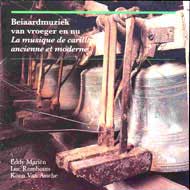
- Rombouts, Luc (carillon-beiaard) 'Beiaardmuziek van vroeger en nu'

Duration: 0'47", 754 kB. (128kB/s, 44100Hz)
Two variation of the Folia theme in triplets
© 1994 Luc Rombouts, used with permission- Title: Les Folies d'Espagne
- Released 1994 by GRE compact disc GRE 1594 (together with the book 'Beiaarden en torens van Belgie')
- Duration: 5'53" (not all variations are played, only variations 1, 4, 5, 7, 10 and 12)
- Recording date: unknown
- Carillon of the church St. Gertrude of Leuven, Belgium
- Realisation sponsored by KU Leuven, Stad Leuven, Gemeentekrediet, Jeugd en Muziek Leuven amongst others
- Sint-Pieterskerk (Sergeys-beiaard), Leuven (carillon-beiaard)
Duration: 0'17", 254 kB. (128kB/s, 22050Hz)
Sint-Pieterskerk (Sergeys-beiaard), Leuven. Heard every hour from Eastern 2003 till Eastern 2004
Thanks to Pierre Chantrenne for making this field recording at Leuven
Folies d'Espagne (2003)
Sint-Pieterskerk, Leuven, BelgiumPublished by the magazine "Campanae Lovanienses"
June 2003, page 29, used with permission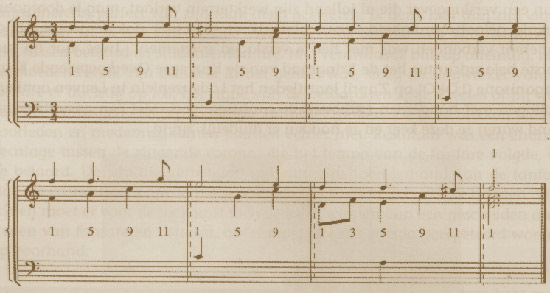
© sheet music by Nieuwsbrief Campanae Lovanienses The sheet music of the automatic-play drum. The drum's rotation, similar to a music box,
activates the hammers located on the outside the carillon's bells. The vertical lines indicate the musical bars
while the dotted lines (at the same spots in this particular case) have the size of
the play drums in mind. The numbers are ment to indicate the division of the play drum.

- Title: Folies d'Espagne
- Created Eastern 2003 as an automatic mechanism
- Duration: From Eastern 2003 till Eastern 2004 for every half an hour (so not on the hours itself where another melody is to be heard)
- Recording date: September 2003
- Carillon: Sergeys-beiaard of the Sint-Pieterskerk, Leuven, Belgium


- Bos, Chris 'Historische Beiaardopnamen 1941-1983'
Direct link to YouTube https://www.youtube.com/watch?v=JjUU6yCRfI0Anonymous Folies d'Espagne played by Chris Bos
Duration: 3'29" direct link to YouTube
© 1999 by Nederlandsche Klokkenspel Vereeniging- Released 1999 by Nederlandse Klokkenspel-Vereniging (http://www.carillon.org) Sonante compact disc CD 1499862 (no longer available)
- Made available by the NAA (Nederlands Instituut voor Beeld en Geluid) and in corporation with the NPS (Nederlandse Programma Stichting) and AVRO (a dutch broadcasting company)
- Duration: 3'23"
- Released as a tribute to the carillon-players who contributed to the revival of the dutch carillon art in the 20th century
- Recording date: May 31, 1957 in de Domtoren, Utrecht, The Netherlands
- 6 microfiches part of "Diverses pièces pour clarinette seule"
- Dated between 1814 and 1822
- Published by Janet et Cotelle, Paris, France
- Part of the collection of the Royal Library, Den Hague, The Netherlands
Manuel Machado was a composer who lived from c.1590 till 1646, so where the 'later' Folia tune is coming from (introduced in 1672) is a mystery (probably a later arrangement in the manuscipt or the personal influence of Stephen Stubbs who performs on both recordings).
Nonetheless it is a pleasure to listen to this excellent 'collage' of music, especially because 'later' vocal Folias are hardly recorded at all (although there are plenty of vocal Folias especially in the Swedish tradition). Such a collage with a vocal part (although no vocal Folia in itself) is a phenomenon in the repertoire of Folias only used in a track recorded by Maddy Prior called Rejoice ye shining worlds and The York Waits with Deborah Catterall in Le triste etat de cette pauvre etable.
Obviously the problem for the Machado-piece was to get some body for the short vocal line of Machado. The chosen formula was to clasp it together with the Folia-progression. To give the tune a nice balance, an intro of an expectant progression is introduced, followed by three later Folia-variations. The vocal Machado piece starts at the 16th bar of the last Folia-variation and ends at the first bar of another three later Folia-variations to conclude the piece once more with the Machado-fragment again with the same bridge between the Folia-variation and 'Dos estrellas le siguen' by Machado.
As the source of the Machado-piece is mentioned Cancionero Sablonara, Bayerische Staatsbibliothek, Mus. ms E 200 / BNM M. 1263. Manuscrito en forma de libro de coro, copiado en Madrid en la corte por Claudio Sablonara c. 1625. Contiene 75 canciones a cuatro, a tres y a dos, cuyos autores son Blas, Romero, Machado, Pujol, Ríos, Torres, published in an edition of 1996 by Judith Etzion, The Cancionero de Sablonara, a Critical Edition (London: Tamesis Books, Ltd.)
The text of the Machado-piece:
Dos estrellas le siguen, morena,
y dan luz al sol :
va de apuesta, señora morena,
que esos ojos son.
- A Corte Musical directed by Rogério Gonçalves (Mercedes Hernandez,
Natacha Ducret (sopranos)
Annemieke Cantor (alto),
Felix Rienth (tenor),
Stéphanie Erös, Birgit Goris (violins),
Agathe Gautschi (cornet à bouquin),
Gilles Vanssons (chalemie),
Ilze Grudule (cello),
Rogério Gonçalves (bassoon & percussions),
Vincent Flückiger (baroque guitar baroque & archlute)
Norihisa Sugawara (baroque guitar & viola da gamba),
Marie Bournisien (double harp),
Corien de Jong (organ)
(organ after instrument Aragonais, beginning 18th century, Église Saint Laurent in Lausanne 1991) 'Flores de Lisboa'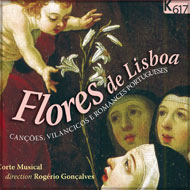
- Dos estrellas Folias
- Released 2007 by K617 compact disc K617195
- Duration: 6'56"
- Recording date: April 24-27, 2007 in Temple de Sainte Croix, Switserland
- Ensemble Anthonello (Yoshimichi Hamada (cornetto and recorder), Kaori Ishikawa (viola da gamba), Marie Nishiyama (harpsichord and harp) and Rafael Bonavita (lute and vihuela), António Carrilho (recorder) and Paulo Gaio Lima (cello)
- Title: A. Falconiero / Manuel: Machado Folias e Dos estrellas le siguen G.
- Broadcasted by Portuguese Radio April 29, 2009
- Duration: 8'01"
- Recording date: July 2008 during the 'Festival de Música de Caldas da Rainha', Centro Cultural e de Congressos de Caldas da Rainha, Portugal
- LeBlanc, Suzie (soprano) and Les Voix Humaines: Susie Napper (viola da gamba), Margaret Little (viola da gamba)
together with Maxine Eilander (Spanish harp) and Stephen Stubbs (Baroque guitar) 'Ay que sí, ay que no'
Duration: 1'58", 1760 kB. (128kB/s, 44100Hz)
Fragment of two variations of the Folia theme followed by the Machado piece and back again to the Folia-theme
© 2002 ATMA Classique, used with permission Jacques-André Houle wrote for the slipcase:
Nearly the equal of Hidalgo and Marín by the quality if not the quantity of his output (two other composers featured at the compact disc, editor), Manuel Machado (c.1590-1646) was a composer and instrumentalist of Portuguese extraction who pursued his career in Spain. He seems to have been much appreciated at court as a chamber musician and he mastered a number of instruments. Only twenty works of his are extant, all secular songs in Spanish, and all of exceeding beauty. A case in point is the finesse of his 'Dos estrellas le siguen', comprising a single stanza. This gem of a song, which opens this recording, is encased in a series of variations elaborated by our musicians on the famous 'Folía', a ground bass that was popular throughout Europe.
- Title: Dos estrellas le siguen
- Released May 2002 by ATMA Classique ACD 2 2244
- Duration: 4'35"
- Recording date: March 12, 13, 15 17, 2001 in Eglise Saint-Augustin, Saint-Augustin de Mirabel (Québec), Canada
- More about the oeuvre at the website of Les Voix Humaines (including some fine acoustical examples).
- Lesne, Gérard and Ensemble 'Circa 1500': Nancy Hadden
(flute and director), Erin Headley (basse viola da gamba), Andrew Lawrence-King
(harp), Paula Chateauneuf (guitar), Stephen Stubbs (lute). 'O Lusitano
Portuguese vilancetes, cantigas and romances'
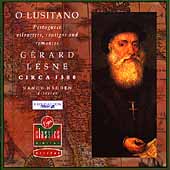
La Folia and from Manuel Machado: Dos estrellas le siguen
Duration: 4'33" direct link to YouTube
© 1990 by Virgin Veritas- Released 1990 by Virgin Veritas compact disc 59071
- Duration: 2'14" (La Folia) and 2'12" (Dos estrellas le siguen)
- Recording date: November 1989
- Lesne, Gérard and Ensemble 'Circa 1500', Nancy Hadden (flute and director), Erin Headley
(bass viola da gamba), Andrew Lawrence-King (harp), Paula Chateauneuf
(guitar), Stephen Stubbs (lute). 'O Lusitano Portuguese vilancetes, cantigas
and romances'
- Re-released June 5, 2001 by Virgin Veritas compact disc 759071
- Duration: 2'15"
- Recording date: November 1989 in St Paul's, New Southgate, London
The famous Follia is a dance of Portuguese origin of the XV century. Exported to Spain, France and Italy becomes a society and court dance. On the contrary, Lei foulié espagnolo, also known as Danse du Turc, was performed in Provence as a representation of two young Saracens’ story. .
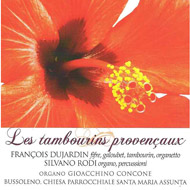
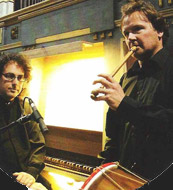
- Dujardin, François (fifre with one hand and drums with the other hand) Rodi, Silvano (organ) "Les tambourins provençaux"
- Released 2010 by Elegia, Organ and Classical Recordings compact disc B3253255BB
- Duration: 6'04"
- Recording date: recorded live 2009 in Bussoleno, parish church of Santa Maria Assunta (organ: Gioacchino Concone)
- More information about this recording you can find at http://www.elegiarecords.it/en/catalogue/details/1/1/catalogo-cd/les-tam
 Manuscript di Venezia, Music in the Biblioteca Palatina di Parma.
- Conti, Annaberta edited the basso continuo and made some revisions
- Published by Societa Italiana del Flauto Dolce © 1982, Rome as part of series: Armonia strumentale (9)
- Score 24 p. and 2 parts 10 p. each, 31 cm
- Publisher No. E SIFD 18 Societa Italiana del Flauto Dolce
- Franco, Horatio (flutes) 'Mestizajes Novohispanos'
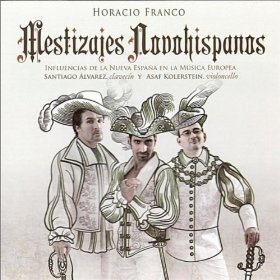 With Santiago Alvares harpsichord and Asaf Rolerstein cello:
- Title: Variaciones sobre La Follia anónimo italiano siglo XVIII
- Released 2011 by Quindecim compact disc ASIN B004P9FBI8
- Duration: 9'52"
- Recording date: February 2010 at the Centro Académico Cultural Juriquilla, Mexico
- Musica Antiqua Provence conducted by Christian Mendoze 'Folies d'Espagne'
- Title: Follia di Spagna (25 variations) pour flûte à bec, basse continue et castagnettes (Anonyme, XVIIe siècle. Manuscrit di Parma)
- Released 2009 by Integral Classic compact disc INT 221.169
- Duration: 9'39"
- Recording date: July 2008 in the Basilic of the Château de Valère in Sion (Schwitzerland)
- Rubato Appassionato 'Le Temple Du Goût : 18th Century Music From Italy And France'

- Title: Partite di Follia. Flauto, Anonymous
- Released 2008 by MA Recordings compact disc M075A (JP)
- Duration: 13'56"
- Recording date: October 2006 in Capella de la Mare de Déu de l'Esperança, Barcelona, Spain
- More about Rubato Appassionato at their website http://www.rubatoappassionato.com/
- Tarsetti, Valeria
- Title: Follia di Spagna. 25 Variazioni (Anonimo sec. XVIII) dal ms. CF-V-23 della Biblioteca Palatina di Parma per Flauto Dolce Contralto (Flauto Traverso, Oboe) e Basso Continuo
- Published 1998 series Hors, musica varia, by UT Orpheus Edizioni, Bologna, Italy
- Score 26 p. and 7 p. for cello and 9 p. for the recorder
- Publisher No. ISMN M-2153-0383-6

Adélaïde de Place wrote for the slipcase:
Known as Folia in Italy, Follía in Spain or Folie in France, Folia is a melody that probably origintaed in Portugal and then passed through Spain before acutally gaining popularity in almost all European countries towards the end of the 15th century. French guitarist and lutenist Robert de Visée, musician for the Chamber of Louis XIV and guitar teacher for the young Louis XV, said that "in court so many couplets from which all concerts ring out, that I can only hear the folias of others".
The well-known theme from the Folia - characterised by its sarabande rhythm and its moderate movement - would give rise to several variations.
We have lost count of the number of musicians who haqvew developed or modified
it. Some names that spring to mind include Corelli, Lully, Couperin, Vivaldi, Carl Philipp Emanuel Bach, Marais, d'Anglebert, Telemann, without counting Paganini, Liszt or Rachmaninov much later. In France, it is often called Folies d'Espagne and, in the United Kingdom, Farinel's Ground after Michel Farinel (Farinelli), who was born in 1649 and worked in Grenoble at tyhe turn of the 17th and 18th centuries.
Manuscript: Livro de Guitarra do Conde de Redondo (Count of Redondo's guitar book)

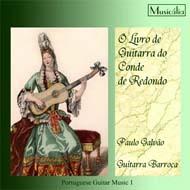 Original source: LVSITANA MUSICA, 1/ opera mvsica selecta - 2 Uma tablatura
para guitarra barroca - O livro do Conde de Redondo, edição
fac-simile, Lisboa, 1987. Edited by the Musicology Departement of IPPC - Portugal
Original source: LVSITANA MUSICA, 1/ opera mvsica selecta - 2 Uma tablatura
para guitarra barroca - O livro do Conde de Redondo, edição
fac-simile, Lisboa, 1987. Edited by the Musicology Departement of IPPC - PortugalPaulo Galvão wrote about this source:
Although the manuscript is not dated, it must have been
produced after 1700. In this manuscript there is a Giga from Corelli's Op.
5 (that was published on 1700). Monica Hall thinks that around 1730 is more
likely because it sounds similar to S.Murcia's book published on 1732. I
can agree with this.
In the Iberian tradition, the book is notated in numerical (as opposed to
alphabetical) tablature; though the notes are there, however, as is the
case with the two other Portuguese baroque guitar sources, rhythmic indications
are lacking (with a small number of exceptions), the interpretation in this
respect being left to the performer (I reconstructed the rhythmic structure
by myself).
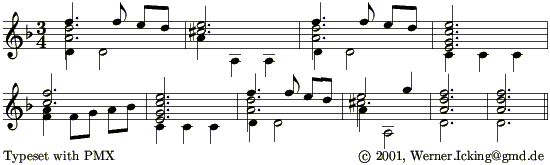
| Theme of Folias de Espanha (c.1700) | Transcribed by P. Galvão, used with permission |
|---|---|
 |
|
- Galvão, Paulo 'O Livro de Guitarra do Conde de Redondo'
Ivan Moody wrote for the booklet notes: Duration: 2'10", 1781 kB. (112kB/s, 44100Hz)
Two variation of the Folia theme in triplets
© 2000 Paulo Galvão, used with permission - Released 2000 by Musicália compact disc M.01.03.003
- Duration: 2'11"
- Recording date: May 2000 at Lagos
- Instrument: a copy of Voboan's model by Oliver Wadworth built in 1993
The variations on the Folias are also highly idiomatic, and a brilliant rhythmic and melodic exploration of this famous basso ostinato theme.
Theme and 8 variations for 5-double string baroque guitar
Herman Vandecauter who detected this folia manuscript wrote about this source 6 January 2014:
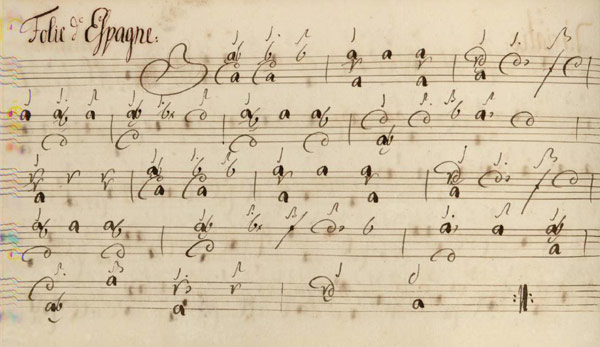
Considering the date of the manuscript (1829/1830) the presentation of the sheet music is a bit curious and not in line with that period. It might well be that the year was added later to the entire manuscript or that the manuscript was a collection of pieces gathered over the years.
The 5-string guitar disappeared around 1790, while the first builder of the 6-string guitar we know was the Italian builder specialized in mandolins, Gaetano Vinaccia in 1779 located in Napels. The popularity of this new guitar becomes clear when we look at the first printed method in 1792 "Principios para tocar la guitarra de seis ordones" by Federico Moretti.
With this influencial method by Moretti the tabulature as a form of notation was replaced by the modern sheet music notation.
I guess that around 1820 all double string guitars were replaced. It might be that this innovation was not implemented everywhere at once on a regional level. This Norwegian region is not on the crossroad of spreading innovations and can be considered as a northern outpost of Europe where influences spread at a later date.
Whatever the reason might be, I guess the manuscript is written with an eye to the high Baroque despite the dates 1820/1830 mentioned as the source.
The guitar music in the Hertzberg manuscript is believed to date mid 1700s. The person, Johanne Hertzberg, who wrote the guitar music in the book lived from 1708 to 1801. The book was passed down generations, and the date of 1829 was added when a later decendent wrote poems on the blank pages. The guitar music is certainly not of the 19th century and is very typical of baroque guitar music of c: 1700. See http://folk.uio.no/henninho/Gitar.html
| Opening of Folie de Espagne: dated 1829/1830 but origins probably mid 18th Century |
Hertzberg manuscript page 81 |
|---|---|
 |
|
- Den Hertzbergske notebok
- Published in Den Hertzbergske notebok 1829/1830
- Page: 81 (theme), 82-89 (8 variations)
- Published as an open source at the internet by the Nasjonalbiblioteket (National Library of Norway) Mus.ms.a 5038 (Den Hertzbergske notebok)
- Source at the internet http://www.nb.no/nbsok/nb/1c1e904cef8b1d14852fe645b2386ed5?index=7#0
These three variations for harp solo might be identical to the variations mentioned at the next item, although different sources are mentioned.
Music in manuscript 34802 at the Conservatorio Luigi Cherubini, Florence.
- Griffiths, Ann revised the modern edition
- Published as Telwn Dewi in Tregaron, Wales in 1980
- O'Farrell, Anne-Marie (Irish harp) 'Number Twenty Nine presents Harping Bach to Carolan'
- Title: Folia
- Source: Telwn Dewi, ed. Ann Griffiths
- Released 1993 by Number Twenty Nine and Anne-Marie O'Farrell. For information and ordering you can mail to amofharp@iol.ie
- Duration: 2'34"
- Recording date: between 14th and 17th April 1993, Park House Recording Studios, Dunshaughlin, Co. Meath
- Irish harp made in Ireland by Jan Muyllaert
These three variations for harp solo might be identical to the variations mentioned at the previous item, although different sources are mentioned.
Music in manuscript Biblioteca Nacional de España, Madrid Ms 816.
 |
Duration: 1'26", 03 kB. |
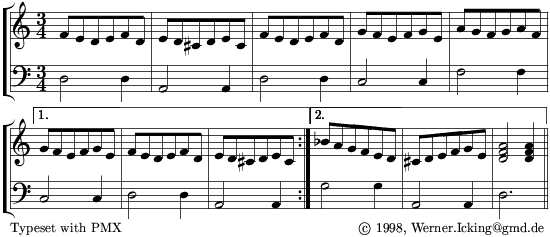
| Theme of Diferencias de las Folías (c.1700) | Hudson, Richard Vol I, p. 122 |
|---|---|
 |
|

- Armoniosi Concerti 'Zarambeques, Música Española de los
Siglos XVII y XVIII en torno a la Guitarra'
In the slipcase is stated: - Title: Folías
- Instrumentation: guitarrilla (J.C. Rivera), barock guitar (Juan Miguel Nieto), theorbo (Consuelo Navas) and viola da gamba (Sara Ruiz).
- Released 2002 by Harmonia Mundi compact disc HMI 987030
- Duration: 2'00"
- Recording date: May 29 and 30, June 1 and 2, 2002 in Sala de Cámara del Conservatorio Superior de Música de Sevilla, Spain
- More about the oeuvre of Juan Carlos Rivera at http://www.juancarlosrivera.com
- Eilander, Maxine (Spanish and Italian harps, Stephen Stubbs: baroque guitar) 'Teatro Lirico'
Folia Variations for harp solo (2004)
These Folia-variations are an enumeration of two pieces: an anonymous Spanish manuscript for harp and the manuscript by Lucas Ruiz de Ribayaz with a nice intro.- Title: Folia Variations (for harp and baroque guitar, 2004)
- Released February 2006 by ECM New Series 1893 4763101
- Duration: 3'32"
- Recording date; February 2004 in Propstei St. Gerold
- See also the page Recommended Folia-recordings
- Zabaleta, Nicanor 'Spanische Harfenmusik des 16, und 17. Jahrhunderts'
- Title: Folias
- Released 1968(?) by Archiv Produktion LP SAPM 198 458
- Series: Archive production, 4th research period Forschungsbereich Westeuropa zwichen Barock und Rokoko (1650-1800), Serie: Spanischen Meister
- Missing in the collection of the Rotterdam Discotheek in The Netherlands, October 12, 1999 (cat.number CF00023)
The Folia is a danza of Portuguese origin with an extensive history in Spain - there being references to it as far back as the fifteenth century. During the course of the seventeenth century the harmonic pattern known as the folías de España became widely used (the three that we include here follow that pattern).[...] The Diferencias de Folías taken from an anonymous book of harp tablature coming from Avila (and preserved today in the Biblioteca Nacional de España in Madrid) are of particular interest as they contain three original variations in plucked style (clearly those in the strummed style are additions here) which correspond to the two most common forms of folías known in the Spanish Baroque; folías a la Italiana (variations I and III) and folías a la española (variation II). The latter are distinguished by their melodies with upbeats and a clear preference for the dominant key. The use of the campanela (a frequently employed guitar resource in the seventeenth and eighteenth centuries) which consists of plucking the melodies with the fingers on several strings whilst allowing them to resonate, in this way perfectly imitating the sound of the harp.
Rather doubtful if this version is for harp solo, In the documentation of the discs no sources (manuscripts) are mentioned at all.
- Lawrence-King, Andrew 'Erasmus van Rotterdam'
- Title: Folias (imperfectas) - Anonymous
- Released 2012 by Alia Vox 6 cd-set (cd nr. 1), AVSA 9895 A/F
- Duration: 1'42"
- Recording date: 2009-2011Col legiata de Cardona (Catalogne)
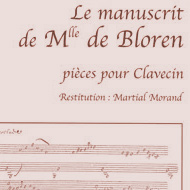
- Morand, Martial (editor of the facsimilé)
- Title: Les Folies d'Espagne for harpsichord solo by anonymous
- Published in Manuscrit de Mademoiselle de Bloren, ca 1700 (MS 108, Médiathèque municipale de Roanne, FR, Loire), édition. Lemoine, Paris, 2006
The collection, of which the Folies d'Espagne is a part, was collected by Marc Roger Normand Couperin (1663-1734), organist at the Court of Sardina and the first cousin of François Couperin le Grand. Because of this last fact he gave himself the name of 'Couperin of Turin' (Turino, Italy) when staying there and he got the nickname 'Coperino da Torino'.
Although the 27 couplets on La Folia are anonymous, there are clearly links with the Folies d'Espagne by d'Anglebert. Moroney speculates that Coperino may have had lessons with d'Anglebert, and composed them himself.
- Published 1998 by Minkoff as a facsimile edition
- Preface by Davitt Moroney
- Moroney, Davitt (harpsichord) 'Livre de tablature de clavescin'
Davitt Moroney wrote for the slipcase: - Released 1999 by Hyperion compact dic CDA 67164
- Duration: 11'51"
- Recording date: July 29, 30, 31 and August 1 in la Maison de l'Orchestre National d'Ile de France.
- Harpsichord by John Phillips, built 1997 in Berkeley after Nicolas Dumont 1707.
- Jacobi, Jörg (editor and publisher)
- Title: Folie d'Espagnes in: Autori Diversi (17.Jahrhundert): Il Mondo è dei folli, 12 Versionen der Follia aus dem europäischen Barock, page 47-62
Jörg Jacobi collected and edited 12 versions of Folías mostly from anonymous manuscripts - Published by edition baroque, Bremen, eba4061, ISMN 979-0-700391-00-3
- Year of publication: April 2018
- Including an introduction about the theme and the specific pieces
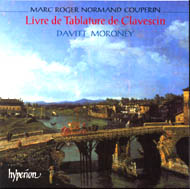
Folies d'Espagnes (f. 6v). By far the longest and most difficult piece in the collection, this work is a series of variations on the well-known theme and bass of La Folia. Couperin's set is noteworthy for more than one reason. First, its unusual length is impressive: containing no fewer than 27 couplets, it is longer even than d'Anglebert's famous set. The set in Couperin's manuscript has clear links with d'Anglebert's work, which was published only after Couperin left for Turin: 4th couplet = d'Anglebert's 4th, 7th couplet = d'Anglebert's 6th, 13th couplet = d'Anglebert's 22nd, 16th couplet = d'Anglebert's 21st, 26th couplet = d'Anglebert's 16th. Some of these correspondences are extremely close, even down to the little ornamental notes, and cannot be the result of coincidence. We may conclude that Couperin had some contact with d'Anglebert. Perhaps he studied harpsichord with him. The work is conceived according to a solid plan, not without its own internal subtlety. After the opening statement of the theme, there follow four groups of six variations (couplet 2-7, 8-13, 14-19, 20-25), followed by a short coda (the last two variations). Each group of six is different as a result of the increasing virtuosity but is nevertheless built in the same way structurally and organised identically: (i) figuration for th e right hand, followed by (ii) the same figuration for the left hand and (iii) a melodic variation starting on D. Then (iv) the two previous figurations of each hand combined together in both hands, followed by (v) a melodic variation starting on F, derived from (iii). Each group of six variations ends with (vi) a bass solo. The most elaborate and rapid figuration is reached in the 23rd couplet, after which the intensity relaxes somewhat.

In this mansucript is also included Folies d'Espagne pour clavecin (14 couplets: 8e couplet de l'invention de Mlle Le Noble)
Pierre Féruselle wrote for the Minkoff-edition about Manuscrit de Mademoiselle la Pierre 'Pieces de clavecin":
This collection of harpsichord pieces is a manuscript whose pedagogical aims are clearly indicated. It was begun on 6 Septembr 1687, the day of the first lesson for a certain Mlle de La Pierre. It then seems to have served another pupil by the name of Mlle Le Noble, for whom the pieces proposed as exercises were copied straight after the first group. It is possible that both these harpsichordists had the same teacher, but in this case one would have to ask why the teachershould re-copy for the second pupil in the same manuscript some twenty pieces which he had already used with the first pupil.
It seems that Mlle Le Noble was more gifted than Mlle de La Pierre, at least as a composer, for she "invented" the eight couplt of the Folies d'Espagne. At all events this represents a music notebook whose physical unity (format, paper, watermarks) is clear. The date 29 January 1730 written on the flyleaf of the Le Noble part seems to be much later yhan the two copyists' hands.
- Anonymous and Mademoiselle Le Noble
- Title: Folies d'Espagne (6 couplets) in: Livre de Mademoiselle La Pierre
- Published c. 1680, re published 1983 by Minkoff Reprint. Genève, Suisse
- Pages:4v-7
- Original manuscript: Manuscrit de Mlle La Pierre, pièces de clavecin: Bibliothèque nationale, Paris, Rés. Vmd. ms. 18
- Jacobi, Jörg (editor and publisher)
- Title: Folie d'Espagne (14 couplets) and Folie d'Espagne (6 couplets) in: Autori Diversi (17.Jahrhundert): Il Mondo è dei folli, 12 Versionen der Follia aus dem europäischen Barock, page 33-39 and p 40-47
Jörg Jacobi collected and edited 12 versions of Folías mostly from anonymous manuscripts - Published by edition baroque, Bremen, eba4061, ISMN 979-0-700391-00-3
- Year of publication: April 2018
- Including an introduction about the theme and the specific pieces
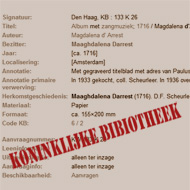
- Brockmeijer, Tom edited the music
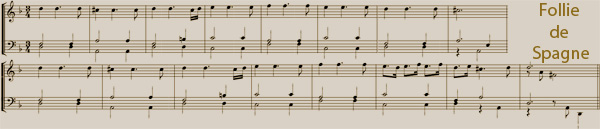
- Title: Follia d' Spangne met eenige variaties
- Edition by Brockmeijer not published, 5 pages, 29 x 21 cm
- Original source manuscript Musyc-boek van juffr. Maaghdalena d'Arrest, 1716
- Original source part of the collection of the Koninklijke Bibliotheek, Den Hague, The Netherland
- Original source catalogue number Den Haag, KB : 133 K 26 http://opc4.kb.nl/DB=1/SET=2/TTL=1/CMD?ACT=SRCHA&IKT=1016&SRT=YOP&TRM=Maaghdalena+d%27Arrest
| Opening of Follie de Spagne (c.1689) | |
|---|---|
 |
|
- Immerseel, Jos van (virginal) 'Hans Ruckers, The musical legacy'
- Released 2000 by (super-audio-CD) NorthWestClassics compact disc NWC-128390
- Duration: 3'08"
- Recording date: 2000, in Museum Vleeshuis, Antwerpen, Belgium
- Virginal built by J. Couchet 1650 reconditioned by Frank Hubbard and Hubert Bédard
- Production has been possible through the cooperation of Het Ruckers Genootschap vzw and Jos van Immerseel amongst others
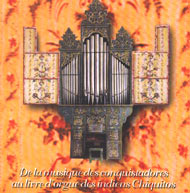 Tono I from the books for keyboard San Rafael of Chiquitos, collected by the
originally Swiss Jesuit missionary Martin Schmid (born in Swiss 1694, arrived
in Bolivia in 1729 and left for Lucern, Swiss in 1768, where he vanished in
1772) for the spiritual education of the Indian people of Chiquitos.
Tono I from the books for keyboard San Rafael of Chiquitos, collected by the
originally Swiss Jesuit missionary Martin Schmid (born in Swiss 1694, arrived
in Bolivia in 1729 and left for Lucern, Swiss in 1768, where he vanished in
1772) for the spiritual education of the Indian people of Chiquitos.The source of the Folia is not known. Although the manuscript contained some pieces by Domenico Zipoli (1688-1726, who was familiar with the compositions of both Pasquini and Corelli) and his style is recognizable in many of the pieces, Martin Schmid himself was a minor composer too.
- Broggini, Norberto 'De la musique des conquistadores au livre d'orgue des indiens Chiquitos'
- Released 1998 by Discographique lorrain K.617 compact disc set of 3 discs K617093/3 with the support of the French Ambassy
- Duration: 4'08"
- Recording date: April 18-20, 1998 organ of Santa Clara in Sucre, Bolivia
- Videla, Mario 'Musica Antigua parra Tecla de España y el Nuevo Mundo'
- Title: Folías for keyboard (Misiones de Chiquitos -Bolivia, anonymous)
- Released 2002 by Cosentino Producciones compact disc IRCO 258
- Duration: 3'57"
- Recording date: Unknown
- Recording with the historic harpsichord of the National Museum of Decorative Art of Buenos Aires, Argentina
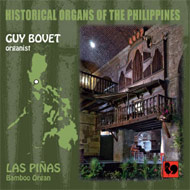
Played on the famous bamboo organ in the village of Las Pinas just outside the Philippine capital.
- Bovet, Guy (bamboo organ) 'Historical Organs of the Philippines: Las Piñas, Volume 4'
- Title: Music in the Indian Reductions: Folias
- Released 2012 by Gallo compact disc Ordernumber CD 1364
- Duration: 4'13"
- Recording date: unknown at the Bamboo Organ at the Philippine village of Las Pinas, Philippines
- Saciero, Antonio 'Ten Years Bamboo Organ Festival' (1st in 1976 through 9th in 1984)

There is no documentation about the anonymous Folia included at the vinyl release- Title: Folias
- Released 1984 by BOR 2LP-set BOR 4010 and 4011
- Duration: 4'30"
- Recording date: 1983 at the 8th Bamboo Organ festival at the Philippine village of Las Pinas, Philippines
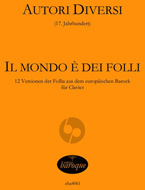
- Jacobi, Jörg (editor and publisher)
- Title: Sarabande in source: Clavierbuch Christian Flor, Lüneburg, Ratsbücherei, Mus ant. pract. 1198: Autori Diversi (17.Jahrhundert): Il Mondo è dei folli, 12 Versionen der Follia aus dem europäischen Barock, page 1
Jörg Jacobi collected and edited 12 versions of folías mostly from anonymous manuscripts - Published by edition baroque, Bremen, eba4061, ISMN 979-0-700391-00-3
- Year of publication: April 2018
- Including an introduction about the theme and the specific pieces
- Title: Sarabande in source: Clavierbuch Christian Flor, Lüneburg, Ratsbücherei, Mus ant. pract. 1198: Autori Diversi (17.Jahrhundert): Il Mondo è dei folli, 12 Versionen der Follia aus dem europäischen Barock, page 1
- Jacobi, Jörg (editor and publisher)
- Title: Folie D'Espagnie in source:
Manuscript Fü9855 des Archivs des Freiherrn von Fürstenberg, Herdringen (Deutsches Musikgeschichtliches Archiv, Kassel). Sammlung von 47 Stücken für Tasteninstrumente, darunter Preludium (-8) toni, Folie d'Espagnie mit 19 Variationen, 19 Menuets und weitere
Tanzsätze; 7 Gesangsstücke in französischer Sprache für
eine Singst, und bezifferten Baß. -Anfang 18. Jh.: Autori Diversi (17.Jahrhundert): Il Mondo è dei folli, 12 Versionen der Follia aus dem europäischen Barock, page 10-19
Jörg Jacobi collected and edited 12 versions of folías mostly from anonymous manuscripts - Published by edition baroque, Bremen, eba4061, ISMN 979-0-700391-00-3
- Year of publication: April 2018
- Including an introduction about the theme and the specific pieces
- Title: Folie D'Espagnie in source:
Manuscript Fü9855 des Archivs des Freiherrn von Fürstenberg, Herdringen (Deutsches Musikgeschichtliches Archiv, Kassel). Sammlung von 47 Stücken für Tasteninstrumente, darunter Preludium (-8) toni, Folie d'Espagnie mit 19 Variationen, 19 Menuets und weitere
Tanzsätze; 7 Gesangsstücke in französischer Sprache für
eine Singst, und bezifferten Baß. -Anfang 18. Jh.: Autori Diversi (17.Jahrhundert): Il Mondo è dei folli, 12 Versionen der Follia aus dem europäischen Barock, page 10-19
- Jacobi, Jörg (editor and publisher)
Jörg Jacobi wrote about this piece in the preview:Die zwölf Variationen der Nr. III finden sich in einem Band, der überwiegend Suiten von Johann Jakob Froberger (1616-1667) enthält, was nahe legt, das auch diese Folie d'Espagne von ihm stammen könnte. Interessant ist das Voranstellen eines kurzen Prelude (das kaum mehr ist, als eine etwas ausgeschmückte Kadenz). Die Variationen steigern sich sehr typisch und planvoll (mit den virtuoseren gegen Ende) und bieten einige schöne Einfälle. Der Halbkreis über den Noten in Variation IV beschreibt eine Verzierung, die ich als Grupetto identifizieren würde.
- Title: Prelude - Folies d'Espagne in source: Schwerin, Landesbibliothek, Mus 617: Autori Diversi (17.Jahrhundert): Il Mondo è dei folli, 12 Versionen der Follia aus dem europäischen Barock, page 2-9
Jörg Jacobi collected and edited 12 versions of folías mostly from anonymous manuscripts - Published by edition baroque, Bremen, eba4061, ISMN 979-0-700391-00-3
- Year of publication: April 2018
- Including an introduction about the theme and the specific pieces
- Title: Prelude - Folies d'Espagne in source: Schwerin, Landesbibliothek, Mus 617: Autori Diversi (17.Jahrhundert): Il Mondo è dei folli, 12 Versionen der Follia aus dem europäischen Barock, page 2-9
Manuscript Res 1186 bis, p. 30-fol.31, Bibliotheque du Conservatoire, National de Musique, Paris France
|
|
Duration: 2'38", 06 kB. |
| Theme of The Spanish Follye | by Hudson Vol I, p. 113 |
|---|---|
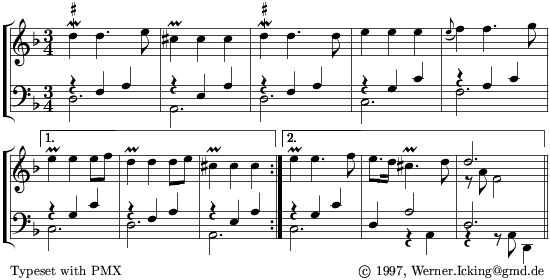 |
|
- Laganà, Ruggero (harpsichord) 'Folías italianas'
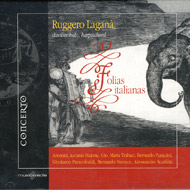
- Title: The Spanish Follye (1685)
- Released 2010 by Concerto compact disc CD 2058
- Duration: 2'06"
- Recording date: October 2009 Bartok Studio, Bernareggio (Mi), Italy
- See also the page Recommended Folia-recordings
 From the slipcase:
the program opens with one of the many sets of variations on the theme of Folia de España by an anonymous composer of the 16th century.
Not much to go on, but the 16th century as indication needs some correction because the later Folia melody and chord progression is involved (introduced in 1672). As the name already indicates i guess some variations of the manuscript collected by Martín Y Coll are involved.- Nosetti, Massimo (organ) 'L'Orgue de Concert, Vol2 Massimo Nosetti à l'orgue historique de la Collégiale Sant'Ambrogio d'Alassio'
- Released 2001 by Syrius, compact disc SYR-141363
- Duration: 5'45"
- Recording date: January 2001, in Alassio, Italy
- historical organ of Collégiale Sant'Ambrogio d'Alassio
|
|
All variations of Follia parte pa |
 |
5 page in pdf-format, 589 kB |
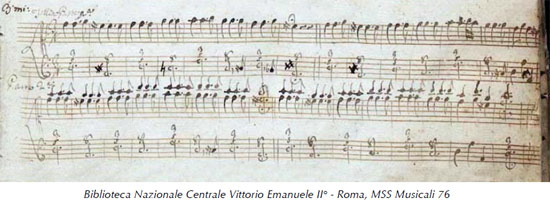
- Dugoni, Paolo (edited the orginal manuscript for modern reading with bass and treble key)
- Released 2011 by Paolo Dugoni
- Pages: 5 pages
- Published by Paolo Dugoni, Italy
- Jacobi, Jörg (editor and publisher)
Jörg Jacobi wrote for his publication:
Die Notation mit Continuoziffern ist typisch für die italienische Claviermusik des 18. Jahrhunderts. Von dem Ausfürenden wird erwartet, dass er die ansonstenrecht dünne Harmonie selbständig und nach eigenem Gusto ausfüllen kann.
- Title: Follia in: Autori Diversi (17.Jahrhundert): Il Mondo è dei folli, 12 Versionen der Follia aus dem europäischen Barock, page 28-33
Jörg Jacobi collected and edited 12 versions of folías mostly from anonymous manuscripts - Published by edition baroque, Bremen, eba4061, ISMN 979-0-700391-00-3
- Year of publication: April 2018
- Including an introduction about the theme and the specific pieces
- Title: Follia in: Autori Diversi (17.Jahrhundert): Il Mondo è dei folli, 12 Versionen der Follia aus dem europäischen Barock, page 28-33
Description Bayerische Staatsbibliothek: 197 Keyboard pieces, org - BSB Mus.ms. 12607 [title page:] Volgen
Praeambula: Fuga ; Versus: /1 Toccatina: durch die acht Kürchen" dan ande
Transponiert Vnd Vermischte /1 Ton. Maria Catharina Kieningin /1
Von Fridberg gehörig: angefangen anno 1735
1735-1750, Mus.ms. 12607, urn: n bn: de:bvb: 12 -bsb0006163 7-3, RISM 455022240 - BSB-Hss Mus.ms. 12607
Paolo Dugoni wrote in an e-mail 13 July 2016:
I would like to report a version of the Folia for harpsichord called "Viola De Spania" contained in a manuscript of Maria Catharina Kiening preserved in the Bayerische Staatsbibliothek. I attach the source and my transcription of the piece.
| |
10 page in pdf-format, 1095 kB |
| |
3 page in pdf-format, 143 kB |
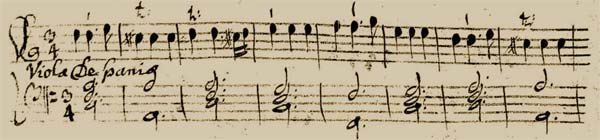
- Dugoni, Paolo (edited the orginal manuscript for modern reading with bass and treble key)
- Released 2016 by Paolo Dugoni
- Pages: 3 pages
- Published by Paolo Dugoni, Italy
- Jacobi, Jörg (editor and publisher)
- Title: Viola De Spaniol in: Autori Diversi (17.Jahrhundert): Il Mondo è dei folli, 12 Versionen der Follia aus dem europäischen Barock, page 1
Jörg Jacobi collected and edited 12 versions of folías mostly from anonymous manuscripts - Published by edition baroque, Bremen, eba4061, ISMN 979-0-700391-00-3
- Year of publication: April 2018
- Including an introduction about the theme and the specific pieces
Unfortunately no documentation about this Folia is included in the slipcase of the recording. As the source an anonymous composer in the 16th century is given which can't be true because the later Folia-theme (introduced in 1672) is clearly exposed in several variations.
- Rouet, Pascale (organ) 'Autour de l'Espagne'
- Title: Diferencias sobre la Folia
- Released by Pavane Records 2003 compact disc ADW 7468
- Duration: 2'31"
- Recording date: July 2-4, 2001 in l'Abbatiale B-D de Mouzon, France
|
|
Duration: 0'29", 01 kB. |
| Manuscript from the archive Bosch van Rosenthal | © Rijksarchief Gelderland, used with permission |
|---|---|
 |
|
- Rijksarchief Gelderland in Arnhem (RAGld) (Archives of the Province
(region) of Gelderland in the Netherlands)
Drs. W.T. Resida (associated with the Rijksarchief Gelderland) was so kind to give notice of this manuscript and the context. The booklet with sheet music was part of the archives of the family Bosch van (von) Rosenthal and was intended as a guide to practice for B. Kloeckhoff (1680-1764) and was dated 1695. For this Folia no particular editor was mentioned (while for some other tunes from the booklet the teacher has signed with his name). Notice that a bit of the tune at the backside of the paper seems to shine through due to the agressive chemical reaction of the ink on the paper over the ages. The booklet contains another extensive version of the Folia (13 variations) which is classified under the composer Reinis, Hen(dricus?). - Manuscript 0724 Archives of the family Bosch van (von) Rosenthal and relatives
- The years 1418, 1539, 1584, 1600-1953
- Inventory number 960
- Rijksarchief Gelderland is vested in the city of Arnhem The Netherlands and can be contacted at http://www.geldersarchief.nl
- Jacobi, Jörg (editor and publisher)
- Title: La folÿ de Espagne in: Autori Diversi (17.Jahrhundert): Il Mondo è dei folli, 12 Versionen der Follia aus dem europäischen Barock, page 1
Jörg Jacobi collected and edited 12 versions of folías mostly from anonymous manuscripts - Published by edition baroque, Bremen, eba4061, ISMN 979-0-700391-00-3
- Year of publication: April 2018
- Including an introduction about the theme and the specific pieces
|
|
Duration: 5'08", 17 kB. |
|
6 page in pdf-format, 97 kB |
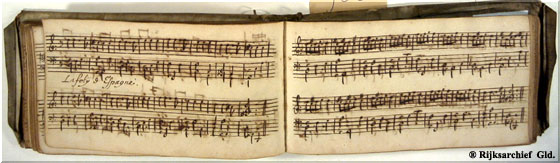
| Manuscript from the archive Bosch van Rosenthal | © Rijksarchief Gelderland, used with permission |
|---|---|
 |
|
- Rijksarchief Gelderland in Arnhem (RAGld) (Archives of the Province
(region) of Gelderland in the Netherlands)
Another Folia from a booklet conserved at the Rijksarchief Gelderland. This booklet with sheet music was like the previous item part of the archives of the family Bosch van (von) Rosenthal and was intended as a guide to practice for C.A. Kloeckhoff (1676-1746), dated back to 1695. For this Folia no particular editor was mentioned (while for some other tunes from the booklet the teacher has signed with his name). It is almost identical to the previous item, the standard folia-theme. Notice that a bit of the tune at the backside of the paper seems to shine through due to the agressive chemical reaction of the ink on the paper over the ages.
The booklet contains another extensive version of the Folia (13 variations) which is classified under the composer Reinis, Henrich. Some variations are identical. For instance variation 5 matches variation 9 of the Reinis' Folia and variation 8 is identical to variation 2 of Reinis. Variation 9 matches variation 6 of the Reinis manuscript. - Manuscript 0724 Archives of the family Bosch van (von) Rosenthal and relatives
- The years 1418, 1539, 1584, 1600-1953
- Inventory number 956
- 13 pages
- Rijksarchief Gelderland is vested in the city of Arnhem The Netherlands and can be contacted at http://www.geldersarchief.nl
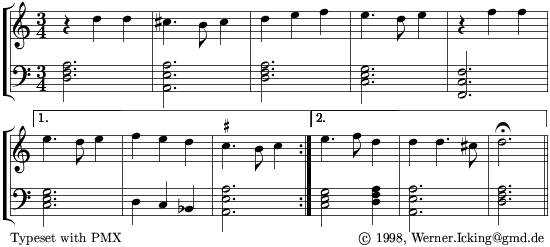
Original: Manuscript 815, Libro de música de clavicimbalo del Sr. Dn. Francisco de Tejada (1721), fols 72r-73r., Biblioteca Nacional, Madrid. Interesting is that variations 5 and 6, as well as the opening half of 2, contain nine measures.
|
|
Duration: 2'43", 08 kB. |
| Theme of Folías graves | by Hudson Vol I, p. 140 |
|---|---|
 |
|
- Atrium Musicae de Madrid / Paniagua, Gregorio
'La Folia de la Spagna'
His 'Parsimonia aristocraciae' (track 5) for harpsichord is actually the Folías graves. Unfortunately the original source for the music is not mentioned in the documentation of the compact disc (but it is in the LP-version!) - Released 1982 by Harmonia Mundi LP HM 1050 & compact disc HMC 901050
- Duration: 3'09" including some noisy weird effects
- Recording date: June 1980
- Jacobi, Jörg (editor and publisher)
- Title: Folías graves in: Autori Diversi (17.Jahrhundert): Il Mondo è dei folli, 12 Versionen der Follia aus dem europäischen Barock, page24-261
Jörg Jacobi collected and edited 12 versions of folías mostly from anonymous manuscripts - Published by edition baroque, Bremen, eba4061, ISMN 979-0-700391-00-3
- Year of publication: April 2018
- Including an introduction about the theme and the specific pieces
- Laganà, Ruggero (harpsichord) 'Folías italianas'
- Title: Folias graves
- Released 2010 by Concerto compact disc CD 2058
- Duration: 2'09"
- Recording date: October 2009 Bartok Studio, Bernareggio (Mi), Italy
- See also the page Recommended Folia-recordings
- Tamminga, Liuwe (organ) 'Islas Canarias, Historical Organs of the Canary Islands'
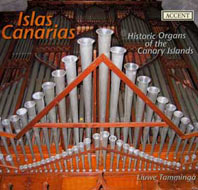
- Title: Folías graves
- Released 2008 by Accent compact disc ACC 24204
- Duration: 2'01"
- Recording date: October 2007 in La Orotava, San Juan Bautista, Tenerife
- Organ built by Otto Diederich Richborn (1723), restored by Bartelt Immer (1990)
- Jacobi, Jörg (editor and publisher)
- Title: Folia in source: Biblioteca National de Madrid, M 2262: Il Mondo è dei folli, 12 Versionen der Follia aus dem europäischen Barock, page 22-23
Jörg Jacobi collected and edited 12 versions of folías mostly from anonymous manuscripts - Published by edition baroque, Bremen, eba4061, ISMN 979-0-700391-00-3
- Year of publication: April 2018
- Including an introduction about the theme and the specific pieces
- Title: Folia in source: Biblioteca National de Madrid, M 2262: Il Mondo è dei folli, 12 Versionen der Follia aus dem europäischen Barock, page 22-23
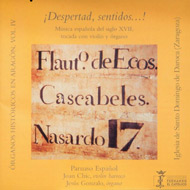
- Gonzalo, Jesús (organ) and Chic, Joan (violin barroco) 'Órganos históricos en Aragó Vol. 4 - Despertad, sentidos...! - Música española del siglo XVII, tocada con violín y órgano - Iglesia de Santo Domingo de Daroca'
- Title: Folia
- Released 2024 by Institución Fernando el Católico
- Duration: 6'08"
Music in manuscript Bodleian Library (GB-Ob) Ms. Mus. Sch. F 576, page 7-9 and page 45-47 and page 82-89, dated 1690-1700, lute with 11 strings (A d f a d' f')
Mathias Rösel wrote about the origins of this manuscript:
What is strange about the Oxford manuscript is that the French tuning (aka D minor tuning) required for this piece was not commonly used in Britain. So, the manuscript may be French. If it is French it probably is from before 1700 because new music for the lute was not produced anymore in France after 1700.
- Bailes, Antony edited the music for '32 Easy pieces for baroque Lute'
- Published 19?? by Tree edition, Lubeck, Germany publishers no. unknown
- Pages and size unknown
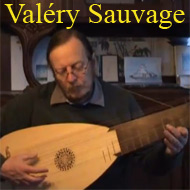
- Sauvage, Valéry
- Plays the manuscript as edited by Antony Bailes 2007.
- Oxford manuscript F 576
- Baroque lute built by Didier Jarny
- More about Valéry Sauvage at http://perso.orange.fr/luthval/discographie.html
|
|
Duration: 0'32", 01 kB. |
 |
Valéry Sauvage plays |
Duration: 3'41" direct link to YouTube
|
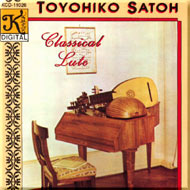
- Satoh, Toyohiko (lute)
- Released 1990 by Klavier Records as compact disc KCD 11026
- Duration: 4'25"
- Recording date: not mentioned in the slipcase
- 14-Note, 26-string Baroque lute made by Nico van der Waals. Its double peg-boxes classify it technically as a theorbo
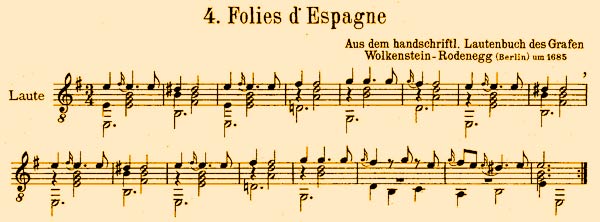
Music in manuscript Staatsbibliothek Preussischer Kulturbesitz Berlin (west)
| Theme of Folies d'Espagna | from the edition N. Simrock, Berlin 1923 |
|---|---|
 |
|
- Bruger, Hans Dagobert (theme and three variations written for the guitar)
1 page in pdf-format, 71 kB
© N. Simrock 1923
thanks to Abel Nagytothy-Toth for making this available
 In the preface was written about Folies d'Espagne:
.Folies d'Espagne (Spanische Torheiten), eine Lautenkomposition mit Variationen aus dem handschriftlichen Lautenbuch des Grafen Wolkenstein- Rodenegg (Ms. Berlin), um 1685, deren weite Verbreitung aus ihrer Wiederkehr in zahlreichen zeitgenössischen Lautenbüichern erhellt; ja, damit nicht genug: auch für verwandte lnstrumente aller Art iibertrug man sie - ais Kuriosum sei ihr Auftau chen als "Folie de Spange" in einer Berliner Handschrift (Mus.MsA0267) für das "Hamburger Cithrinchen" (eine Art Cither mit 5 gleichgestimmten Saiten) vermerkt. Dabei ist die Melodie hochst ansprüchslos und einfach, ebenso wie die gewiss harmlosen Variationen über sie, und hat hier hauptsächlich wegen ihrer enormen Popularität als Probe einer volkstümlichen Lautenkunst Aufnahme gefunden*). - Franzosische Tabulatur
- Source: "Aus dem Handschriftl. Lautenbuch des Grafen Wolkenstein-Rodenegg (Berlin) um 1685"
- Published in "Alte Lautenkunst aus drei Jahrhunderten, Heft II, Das XVII.und XVIII. Jahrhundert"
- Published by N. Simrock, G.M.B.H., Berlin, Leipzig, year of publication 1923 (year 1923 handwritten on the cover
- 1 page 21 x 29 cm
- Quadt, Adalbert edited the music for guitar 'Lautenmusik des 17. und 18. Jahrhunderts heft 1' Edited from tablatures and selected with regard to practicability on the guitar by Adalbert Quadt
- Published 1978 by VEB Deutscher Verlag fur Musik, Leipzig (page 53), Lizenznummer 418-515/D119/78, printed in the German Democratic Republic, Druck und Bindearbeit: Offizin Andersen Nexö Leipzig - III/18/38, Bestellnummer 32070
- With a preview by Adalbert Quack, june 1977 Berlin
|
|
Duration: 3'47", 07 kB. |
Farinel's variations were published by John Playford in The Division Violin in 1684 (London) where it is listed in the index as 'A Division on Mr Farinell's Ground' and in the first part of The Division Flute by anonymous published in 1706 by Walsh in London.
- Ciuffa, Romeo (recorder) and Chiaie, Giancarlo delle (harpsichord)
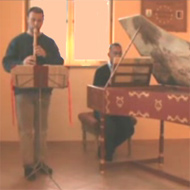
Faronells Ground (from 'The division flute') as played by Romeo Ciuffa and Giancarlo delle Chiaie
Duration: 5'21" direct link to YouTube
© 2008 Romeo Ciuffa (Romeoamkj), used with permission- Broadcasted at YouTube April 3, 2008 by Romeo Ciuffa
- Duration: 5'21"
- Recording date: April 2, 2008 in Palazzo Annibaldeschi in Monte Compatri, Rome, Italy
- More about the concerts organized by Romeo Ciuffa at http://www.amkj.org
- Holman, Peter editor 'The division recorder, a complete collection of
English divisions on a ground bass for alto (treble) recorder (c.1680-1708)'
- Published 1979 by Schattinger-International Music
- Score 2 Vol. 31 cm
- Publisher No. H1020-1021
- Munrow, David (treble recorder) 'The Amorous Flute' with Oliver Brookes bass viol and Christopher Hogwood harpsichord
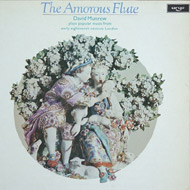
From the documentation of the Vinyl:
An anonymous set of divisions on the famous Follia ground bass, from The Division Flute issued by Walsh in London, 1704
- Title: Faronells Ground `
- Released 1974 by Argo, London LP ZRG 746
- Duration: 3'40"
- Recording date: not mentioned in the documentation (but indirect sources mention 1973)
- Munrow, D. (recorder) & Brookes, O.(bass viol) & Hogwood, C. (harpsichord) 'The amorous flute'
- Title: Faronells Ground
- Released 1995? by Decca as compact disc 440 079-2DM
- Duration: 3'35"
- Recording date: 1973
- Review in Gramophone 10/95
- Munrow, D. (recorder) & Brookes, O.(bass viol) & Hogwood, C. (harpsichord) 'The artistry of David Munrow, Baroque and Renaisance works for recorder including 'La Folia'
- Title' La Folia' but this is exactly the same tune and recording as mentioned above with the title 'Faronells Ground '
- Released by Decca as tape (cassette) AWC 8240 without indication of year
- Duration: 3'35"
- Recording date: 1973
- Munrow, D. (recorder) & Brookes, O.(bass viol) & Hogwood, C. (harpsichord) 'The artistry of David Munrow, Baroque and Renaisance works for recorder including 'La Folia'
- Title: 'La Folia' but this is exactly the same tune and recording as mentioned above with the title 'Faronells Ground '
- Released 1996 by Big Joke Music compact disc
- Duration: 3'47"
- Recording date: 1973
- Pottier, Laurence (recorder) & Amade, Jacques (organ) 'Méditation, flûte a bec and organ'
- Title: Farounels Ground (1706)
- Released 2002 by Bayard Musique compact disc D9739260
- Duration: 4'28"
- Recording date: July 18-19, 2002 in the church of Saessolsheim
- Temmingh, Stefan and ensemble
- Title: Anon. Follia (Faronells ground)
- Published at YouTube May 3rd, 2011 by Klangmueller
- Duration: 5'46"
- Recording date: 2011 during a live concert (more information is missing)
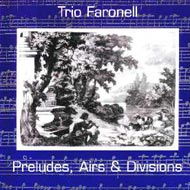
- Trio Faronell: Alan Davis recorder, Jane Ryan viola da gamba, Andrew Hurst archlute "Preludes, Airs & Divisions"
- Title: (1706)
- Released by self published year unknown compact disc TFCD2
- Duration: 5'44"
- Recording date: 20th & 21st April 2001 in St Paul's Church, Hockley, Birmingham, England
|
The Division Flute 24 mb, 35 pages |
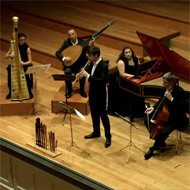
Anonymous Follia played by Stefan Temmingh and ensemble live
|
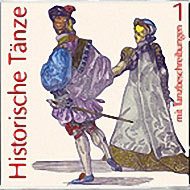
- Collegium Musica Rara conducted by Peter Thalheimer (Altblockflöte, Gitarre, Bassgambe, Kastagnetten)
- Title: Follia (1680)
- Released by Fidulafon compact disc Fidula-CD 4469 (year not mentioned in the documentation)
- Duration: 2'49"
- Recording date: 1988, place not mentioned in the documentation
 Raymond Tuttle wrote for the magazine Fanfare:
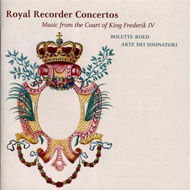
Another highlight is the closing “Folie d’Espagne” from The Princess’s Suite , so named because it was assembled from the music collection of Princess Charlotte Amalie, who was Frederik IV’s daughter. In this movement, the famous “La Folia” theme makes an appearance and is subjected to quirky variations. The Suite’s assembly was carried out with taste by Henrik Bøggild, and arranged for orchestra by Maciej Prochaska.
- Ewa Golinska (Violin), Bolette Roed (Recorder) and Ensemble Arte Dei Suonatori
- Parts of the suite: Ouverture, Allemand, Courant 1&2, Saraband, Vivace, Folie d'Espagne
- The collection is not dated, but can be traced back to around 1730. The orchestral arrangement presented here was made in 2013 by Maciej Prochaska. (source at the website of Dacapo)
- Released 2013 by Dacapo Records compact disc 6.220630
- Duration of the suite 13'56" and of the part VI Folie d'Espagne 1'53"
- Recorded in the Mirror Chamber of the Castle Museum in Pszczyna, Poland, on 13-16 March 2013
|
|
Duration: 5'50", 11 kB. |
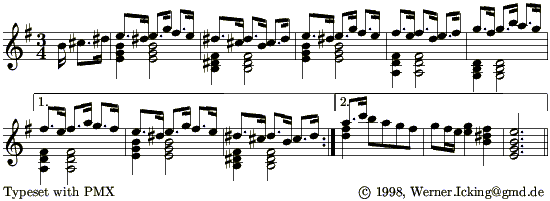
| Theme of Follías de España | by Hudson Vol I, p. 143 |
|---|---|
 |
|
- Alcock, Gillian (hammered dulcimer) 'The Pleasures of Hope' Alcock only plays the theme of this piece as an introduction to her own variations for hammered dulcimer
- Title: La Folia in OZ
- Released 1997 by Alcock compact disc GA001
- Duration: 6'29"
- Recording date: 1997 in Canberra, Australia
- Instrument (hammered dulcimer) built by Gillian Alcock
- Atrium Musicae de Madrid/ Paniagua, Gregorio (guitar, percussion, harpsichord, recorders, clarinet) 'La Folia de la Spagna'
- Title: 'Fons vitae',track 1 from 'La Folia de la Spagna'
- Released 1982 by Harmonia Mundi compact disc HMC 901050
- Duration: 6'01"
- Recording date: June 1980
- Jenny, Tobias (hammered dulcimer) 'Chains, roaming minds' music with
links to mountains and memories'
In December 1998 Tobias Jenny wrote about this folia-piece: - Title: Folias de España, Anonymous from a manuscript in Barcelona 1764
- Released 1998 by Striking String Sounds compact disc TB001
- Duration: 7'51"
- Recording date: Spring 1997 in Alberta, Calgary
- More about this recording at http://web.me.com/uphillbakery/StudioCantilena/CD.html
- Olavide, Begoña (salterio), Paniagua,
Carlos (darbugas, psalterion) e.o. 'Salterio'
This is a Folia-medley starts with an anonymous Folia including some variations by Gaspar Sanz, the second Folia is played as an improvisation by the ensemble and the last part is the Barcelona Manuscript for salterio solo dated back to 1764. - Released January 1999 by MA Records compact disc MA 025A
- Duration: 10'31"
- Recording date: March 1994 in the Monasterio de la Santa Espina, Valladolid, Spain
- Schickhaus, Karl-Heinz edited the music for psalter (Hackbrett)
- Title: 10 Solostücke aus der Handschrift Barcelona 1764, Spanische Hackbrettmusik, Heft 2
- Published by Musikverlag Josef Preissler, Munchen
- Publisher No. 6316/II
- Stolzenburg, Birgit (Barockhackbrett/Salterio) 'Il Salterio'
- Title: Folias de Espana
- Released 1996 by NYX compact disc NYX1111 address: Lindenstr. 18, 83607 Holzkirchen, Germany
- Duration: 6'32"
- Recording date: 1996 at the Iceland Studio
- Übellacker, Margit (Dulcimer/Barockhackbrett/Salterio) 'Clarini'
- Title: La Folia for hammered dulcimer
- Recorded by Radio Bremen
- Released 2010 in a coproduction by Radio Bremen and Laika-Records compact disc 3510266.2
- Duration: 9'28"
- Recording date: June 14 and 16, 2010 in the Sendesaal Bremen, Germany
Many composers were inspired to write variations to the
famous dance piece Folias de Espan˜a. For centuries it rated in the top
ten along with Greensleeves. My version is from a manuscript datet 1764
in Barcelona containing a vast collection of Hammered Dulcimer music
(Salterio). It is the piece de resistance in my programs. I love playing
it and put it in the programs, since it allways arrives well even with
folk audiences. So for the last 2 years I played it in various concerts
(Folk and Classical) in Canada and Argentina. I play the Folias 1 tone
lower (in d-minor) because the range of my instrument is not high enough.
I combine pizzicato and hammering in my interpretation. Var 6 both hands
Pizz. (as suggested in the edition by Schickhaus). Var 7 and 10 'melody'
pizz. lower part hammered after var 10 I repeat the theme pizzicato.
I play the variations on a Appenzell stile Hackbrett which I built in
a Hackbrettbuilding course at the Heimatwerkschule in Richterswil, Switzerland
back in 1992 in the tradition of the Alpstein region in eastern Switzerland,
where it is THE regional instrument . All music schools offer lessons
on the Hammered Dulcimer and it is now enjoying a revival at the Conservatory
level in Europe. That is when I started playing the instrument.
This is a very unique and rare performance of the Folies d'Espagne.
The length of the music is no more than 22 seconds but just imagine that you are going back in time to the year 1763 and realize that your ears are able to hear the exact authentic sound of a Folia-tune as it was heard in those days. OK, not a fashionable folia because the sound is determined by the technical limitations and the specific purpose of the instrument, namely to learn birds some popular chirping, but still it is quite fascinating.
Jean-Michel Roudier, the museum conservator of the musée Auguste Grasset de Varzy (http://www.cg58.fr/services-ouverts-au-public/musees-de-la-nievre/musee-auguste-grassetvarzy.html) wrote in August 2002:
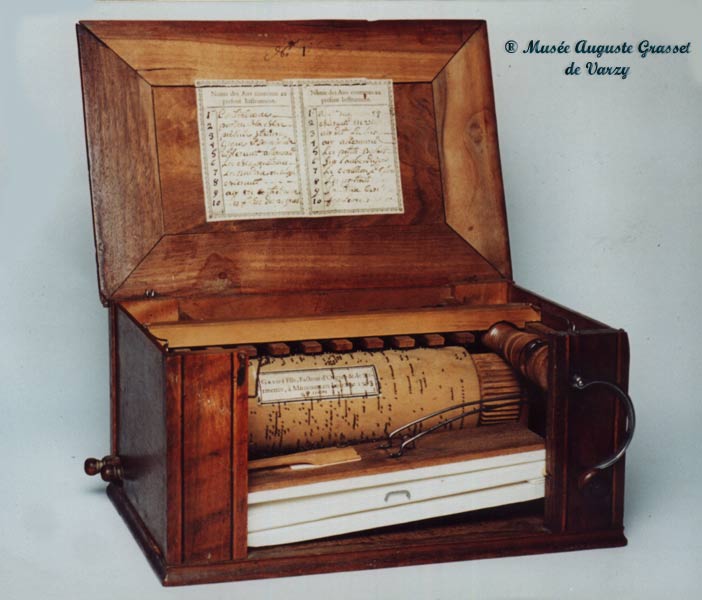 |
| serinette manufactured by Gavot
1763 |
Bird-organs, in french 'serinettes' derived from the word
'serin' meaning European canary (in Latin serinus serinus) were intended
to learn domestic birds to sing melodies by repeating the tunes over and
over again.
In our museum collection we have such an 18th century bird-organ. This charming
mechanical instrument (table-model) was dated March 28, 1763 and signed
by 'Gavot', a well known instrument manufacturer from the city of Mirecourt
(in the Vosges, east of France). The organ is well-equipped with two stops
(registers) of 10 pipes each,
one in the upper register (treble-notes, in french registre aigu) and one
in the lower register (registre grave). So people could choose to play melodies
in one of the two registers. However it is not possible to make use of both
registers at the same time. The barrel contains 10 tunes and the titles of
the melodies are labeled with handwritten paper on the box of the serinette
(see photo).
Recently the instrument has been restored in its full glory by the restorer
Bernard Pin. Now it can produce the original sound again of all the ten melodies
(small airs and dances) in both registers for which it was originally intended.
Because of the extraordinary pure and authentic sound, I decided to record
all the ten melodies in both registers for a compact disc release, with the
financial help of the 'Association des Amis du Musée Grasset Conseil
général de la Nièvre'. The last melody is 'Les Folies
d'Espagne' a tune which will have your special interest. You might notice
the very high tempo of the Folia-theme, especially in the last eight bars.
The speed is also more up tempo compared to the other tracks which have less
bars than the sixteen of the Folies d'Espagne because of the limited absolute
duration of the pieces to be played. On a serinette, to come full circle of
the barrel, must be achieved by the player (the guy that turns the crank)
in more or less than 20 seconds. Otherwise, the bellows will not blow air
enough, and the notes are not hold.
About the name of the man who did put all these small things of brass (in
french 'picots') on the wood roll : i should say 'anonymous'. There was, in
the 18 th century, a man specialized in this sort of job in every workshop.
Unfortunately, he has no name, and the only signature we know here is 'Gavot
fils' (the son of Gavot). Some specialists in mechanical music told me, after
listening to the record, that the roll was very well 'noted'. Some others
are much more simplified. And the notes of the 10 pipes are unusual, compared
to other serinettes made at the same time. However due to its very specialized
disposition the compact disc is not available in record shops as you might
understand.
- Gavot (manufacturer of the mechanical instrument) 'La Serinette du musée Auguste Grasset de Varzy'
- Title: Les Folies d'Espagne
- Released 2002 (year not indicated) by musée Auguste Grasset de Varzy compact disc without order-number
- Duration: 0'22"(in high register)
- Duration: 0'22"(in low register)
- Recording date: 2002 in the museum Auguste Grasset, Varzy
- Instrument (serinette) manufactured by 'Gavot' and reconditioned by Bernard Pin
- The compact disc with a total duration of 8'24" and with the tunes Contredanse, Pardon ma Mère, Prélude Italien, Gigue et son prélude, Menuet allemand, les Mousquetaires, La Badine en chasse, Menuet, Air en contredanse and Les Folies d'Espagne all played in both registers can be ordered for the price of 6 Euro including shipping by the Musée Auguste Grasset de Varzy: jimbea@wanadoo.fr
| |
Duration: 0'22", 254 kB. (96kB/s, 44100Hz) |
- Les Musiciens du Palais Royal (theorbo solo - Kléber Besson) 'Les joyaux de la musique Baroque Française'
- Title: Les Folies d'Espagne
- Released April 2004 by MPR compact disc 001 and it can be ordered for 12 euro or $12 (including post handling) at http://perso.wanadoo.fr/lesmusiciensdupalaisroyal/contact.htm
- Duration: 1'55"
- Recording date: February 29, 2004 at Claye Souilly 77410, France
- More about the oeuvre of Les Musicians du Palais Royal at http://perso.wanadoo.fr/lesmusiciensdupalaisroyal/

Kléber Besson wrote about this piece:
This Folia was part of a manuscript in the collection of the duc d'Aiguillon, now preserved in Agen (France), known as Folia in La mineur, F 6,7 Ms. Agen. The piece is written down in two sections: A and B. I recorded the piece as A-B-A to extend the solemn atmosphere of the composition and as you probably will know the theme was often repeated at the end of these kind of Folias.
| |
Duration: 1'55", 964kB. (64kB/s, 44100Hz) |
|
2 pages in pdf-format with fingersetting, 71 kB |
- Inventory of the Royal Library, Den Hague, The Netherlands as part of the collection Frans Vester
- Inventory number NMI42.1
- sheet music pages 54-55, size 33 cm
Richard Hudson (p. 108, Vol 1) stated that variations 2, 3 4 and 11 are almost identical to the variations 3, 2, 4 and 9 of the ground by Farinelli.
- manuscript Res 1186 bis, fols. 33-36, Bibliotheque du Conservatoire
National de Musique, Paris France
This is the only piece in the manuscript that is not clearly for keyboard. It contains some keyboard fingering for the upper part, but the bowing slurs and the texture point to a performance by violin and continuo. (source R. Hudson 'La Folia' p. XXXVII)
See also the intrumental version of Joy to great Caesar for harpsichord published by Bremner.
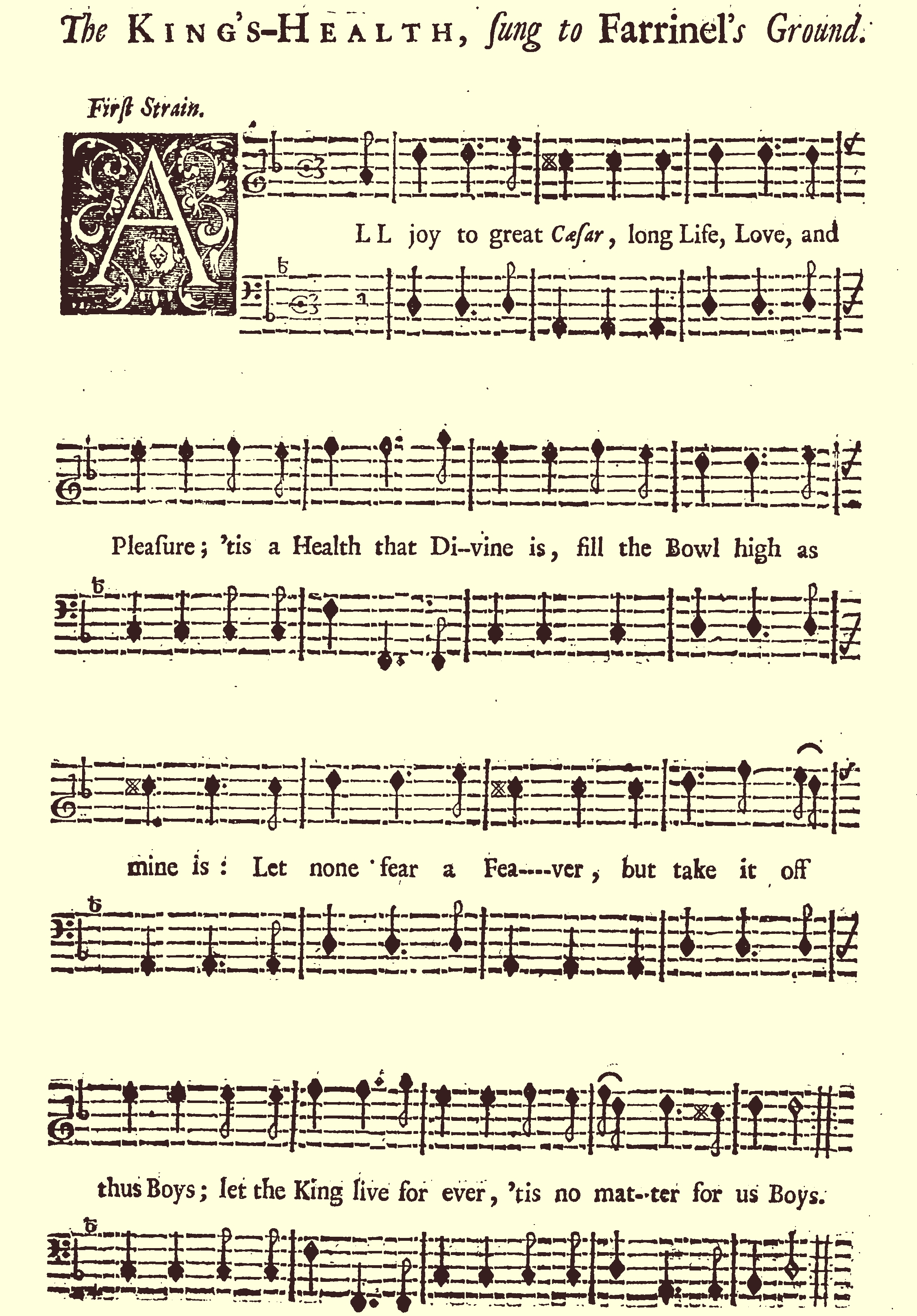
'Farrinel's Ground' is the label of the Folia-tune in Great Britain derived from the violinist Farinel (with different spellings of the name Farinel). Although D'Urfey was also a composer, he did not compose this tune but only wrote the text with the indication that it should be sung on the Folia-theme which was included in the publication.
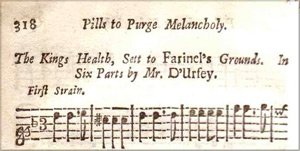 |
|
| the music from Several New Songs, 1684 |
| Text: | |
| Joy to great Caesar, long Life, Love, and Pleasure 'tis a Health that Divine is, fill the Bowl high as mine is. Let none fear a Feaver, but take it off thus Boys. let the King live for ever, 'tis no matter for us Boys, Try all the Loyal, defy all. give denial sure none thinks the Glass too big here, nor any Prig here, or sneaking Whig here, of Cripple Tony's Crew, that now looks blew, his Heart akes too, the Tap won't do, his Zeal so true, and Projects new, ill Fate does now pursue Let Tories guard the King, let Whigs in Halters swing. let Pilk- and Sh- be sham'd, let bugg' ring O be damn'd. let cheating Pl-- be nick'd, the turncoat Scribe be kic'd. let Rebel City Dons never beget their Sons. let ev'ry Whiggish Peer that Rapes a Lady fair and leaves his only Dear the Sheets to gnaw and tear, be punish'd out of hand, and forc'd to pawn his Land t'attone the grand Affair |
Great Charles, like Jehovah, spares Foes would unking him, and warms with his Graces the Vipers that sting him. 'till crown'd with just Anger the Rebels he seizes. Thus Heaven can Thunder when ever it pleases Then to the Duke fill, fill up the Glass, the Son of our Martyr, belovev'd of the King. Envy'd and lov'd, yet bless'd from above, secur'd by an Angel safe under his Wing Faction and Folly, and State Melancholy, with Tony in Whigland for ever shall dwell. let Wit, Wine and Beauty, then teach us our Duty, for none e're can love, or be wise and rebel |
- Passamezzo (Emily Atkinson: soprano, Robin Jeffrey: lute, Alison Kinder: bass viol)
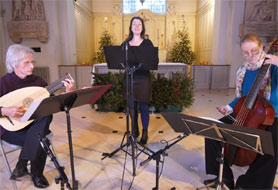
Passamezzo The King's Health, All joy to great Caesar, Farrinel's Ground
Duration: 3'05" direct link to YouTube
© 2023 by Passamezzo- Title: The King's Health - All joy to great Caesar - Farrinel's Ground - Follia
- Published at YouTube May 12, 2023 by Passamezzo
- Duration: 3'05"
- A Stadlen Production
- Recording date: 9 January 2023
- Thomas D'Urfey
- Published in 1719 in Wit and Mirtth: or Pills to Purge Melancholy. being A Collection of the best Merry Ballads and Songs, Old and New. Fitted to all Humours, having each the their proper Tune for either Voice, or Instrument: Most of the Songs being new Set. Vol IV.
- Printed 1719 by W. Pearson for J Tonson at Shakespear's Head, over against Catherine Street in the Strand
- Published Pills to Purge Melancholy (1719) in 1991 by Bartholomew Press, Boulder, Colorado, USA
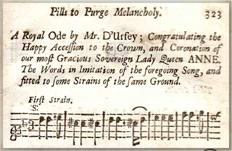
Text: D'Urfey, Thomas (1653-1723), created 1702 (Coronation of Queen Anne was on the 8th of March 1702) published 1719
- Thomas D'Urfey
- Published in 1719 in Wit and Mirtth: or Pills to Purge Melancholy. being A Collection of the best Merry Ballads and Songs, Old and New. Fitted to all Humours, having each the their proper Tune for either Voice, or Instrument: Most of the Songs being new Set. Vol IV.
- Printed 1719 by W. Pearson for J Tonson at Shakespear's Head, over against Catherine Street in the Strand
- Published Pills to Purge Melancholy (1719) in 1991 by Bartholomew Press, Boulder, Colorado, USA
- As far as I know this tune has not been recorded yet
 Text: Jean de La Fontaine (1621-1695), created 1687, published after his death
Text: |
|
| On languit, on meurt près de Sylvie |
Tous les jours entrent à son service |
| C'est ainsi qu'en un bois solitaire |
|
- Deletre, Bernard (bass), Desrochers, Isabelle (soprano), Marais Symphony
Orchestra 'Jean de La Fontaine: A Musical Portrait, Lully, Couperin, Charpentier
and others'
In the slipcase is written: - Title: Couplets pour Mme d'Hervart sur l'air des Folies d'Espagne
- Released 1996 by Virgin Veritas, Emi Classics Import compact disc UPC: 724354522925
- Duration: 2'34"
- Recording date: August 25-28, 1995 at l'abbaye de Saint-Michel-en-Thiérache
Madame de la Sablière had provided lodgings for La Fontaine in her house since 1673, but she became increasingly religious and he took to spending more and more time with the Hervart family and their brilliant circle of guests. The Hervarts gave him a room, full of busts of philosophers, in which he kept his harpsichord. Françoise d'Hervart was 'one of the most beautiful women anyone has ever seen'. La Fontaine wrote that it was his 'desire and intention that in future Mme d'Hervart be called Sylvie in all my territory on Parnassus' i.e. in his poetry. That he had given his very name to Madame Fouquet thirty years previously shows how great a compliment he was paying his hostess, for whom he wrote some galant verses to the well-known tune 'Les Folies d'Espagne'.
 Text: Voltaire (1694-1778) (born as François Marie Arouet)
qui s’appelait Madeleine. Chanson sur l'air des Folies d’Espagne Votre patronne en son temps savait plaire; |
|
7 pages in pdf-format 105 kB |
Manuscript 2151 of the university of Gand is mentioned as containing two pieces on the l'air de Folies d'Espagne: 'reviens pécheur, cést ton Dieu, qui t'appelle' and 'Profondeur, abime impénétrable'
- Smidt, J.R.H. de (collected by)
'Les Noëls et la tradition populaire, 142 notations populaires avec gravures'
- Published 1932 in Amsterdam by H.J. Paris
- Included a list of literature about Folies d'Espagne (La Folia)

The Folia theme is actually not sang at all. In the musical breaks between the verses twice a statement of the second line of the Folia (ending in the tonica) is to be heard while the instrumental intro and coda is an imitation of the melody of the verses.
- Prior, Maddy with The Carnival Band 'Sing lustily & with good courage'
- Title: Rejoice ye shining worlds
- Prior, Maddy (voice) Watts, Andy (recorders), Jub' (bass) and Badley, Bill (lute)
- Released 1990 by Saydisc Records compact disc CD-SDL 383
- Duration: 2'09"
- Recording date: March 1990 at Valley Recordings, England
preserved in a Spanish manuscript from the early 18th century, Escorial manuscript Bc M. 1452, circa 1731, a modern edition was published by Maurice Esses
Arrangements based upon this manuscript were used by:
- Baxter, Becky (composer letter B)
- Grupo de Música Barroca La Folía (composer letter G)
- The Waverly Consort (composer letter W)
This tune is firmly grounded in the genre of folk songs. The first 8 bars follow the chord progression of the last 8 bars of the Folia-theme. Like the Swedish Sinclair(s)visan the following 8 bars are somewhat like an answer on the Folia-theme. So in fact the Lampaanpolska is more complex than the Folia, while in the Folia theme the first 8 bars are the same as the first 8 except for the ending.
Arrangements based upon this traditional tune were used by:
- JPP (Järvelän Pikkupelimannit) (composer letter J)
- Kuula, Toiva (composer letter K)
- Rinda-Nickola, Samuel (composer letter R)
- Tapiola Choir conducted by Pohjola, Erkki (composer letter T)
- Zetterholm, Finn & Selander, Marie (composer letter Z)
This tune is firmly grounded in the genre of protest and folk songs. There are many sung versions of the tune. The first 8 bars follow the chord progression of the last 8 bars of the Folia-theme. Like the Finnish/Swedish Lampaanpolska the following 8 bars are somewhat like an answer on the Folia-theme. So in fact the Sinclairvisan is more complex than the Folia, while in the Folia theme the first 8 bars are the same as the first 8 except for the ending.
'Visa' in Swedish means roughly the same thing as 'song' in English. 'Sinclair' is derived from Malcolm Sinclair, a Swedish diplomat, who was murdered on his way home from Turkey 1739 on orders of the Russian government. The original 90 verse text was written by Anders Odel (1718-1773) but there are lots of variants on the original text, and many of them are of a political nature. The Swedish poet Carl Michael Bellman (1740-1795) also set words to the La Folia melody, no doubt helping along its spread in Sweden. The complete text in the Swedish language, written by Anders Odel can be found at http://members.tripod.com/minata/sincl.html
Arrangements based upon this traditional tune were used by:
- Adolphson, Olle (Composer letter A) title: Folia but the tune is Sinclairvisan
- Grieg, Edvard (Composer letter G)
- Johansson, Jan (Composer letter J)
- Knutna Nävar (Ensembler letter K)
- Svenblad, Ronnie (Composer letter S)
- Taube, Sven Bertil (Composer letter T)
- Willemark, Lena (Composer letter W)