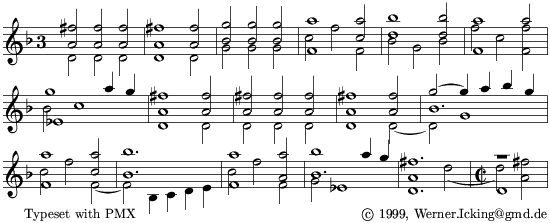
The structure of the 'early' folia (usually before 1672) as classified by Richard Hudson can take
different chord progressions and melody-lines. From that point of view they are not so interesting
for a comparison and detailed description. However since the later folia emerged from these folias and they
keep on crossing my path in doing some research for the later folia it seems fair to mention a standard
early folia model quoting Hudson and to list some of those early folias. A real profound study
of the 'early' folia you can find at the excellent website http://www.xs4all.nl/~wresida/homepage/earlyfolia.html.
The webmaster, Mrs Resida has made a huge contribution over the years to this website too. Without her input
and inspiration it would have not been that detailed as it is today.


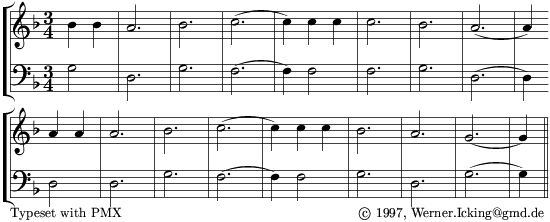
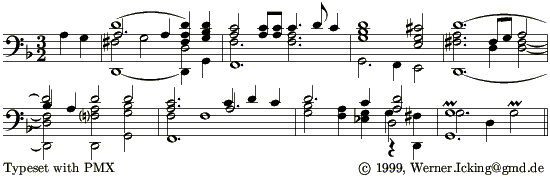
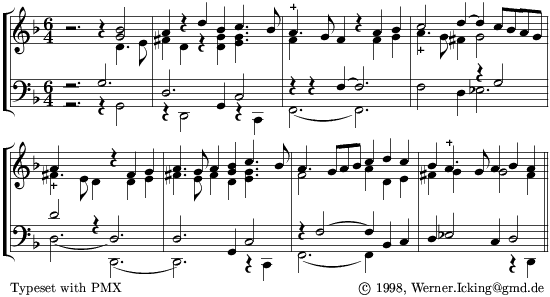
A FRAMEWORK OF THE EARLY FOLIA

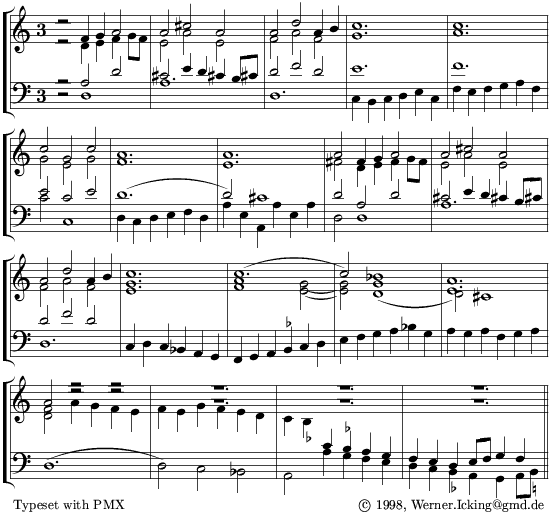
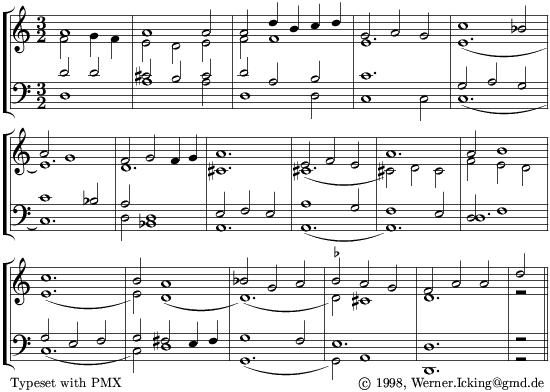
The framework twice followed by the
opening of 'Partite variate sopra Folia'
by Piccinini (1623). Duration: 1'14", 2kB.
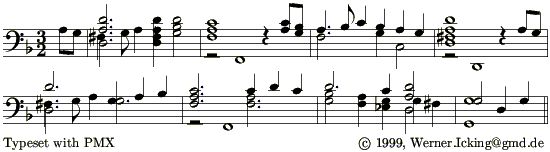
The framework in the key of g minor by Hudson, Vol I, p. XVIII
Framework of the early Folia by R. Hudson -10kB


Some 'early' folias in alphabetical order of composer


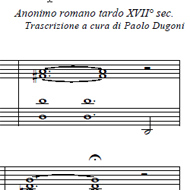
Anonymous for organ (17th century)
Follia (manuscript AA 360, Civico Museo Bibliografico Musicale, Bologna, Italy)
  1. Tamminga, Liuwe (organ) 'Basilicata, a musical journey in the provinces of the Kingdom of Naples'
    Here the early Folia scheme is exposed as played by Piccinini and Kapsberger for plucked instruments.
    • Title: Follia
    • Released 2002 (although not indicated) by Accent as compact disc ACC21147
    • Duration: 0'45"
    • Recording date: October 28 and 29, 2001 in the Chiesa Madre S. Maria Maggiore, Miglionico, Italy
    • Organ built by Giuseppe Rubino of Puglia, restaured by Fratelli Ruffatti di Padova 1993

Anonymous for vihuela (16th century)
cover cd Juan Carlos Rivera - size 15 Kb
Diferencias de Folías
In the manuscript of Silva de Sirenas together with some later additions, copy of the manuscript in the national library of Austria, Vienna
  1. Rivera, Juan Carlos (vihuela) 'Tañer de Gala, Música para vihuela de mano'
    Juan Carlos Rivera wrote about this piece in an e-mail May 2004:

    The anonymous folia (track 1 of the cd) is a manuscript added to Valderrabano's 'Silva de Sirenas' and a copy of this music is conserved in the National Library of Austria (there are two more pieces by the same hand). This composition is written in Italian tabulature.

    In the slipcase José Carlos Cabello (English version revised by Christopher Price) wrote:

    Vienna's National Library preserves a copy of Silva de Sirenas with a later manuscript addition. In it is found the anonymous Diferencias sobre Folias (track 1) recorded here, perhaps the most 'modern' music on this CD. Its theme and variations form anticipates some Spanish seventeenth century music. The folía (modern spelling; the old spelling lacked the accent, as was the norm in Spain during the sixteenth and seventeenth centuries) is a dance, whose origins are claimed by both Spain and Portugal. Francisco Salinas, in his De musica libri septem published in Salamanca in 1577, says that it was a Portuguese dance and gives two alternative versions of the tune. It began to be cultivated towards the last quarter of the sixteenth century, achieving great popularity during the next century, although in its second variant given by Salinas, slightly modified. The diferencias on the folía recorded here are an elegant example of an ornamented harmonic pattern which, incidentally, offers many possibilities: challenging rapid scales for the right hand, constant changes from the low to the high courses demanding a great limpieza (clarity and transparency) in following the melodic line. The rasgueado strumming passage added by Juan Carlos Rivera at the end of the piece is a kind of symbol, in view of the new period of Spanish music emerging at the time, that the pre-eminence of the vihuela was nearing its end

    • Title: Diferencias de Folías
    • Released 2002 by Cantus compact disc C9631
    • Duration: 4'21"
    • Recording date: July 2000 at Antigua Iglesia de San Miguel, Cuenca, Spain
    • Vihuela built by Francisco Hervás, Granada, Spain in 1991
    • More about the oeuvre of Juan Carlos Rivera at http://www.juancarlosrivera.com

Anonymous for voice(s) and ensemble (16th century)
Les Caterines / La Cara Cosa (La Folia)
cover cd Ensemble Lucidarium size 15 Kb Melody: "La Cara Cosa" (anonymous, Bayerische Staatsbibliothek Mus. manuscript 1503)
Text: "Les Caterines" Joan Escrivà (Valence 1450 - end of 15th century)

Les Caterines
semblen regines;
donques veurem
quines coblas ne fem.
Tala la volem.

Las que he trobades
son obblidades;
per que, cercades,
d'altras ne farem.
Tale la volem.

Jo n'am una
mes que naguna,
e vol Fortuna
trebal passem.
Tale la volem.

Es cara cossa,
gentil come rosa;
mes no reposa
lo mal que prem.
Tale la volem.

Es molt cortesa,
de gran noblesa;
de amor ensesa
com la veurem?
Tale la volem.

Cara de sancta,
de virtut tanta;
no puch dir quanta
ne la compren.
Tale la volem.

Es desembolta,
muda la volta
mes de revolta
hi jugarem.
Tale la volem.

The 'Catherines'
Seem like queens
So, let's see
What verses we can make up:
That's the way we like them.

Those I've already written
Have been forgotten,
That's why we'll try
To write some fresh ones:
That's the way we like them.

There's one I like
More than any other:
But Fortune
Wants us to suffer;
That's the way we like them.

She's a dear thing,
Sweet as a rose.
But the pain that crushes me,
Gives no respite
That's the way we like them.

She's very graceful
Of great nobility
Flaming with love
How do we see them?
The way that we like them.

O saintly face,
So full of virtue,
I can't even tell you
how much it contains:
That's the way we like them.

She's free and easy
Changes her mood,
Each time
We play,
Because that's the way we like them.

  1. Ensemble Lucidarium (Gloria Moretti: voice, Viva Biancaluna Biffi: voice, viola d’arco, Massimiliano Dragoni: percussion, Francis Biggi: viola da mano, Elisabetta Benfenati: renaissance guitar, Federico Marincola: bass lute, Avery Gosfield: recorder, Marco Ferrari: renaissance winds) ' La Istoria de Purim, Musique et poésie des Juifs en Italie à la Renaissance'

    Fragment of Les Caterines / La Cara Cosa (La Folia) by Ensemble Lucidarium
    Duration: 1'20", 892 Kb.( 90kB/s, 44KHz)
    © 2005 Ensemble Lucidarium, used with permission

    • Title: Les Caterines / La Cara Cosa (La Folia)
    • Released 2005 by Classica Da Camera K617 (Harmonia Mundi 90) compact disc K617 174
    • Duration: 6'36"
    • Recording date: May 8-11, 2005 in the church of Vasperviller, Moselle, France as part of the XVIIIth Festival International de Musique de Sarrebourg (announced as a worldpremière).


Aquilla, Marco dall' (? - ?)
cover cd Rumsey - size 10 Kb
Cara Cossa
  1. Rumsey, Shirley 'Music of the Italian Renaissance for voices, lutes, vola da mano, cittern and Renaissance guitar'
    • Title: Cara Cossa
    • Released 1994 by Naxos Early Music compact disc CD 85550615
    • Duration: 1'14"
    • Recording date: May 10-12, 1993


Bailly, Henri le (? -1637)
La Folie. Passacaglia from ballet
Despite the title this is no early Folia but a beautiful example of a passacaglia. It is listed to avoid any misunderstandings in the future.
Text: (original Spanish and translation into English)
Yo soy la locura
la que sola infundo
placer y dulzura
y contento al mundo

Sirven a mi nombre
todos mucho o poco,
y no, no hay hombre
que plense ser loco.

I am the madness
That instills
Pleasure and gentleness
And contentment in the world

All men wait on my name
Little or much
But none of them
Considers himself a madman

  1. Janas Ensemble directed by Paola Erdas 'Hermosuras'
    cover cd Bailly Janas Ensemble size 15 Kb Paola Erdas wrote for the slipcase:

    Despite the title and the great text, the Folie by Henry de Bailly (died in 1637), is not based upon the theme of the Follia, but upon a bass passacaglia (four descending notes). This form, of Neapolitan origins, was much used by musicians in the Spanish lands. Bailly, a Frenchman, used a Spanish text and a musical form born in Italy under Spanish domination in order to create a composition offering a strong rhythmical impact, rich in syncopation, the whole in a decidedly Iberian style.

    • Title: Passacalle: La Folie
    • Released 2001 by Stradivarius compact disc STR 33601
    • Duration: 2'03"
    • Recording date: November 17-19, 2000 in Chiesa di Sant' Antonio Abate, Piancerreto di Cerrina, Alexandria

  2. Le Poème Harmonique and director Vincent Dumestre 'Pierre Guédron: Le consert des Consorts (v.1565-v.1620)' cover cd Bailly Dumestre size 15 Kb
    • Title: Passacalle, La Folie
    • Released 2002 by Alpha Productions compact disc ALPHA019 - 3760014190193
    • Duration: 3'54"
    • Recording date: April 2001 in la Chapelle de l'Hôpital Notre-Dame de Bon Secours, Paris

  3. Resonet (Mercedes Hernández: soprano, Fernando Reyes: lute, Xoán Ramón Marín Martinez: castanets) 'Les Pellerines' cover cd Resonet Bailly size 15 Kb Mercedes Hernández wrote for the slipcase:
    The madness pointed at by Erasm of Rotterdam in his 'Praise of Madness' as causing many men to abandon their families to go to Santiago was clearly shown in its French reedition in Amsterdam in 1728. We represent this madness in the passacaglia 'La Folie (1614), also in Castillian, that was part of a ballet composed by Le Bailly for Queen Ana.

    • Title: Passacalle 'La Folie'
    • Released March 2001 by Clave Records (Boanerges) compact disc 2013-CD
    • Duration: 2'51"
    • Recording date: December 27-29, 1999 and January 4, 2000 mobile studio of Radio Galega


Baldano, Giovanni Lorenzo (1576-1660)
cover cd Horst Grimm - size 15 Kb
Follia (1603)
  1. Grimm, Horst (Sordellina in G & D), Dustman, Katharina (Percussion) 'Giovanni Lorenzo Baldano, Il libro della Sordellina'
    Horst Grimm wrote about the instrument:

    The sordellina has two chanters, and at least one drone, and it was only known from written or illustrated historical sources

    • Title: Follia
    • Released 1999 by Verlag der Spielleute, compact disc ordernumber 9903
    • Duration: 1'48"
    • Recording date: not mentioned in the slipcase
    • More information about this recording at http://www.spielleute.de/grimmcd.htm


Bartolotti, A.M. (c. 1615-after 1650)
Follia, 1640
Tom Moore wrote about Bartolotti:

Angelo Michele Bartolotti of Bologna published two books of tablature for the guitar. The first, published in Florence in 1640 (Libro Primo), begins with twenty-two passacaglia in as many keys, which are followed by six suites each made up of allemanda, two correnti and sarabanda. The volume closes with a follia set. (Both volumes were reissued in facsimile by Minkoff in 1984). Bartolotti moved to France in 1656, and from that point he seems to have been known as a theorbist; in 1669 he published a book on basso continuo for the theorbo, at which point he disappears from history.
For the listener who is used to light and undemanding music from the baroque guitar the seriousness of Bartolotti's writing comes as a surprise. The focus is on plucked rather than strummed textures, and the weightiness of the discourse is what one would expect from the theorbo.


Bertali, Antonio (in collaboration with Leopold I) (1605-1669)
cover cd Ricercar Consort size 15 Kb
Regina Coeli (1644)
  1. Ricercar Consort directed by Philippe Pierlot with Henri Ledroit counter tenor, Françle;ois Fernandez (violon), Mihoko Kumura (violon), Philippe Pierlot (basse de viole), Gail Ann Schröder (base de viole) and Guy Penson (harpsichord) (all at Regina Coeli) 'Deutsche Barock Kantaten (1)'
    In the slipcase is written:

    Finally Leopold I was nothing less than Emperor! [...]The Regina Coeli, one of the numerous religious compositions of Leopold I, bears the inscription: accompagnamento di viole del Anthonio Bertaly

    • Title: Regina Coeli
    • Released 1985 by Ricercar Dureco compact disc 240872
    • Duration: 6'41"
    • Recording date: 1985 in Eglise Saint-Apollinaire à Bolland
  2. Ricercar Consort directed by Philippe Pierlot with Carlos Mena counter tenor (Regina Coeli) 'Sonata à 6 "Tausend Gulden" et six autres Sonates; Chiacona'
    • Title: Regina Coeli
    • Released 2004 by Mirare compact disc MIR 9969
    • Duration: 7'16"
    • Recording date: unknown


Bianchini
La cara cosa? in: Intabolatura de lauto for Viola da Gamba, 1546

Briceño, Luis de (first half 17th c.)
cover cd Ricercar Consort size 15 Kb
Folias (in Método mui facilissimo, 1626)
Paola Erdas wrote for the slipcase (translation by Rossella Bagnardi):

By Luys de Brinceño (late 17th century)theoretician and guitarist, we have selected a piece called Folias, variations on ground bass on the theme of Folias. This theme (hre slightly modified) was amongst the most widely used in western music and is another example of Iberian repetory that crossed the border to become part of the common heritage of Europe.

    • Title: Folias
    • Released 2001 by Stradivarius compact disc STR 33601
    • Duration: 1'19"
    • Recording date: November 17-19, 2000 in Chiesa di Sant' Antonio Abate, Piancerreto di Cerrina, Alexandria


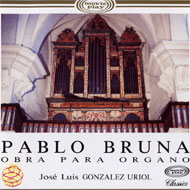
Bruna, Pablo (1611-1679)
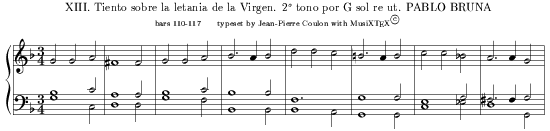
Tiento de segundo tono sobre la letanía de la Virgen
Theme of letanía de la Virgen
Opening of Tiento de segundo tono sobre la letanía de la Virgen by Pablo Bruna,
07kB
  1. Bovet, Guy (organ) 'Orgues du Mexique I, orgues de la Cathedrale de Mexico'
    In the slipcase is mentioned about this track: cover lp Bovet - size 15 Kb

    This magnificent work is written entirely for divided keyboard, based on a melody which is constantly repeated, either in part or as a whole. The soprano becomes more and more ornate, and at the end the texture swells as if it were a piece for a non-divided keyboard. For this recording, and for more variety, the registration proceeds sometimes with echos (the alternation of priest and congregation), sometimes with varied solos, a diversity which displays well the many colors of the organ.

    • Title: Tiento sobre la letanía de la Virgen
    • Released 1987 by Gallo compact disc CD-439, 1986 LP 30-439, cassette 47-439
    • Duration: 6'53"
    • Recorded on the orgues de la Cathedrale de Mexico-City
    • Series: El órgano histórico Español nr. 4

  2. Chapelet, Francis (organ) 'L'orgue historique de Covarrubias' cover cd-set Chapelet 15 Kb cover cd Chapelet 15 Kb
    • Released by Harmonia Mundi LP HM793 and as 6 compact disc set 'Les Orgues Historiques', second disc 'Orgues d'Espagne' HMC 29001225.30
    • Duration: 5'52"
    • Recording date: not mentioned in the compact disc-set
    • Organ: Orgue Diego de Orio Tejada (17th and 18th Century)

  3. Immerseel, Jos van (harpsichord) 'Hans Ruckers, The musical legacy'
    • Title: Tiento sobre la letania de la Virgen
    • Released 2000 by (super-audio-CD) NorthWestClassics compact disc NWC-128390
    • Duration: 5'38"
    • Recording date: 2000, in Museum Vleeshuis, Antwerpen, Belgium
    • Harpsichord built by Hubert Bédard (1974) after Andreas Ruckers
    • Production has been possible through the cooperation of Het Ruckers Genootschap vzw and Jos van Immerseel amongst others
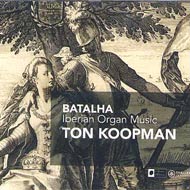
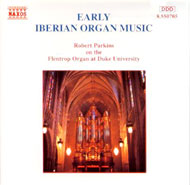
  4. Parkins, Robert (organ) 'Early Iberian Organ Music' cover cd Robert Parkins - size 10 Kb
    • Title: 'Tiento on the litany of the virgin'
    • Released 1993 by Naxos compact disc 8.550705
    • Duration: 7'12"
    • Recorded 1992 on the Flentrop organ at Duke University

  5. Rogg, Lionel (organ) 'La Escuela de Zaragoza I'
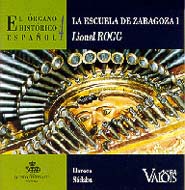
    Lionel Rogg wrote about 'Tiento sobre la letania de la Virgen' in the slipcase: cover cd La Escuela de Zaragoza I

    This is another work which allows exploits on the register of an organ with a single keyboard, but with cut registers. It is an impressive ensemble of variations on a hymn to the Virgin. The final progression, in which the composer allows himself to be carried away by a kind of a mystical delirium, evokes other famous litanies, like those of Jehan Alain.
    Being blind, Bruna was probably not able to control the writing of his compositions, and this work has come to us in quite a confusing version, especially for the one who wants to follow a successive regular harmonies of the main theme. There are obvious errors, and, in the manner of Guy Bovet, who has very kindly given them his attention, I took the liberty of reordening certain passages

    • Title: Tiento de segundo tono sobre la letanía de la Virgen
    • Released 1992 by Auvidis Valois compact disc V4648
    • Duration: 6'25"
    • Recording date: August 1991 at the organ of Santo Domingo, Daroca
    • Series: El órgano histórico Español nr. 4
  6. Torrent, Montserrat (organ) series: 'órganos históricos en Aragón, anthologia de organistas aragoneses del siglo XVII'
    • Title: Tiento de segundo tono por Gesolrut sobre la letania de la Virgen
    • Released by unknown label and year of release unknown
    • Organ built by Sánches, Bartholomé in 1734
    • Duration: 7'03"
    • Recording date: unknown at the organ of the Church of Zaragoza Spain de Nuestra Señora de la Asunción de Cariñena


Cabanilles, Iohannis (1644-1712)
Diferencias de Folias in: Tocatas y Folias for organ (1694)

Duration: 8'20", 16 kB.
Sequenced by Paco Villanueva and used with permission
The midi archive of Paco Villanueva (Early Spanish music) is located at http://classicalmus.hispeed.com/paco/

Opening of
Diferencias de Folias
in the Opera omnia Volumen II
edited by Hyginii Anglès
Opening of Diferencias de Folias by Cabanilles, 22kB
  1. Anglès, Hyginii edited the music
    • Title: Diferencias de Folias
    • Published in: Iohannis Cabanilles, Opera omnia Volumen II, page 130 and further
    • Published 1933 by Institut d'Estudis Catalans: Biblioteca de Catalunya, Barcelona
    • Series: Publicacions del Departament de Música VIII

  2. Behringer, Michael (harpsichord) 'Altre Follie'
    cover cd Hespèrion XXI 'Altre Follie' 15kB Rui Vieira Nery wrote for the slipcase:
    Even the greatest of all Peninsular keyboard composers of the late seventeenth century, the Catalan Joan Cabanilles (1644-1712), did not feel that it would be unworthy of his talent to cultivate the genre, side by side with his majestic contrapuntal tientos. Many of these composers were known in their lifetime not only for their instrumental virtuosity but also for their ability to apply it to lengthy improvisations on well-known musical themes. In their settings of variations on the Folia one cannot not avoid the feeling that these are published as mere examples of their improvisatory talent, and that the composers themselves would most likely change a great deal of the written musical text every time they performed it, in a much more significant way than they would dare to do when performing a stricter genre of musical composition.
    On the other hand, although the style of composition in these pieces is certainly not "popular", in the proper sense of the word, but rather the work of a skilled virtuoso and an academically trained composer, the rhythmic strength of the music suggests that this is still a repertoire intended for an upper-class elite but nevertheless much closer to its remote popular roots than would be the case of the more sophisticated instrumental genres, such as the Tiento or the Fantasia. It is also fascinating to observe the fact that Iberian and Latin-American musical genres of this period that contain a strong cross-cultural component, like the Afro-Brazilian Cumbés of the several Portugal guitar collections of the early eighteenth century, often present chordal sequences that are very similar to those of the Folia, even when they combine them with non-European rhythmic and melodic patterns. That is the case of an Andean Cachua extracted from the collection of Amerindian songs and dances assembled in the mid-eighteenth century by the Peruvian Bishop Baltazar Martinez Companon, which corresponds to a true reprocessing of the Iberian original model at the hands of Amerindian musicians.

    • Title: Diferencias de Folias
    • Released 2005 by Alia Vox compact disc AV 9844
    • Duration: 5'55"
    • Recording date: February 28-March 3 and June 6-9, 2005 in the Collégiale of the Château de Cardona, Catalogne
    • See also the page Recommended Folia-recordings


Cabezón, Antonio de (1510-1566)
Para quien crié cabellos
  1. Hespèrion XX/conducted by Jordi Savall with Smith, Hopkinson and Clancy, Robert 'Antonio de Cabezon 1510-1566, Spanische Instrumentalmusik zur Zeit Karl V'
    • Title: Para quien crié cabellos
    • Released 1986 by Reflexe EMI, Köln as LP 067 EL 270385
    • Recording date: October 23-26, 1983 in the Katholische Kirche, Seeuwen/Basel

  2. Ricercare Ensemble für Alte Musik/conducted by Piguet, Michel and Savall, Jordi 'Die Instrumental Variation in der Spanischen Renaissance'
    cover cd-box Reflexe Vol 3, 15 kB Jordi Savall wrote for the slipcase (translation by E.P. Echols):

    Dances with variations: the 'pavana', the 'gallard', the 'folia', etc., are used as the basis for the development of variations, especially in the outer voices (discant and bass).
    Variations on ostinato basses (the Italien 'tenores'): in general they take their starting point from dances like the 'romanesca', the 'passamezzo', the 'folia', etc., which, basically unchanged, become the 'basso ostinato' or ground bass of the variation.
    This Romance V by Antonio de Cabezón, that was published by Venegas de Henestrosa in 1557 was based on the famous 'folia' that later was to become known throughout all Europe as 'Folies d'Espagne'.

    • Title: Para quien crié yo cabellos (folia) played by the spinet solo (Anne Gallet)
    • Released 2000 (digital remastering 2000, ADD) by Reflexe EMI, Köln compact disc 8 26484 2 and 6 pack cd-set EAN: 0724382648024 (Reflexe Vol. 3, released November 2000)
    • Duration: 2'05"
    • Recording date: October 15-22, 1972 in Zürich, Neumünster
  3. Savall, Jordi (Viole de gambe [basse]), Behringer, Michael (organ) 'La Folia, 1490-1701'
    • Title: Para quien crié cabellos
    • Released 1998 by Alia Vox compact disc AV 9805
    • Duration: 2'10"
    • Recording date: July 31/August 1-2, 1998

Pavana con su glosa (1557)
  1. Ensemble Capricio Stravagante and Sempe, Skip 'Cabezon, Canto a Mi Caballero' cover cd Ensemble Capricio Stravagante - 13 kB
    • Title: Pavana con su glosa
    • Released 2000 by Astrée compact disc E 8051
    • Duration: 3'01"
    • Recording date: September 1998

  2. Calvo-Manzano, Maria Rosa (harp) 'Música Española para Arpa' cover cd Calvo-Manzano - 13 kB
    • Title: Pavana con su glosa
    • Released 1996 by ARLV Disco compact disc AD005
    • Duration: 9'57"
    • Recording date: no date mentioned in the slipcase

  3. Erdas, Paola (harpsichord) 'Luys Venegas de Henestrosa, Libro de Cifra Nueva para Tecla, Arpa y Vihuela'
    cover cd Paola Erdas - 15 kB Paola Erdas wrote for the slipcase (translated by Rossella Bagnardi):
    [...] The pieces of music in Libro de Cifra Nueva are a collection of the most famous pieces of music of that period (in the context of the 16th century). The book offers a comprehensive and exhaustive panorama which gives us a precise idea of the current musical tastes: of course sacred music but also popular melodies such as Guardame las Vacas, several noble Tientos, vocal music with one or more voices, a large number of Fantesias for vihuela. These works were composed by the most important representatives of the Spanish and European musical societies during that century: we can find many namesthat sometimes are even unknown such as Francisco de Soto, deeply appreciated by Charles V and a very close friend of Cabezón, Francisco Fernández Palero, organist of the chapel of Granada, and so on. The collection of Venegas is the only available source of information on these musicians. The Libro contains other curiosities: a Hymno of the nun Gracia Baptista, one of the rare examples of women's music; three Tientos of Julius da Modena, i.e. Giulio Segni, who was a friend of Pietro Aretino; a Pavana glosada de Antonio (de Cabezón), which is the first example of variations for keyboard on Follia; the Romance "Para quien cries yo cabellos" a beautiful vocal version of Follia. [...]

    • Title: Pavana con su glosa
    • Released by Stradivarius 1998 compact disc STR 33483
    • Duration: 2'33"
    • Recording date: September 29-30 & October the 1st 1997, Musée des Beaux-Arts, Chartres, France
    • You can listen to the entire piece in mp3-format (2,4 Mb, 128 kbs) at the website of Paola Erdas http://www.qnet.it/paolaerdas/epediscografia3.htm
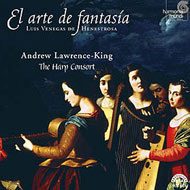
  4. The Harp Consort and Andrew Lawrence-King (renaissance harp) 'El arte de fantasía' cover cd The Harp Consort - 15 kB
    • Pavana con su glosa, improvised after Henestrosa
    • Released 2004 by Harmonia Mundi USA compact disc HMU 907316
    • Duration: 2'35
    • Recording date: February 11-17, 2000 at St George's Church, Chesterton, Cambridge, England

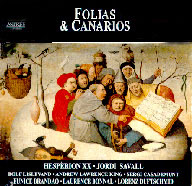
  5. Hespèrion XX conducted by Jordi Savall 'Folias & Canarios' cover cd Savall cover cd Savall new release
    • Title: Folias - Pavana con su glosa
    • Released 1993 by Astrée compact disc 8051 and Astrée 8516 and Naïve Fontalis 9974
    • Duration: 1'55"
    • Recording date: January 1993

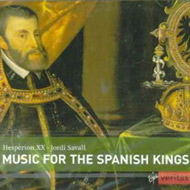
  6. Hespèrion XX conducted by Jordi Savall 'Music for the Spanish Kings' A new mid-price release of two discs previously released as two separate discs cover double cd Savall cheap re-release
    • Title: Folias - Pavana con su glosa
    • Released 2001 by Virgin Veritas double compact disc mid-price 7243 5 61875 2.
    • Duration: 2'19"
    • Recording date: October 1983 in the Catholic Church, Seewen, Switzerland

  7. Hespèrion XXI conducted by Jordi Savall 'Altre Follie'
    cover cd Hespèrion XXI 'Altre Follie' 15kB Rui Vieira Nery wrote for the slipcase:

    By the early sixteenth century the bass line of the Folia was already present in a number of polyphonic pieces collected in the Cancionero del Palacio, as a ground over which various contrasting melodic lines could be built, such as those of the songs "Rodrigo Martínez", "Adorámoste Señor" or "De la vida deste mundo" (the latter is the earliest example recorded in the present album). In 1553 Diego Ortíz used it in his Trattado de glosas as one of the ostinati bass lines on which he composed several Recercadas for viola de gamba with harpsichord accompaniment, and presented it in its basic, two-part sequence (A-E-A-G-C-G-A-E, followed by A-E-A-G-C-G-A-E-A). With slight alterations, this is also the ground for Antonio de Cabezón's "Pavana con su glosa", published in 1557 in Venegas de Henestrosa's keyboard anthology entitled Libro de Cifra Nueva. Similar chord progressions, even when their actual sequence does not entirely coincide with this pattern, or when there is a greater rhythmic and formal freedom in the ultimate structure of the piece, appear in numerous instrumental works of sixteenth-century Spanish music, including various compositions in Alonso Mudarra's 1546 Tres Libros de Música en Cifra de Vihuela.

    • Jordi Savall (viola da gamba soprano), Sergi Casademunt (viola da gamba tenor), Fahmi Alqhai (viola da gamba bass), Philippe Pierlot (viola da gamba bass), Carlos García-Bernalt (harpsichord), Rafael Bonavita (vihuela de mano)
    • Title: Pavana con su glosa (1557)
    • Released 2005 by Alia Vox compact disc AV 9844
    • Duration: 3'01"
    • Recording date: February 28-March 3 and June 6-9, 2005 in the Collégiale of the Château de Cardona, Catalogne
    • See also the page Recommended Folia-recordings

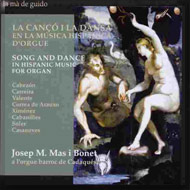
  8. Ma i Bonet, Josep M.(organ) 'La cançó i la dansa en la música Hispanica d'orgue' cover cd Josep M. Mas i Bonet 15 kB
    Josep M. Mas i Bonet wrote for the slipcase:

    The 'Pavana con su glosa' is a harmonic structure with 26 bars subdivided in sections of 4 and based on the Follia bass, exceptionally with a ternary rhythm. Given its slow and ceremonial nature, it reminds us of a dance of the same name.

    • Pavana con su glosa
    • Released 2005 by la mà de guido compact disc LMG 2069
    • Duration: 3'16"
    • Recording date: May 6 and 7, 2005 organ of santa Maria de Cadaqués, Spain

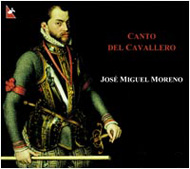
  9. Moreno, José Miguel(vihuela) 'Canto del Cavallero' cover cd Moreno 15 kB
    • Pavana con su Glosa (Henestrosa)
    • Released 1996 by Glossa compact disc GCD 920101
    • Duration: 4'25"
    • Recording date: May 1002 in Villa Cnsuelo, San Lorenzo de El Escorial, Spain

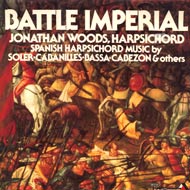
  10. Woods, Jonathan (harpsichord) 'Battle Imperial, Spanish harpsichord music by Soler, Cabanilles, Bassa, Cabezon & others cover lp Jonathan Woods 15 kB
    • Pavana con su Glosa
    • Released 1978 by Decca, Ace of Diamonds lp SDD 530
    • Duration: 2'42
    • Recording date: probably 1976 but not mentioned in the documentation of the recording
    • Harpsichord built by Rutkowski and Robinette in New York in 1964 with two keyboards and seven pedals. Lower keyboard: 16', 8' 4', buff, manual coupler. Upper keyboard: 8', lute.

Pavana Italiana in: Libro de Cifra Nueva by Venegas de Hen. (1557)
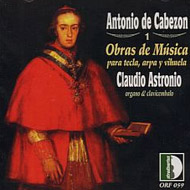
  1. Astronio, Claudio (organ or harpsichord) 'Antonio de Cabezón' cover cd Astronio - 15 kB
    • Differencias sobre la pavana italiana
    • Released 2001 by Stradivarius compact disc ORF 059
    • Duration: 3'38
    • Recording date: April 13-15, 1995 Convento della Clarisse di San Salvatore, Fucecchio, Firenze.

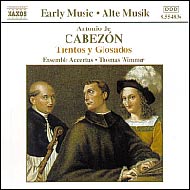
  2. Ensemble Accentus, conductor Thomas Wimmer 'Antonio de CABEZON: Tientos y Glosados' cover cd Ensemble Accentus - 10 kB
    • Pavana Italiana
    • Released 2001 by Naxos compact disc 8.554836
    • Duration: 1'54"
    • Recording date: unknown
  3. Ensemble Capricio Stravagante and Sempe, Skip 'Cabezon, Canto a Mi Caballero'
    • Pavana Italiana
    • Released 2000 by Astrée compact disc E 8051
    • Duration: 2'57"
    • Recording date: September 1998
  4. Ensemble Capricio Stravagante and Sempe, Skip 'Cabezon, Canto a Mi Caballero'
    • Pavana Italiana
    • Released 2000 by Astrée compact disc E 8051
    • Duration: 2'57"
    • Recording date: September 1998

Caliginoso
Quattro libri della Chitarra spagnuola before 1650

Carbonchi, Antonio (? - ?)
Folias (1640)
cover lp  15 kB Peter Danner wrote for the recording:
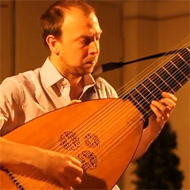
Although musicologists have learned much in recent years about the history of the baroque guitar, most of its composers remain rather shadowy figures. Biographical information is frustrating scarce. A few facts do emerge from the surviving music books. For example, to begin with the Italians, we know that Antonio Carbonchi published two books of guiatr music: one in 1640, the other in 1643. The dedicatios in these books inform us that Carbonch, a native of Florence, was an employee of Prince Matthias of Tuscany in 1640 and in the service of Marquis Bartolomeo Corsini three years later. Beyond these few meager facts, however, we have only Carbonchi's music to tell us about the man.

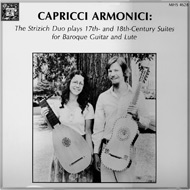
  1. The Strizich Duo (Catherine Liddell Strizich and Robert Strizich Baroque guitars) 'Capricci Armonici: The Strizich Duo plays 17th- and 18th- Century Suites for Baroque Guitar and Lute'
    • Title: Folias
    • Released 1981 by Musical Heritage Society Inc. vinyl order number MHS Stereo 4628
    • Duration: 1'13"
    • Recording date: June 4-6, 1982 in Palomar College, San Marcos, California, USA
    • Baroque guitars: 5-course baroque guitar after Jean Voboam by Nico van der Waals 1976 and 5-course baroque guitar after Giorgio Jungmann by Paul Fischer 1977


Carré, Antoine, sieur de La Grange (? - ?)
Folia (1671)
A little-known guitarist worthy of revival, he worked in the service of the Princess Palatine. This tablature reveals preludes, chaconnes, allemandes, sarabandes, folia, gigues and an instruction book.
  1. Carré, Antoine
    • Title: Folia
    • Published in: Livre de guitarre contenant plusieurs pièces... avec la manière de toucher sur la partie ou basse continue.
    • Published 1977 by Minkoff-edition, Réimpression de l'édition de Paris, 1671. Genève. 1977. 1 volume in-8 de 64 pages, broché
    • Publisher Nr.ISBN 2-8266-0644-1

Castaldi, Bellerofonte (1580 - 1649)
Follia (12 variations)
Published in 'Capricci a due stromenti cioe tioba e tiorbino e per sonar solo varie sorti di balli fantasticarie', Modena, 1622
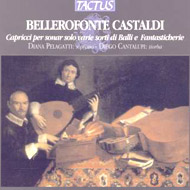
  1. Catalupi, Bellerofonte (theorbo) 'Capricci per sonar solo varie sorti di balli fantasticherie' cover cd Catalupi - 15 kB
    • Released September 2001 by Tactus Records compact disc TC 582801
    • Duration: 5'27"
    • Recording date: July 18-21, 2000 in Sacrestia della chiesa parrocchiale die Zanengo in Cremona, Italy

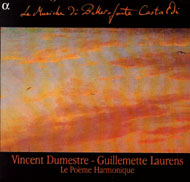
  2. Dumestre, Vincente and Laurens, Guillemette 'Le Musiche di Bellerofonte Castaldi, Le Poème Harmonique Peter van Heyghen and Vincent Dumestre wrote for the slipcase: cover cd Castaldi - 12 kB

    The musician (Castaldi) also proves to find the right harmonic 'idioms' and to restore the colourful trend of popular music, using the musette obstinate bass part, the rhythmic repetitions archieved when playing two seperated strings in unisson (on the tiorbino or on the theorbo in 'Follia' [...])

    • Released 1998 by Alpha with the support of the city of Modena, cd Alpha 001
    • Duration: 4'30"
    • Instruments used: percussion (Grare), basse de viole (Watillon), tiorbino (Moscardo), thèorebe (Dumestre)
    • Recording date: March 25, 26 and 27, 1998 in Sion (Switserland)


Colonna
in: Intavolatura di chitarra, 1620

Corbetta, Francesco (1615-1681)
Folias, Follie & Folie (1643, 1648, 1671 and 1674)
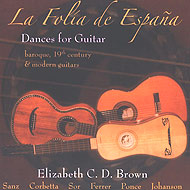
  1. Brown, Elizabeth C.D. (Baroque guitar) 'La Folía de España'

    cover cd Elizabeth C.D. Brown 15 kB Elizabeth Brown wrote for the slipcase:
    One of the Italian guitarists that Sanz mentions in the preface to his book is Francesco Corbetta, calling him "el mejor de todos" (the best of them all). this was not an overstatement, as Corbetta was probably the greatest guitar virtuoso of his time and a sophisticated composer as well. His contribution to the guitar was remarkable in that he focused exclusively on the guitar and also that he traveled extensively outside of Italy where the guitar was already well established. His charismatic virtuosity was especially recognized in the English and French courts, where the once lowly guitar became extremely fashionable among the nobility. Corbetta's Follia is from his second book, published in Italy in 1643. This Folia predates Sanz's version by over 30 years, yet it is very progressive for the time. Cor­betta is credited with both influencing the development of the Folia form, and with introducing it to the French.

    • Title: Follia (1643)
    • Released 2005 by Rosewood Recordings compact disc ROSE 1007-CD
    • Duration: 2'14"
    • Recording date: Fall 2004, at Queen Anne Christian Church, Seattle, Washington, USA

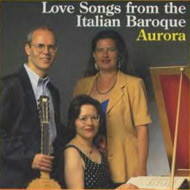
  2. Buhl-Mortensen, Kristian (Baroque guitar) 'Love songs from the Italian Baroque' cover cd Trio Aurora - 15 kB
    • Title: Follia (1643)
    • track for solo baroque guitar on an album by the ensemble Aurora (with Agnethe Christensen (vocal) and Monica Westheimer (harpsichord))
    • Released 1993 by Classico compact disc
    • Duration: 1'26"
    • Recording date: March 1992, Kastelskirken, Copenhagen, Denmark

  3. Carter, William (baroque guitar), Jacobs, Fred (baroque guitar)
    • Title: Prelude and Folies d'Espagne et Sarabande
    • Performed live in the Kleine zaal van het Concertgebouw, Amsterdam
    • Duration: 11'27"
    • Recording date: January 13, 2002
    • Recorded by De Concertzender (The Netherlands) and broadcasted April 25, 2002
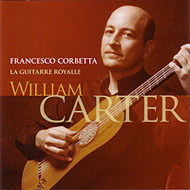
  4. Carter, William (baroque guitar) 'La Guitarre Royalle' cover cd William Carter 15 kB
    William Yeoman wrote for The Gramophone in December 2004

    This is a wonderful disc, impeccably recorded, and sure to become a most agreeable bedtime companion for many. Listen out for Carter's own prelude to the 'La Folia' variations - it's a real flamenco-inspired 'tour de force'.

    • Titles: Folie, Folie in g minor
    • Released 2004 by Linn Records compact disc CKD 185
    • Duration: Folie 4'03", Folie in g minor 2'46"
    • Recording date: unknown

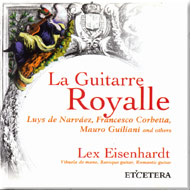
  5. Eisenhardt, Lex (guitar) 'La Guitarre Royalle'
      cover cd Lex Eisenhardt - 15 kB
    • Title: Folie
    • Released 1998 by Etcetera compact disc KTC 1199
    • Duration: 2'06"
    • Recording date: October 1995 in La Divina Commedia, Maurik, The Netherlands
    • You can mail Lex Eisenhardt at: l.eisenhardt@wxs.nl

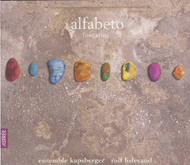
  6. Ensemble Kapsberger and Rolf Lislevand 'Alfabeto, Foscarini'
    cover cd Ensemble Kapsberger -15kB The ensemble mixed one of the folias of Corbetta with the Foscarini
    • Title: Folias per la
    • Released 2001 by Astrée Naïve compact disc E 8852
    • Duration 4'20"
    • Recording date: May 2001 in Sion, Switzerland

  7. Lindberg, Jacob (five course baroque by Robert Eyland) 'Corbetta, Francesco, Guitar Music'.
    Jacob Lindberg wrote for the slipcase in 1997: cover cd Lindberg

    In the 17th century a larger version of the four-course renaissance guitar evolved to which a fifth course was added. In some places it threathened the lute as a preferred solo-instrument of the nobility and one of the most important musicians responsible for this was Francesco Corbetta.
    Corbetta published in Brussels his fourth book , 'Varii scherzi di sonate per le chitara spagnola' in 1648 with a set of variations on the folia. The set of variations on the famous folia ground appeared five years earlier but this slightly revised version has one more variation. It demonstrates very clearly the two different playing styles that were used by 17th-century guitarists; 'rasgueado' or strumming style for the 'parte prima' and 'parte secunda' and 'punteado' or plucking style for the last three sections. All Corbetta's books have variations on the folia, and the best of these is perhaps the one in D minor from his Book 'La Guitarre Royalle' (or 'La Guitarre Royalle Dediee au Roy De La Grande Bretagne') It is the longest piece Corbetta wrote. The first statement has a stress on the second beat of each bar, accentueted by a dotted rhythm, and there are seven contrasting variations demanding a considerable technical ability from the performer.

    • Title: Folias, Follie & Folie
    • Released 1997 by BIS compact disc CD 799
    • Duration: Folias 3'05", Follie 3'30", Folie 4'37"
    • Recording date: April 1996 at Hammersta Slott, Sweden
  8. Lislevand, Rolf (guitar) 'Altre Follie'
    cover cd Hespèrion XXI 'Altre Follie' 15kB This Folias tune of the compact disc 'Altre Follie' is a combination of different lines from the Folia composition by Corbetta and by Sanz. The opening is for the Corbetta strummed lines followed by the theme of Sanz. The music swiches several times between the two pieces. Overall, one can globally identify the Corbetta elements by the strummming style and the Sanz lines by the plucked style.
    Rui Vieira Nery wrote for the slipcase:

    Corbetta seems to be one of the first authors to superimpose to the traditional bass of the Folia the characteristic treble melody in triple meter, with a dotted second beat in each measure, that was to become associated with the genre from the late seventeenth century on. In fact, Gaspar Sanz' 1674 version was basically an adaptation of Corbetta's setting., which the Spanish master must have acquired shortly after its publication in Paris.

    • Title: Folias (1674)
    • Released 2005 by Alia Vox compact disc AV 9844
    • Duration: 3'14"
    • Recording date: February 28-March 3 and June 6-9, 2005 in the Collégiale of the Château de Cardona, Catalogne
    • See also the page Recommended Folia-recordings

  9. Martinez, Kurt (guitar) 'Folías' cover cd Martinez 15kB
    • Title: Folia and Follie
    • Released without indication of year (but it is 2003) by martinezkurt@cs.com without order number
    • Duration: 2'22" and 3'12"
    • Recording date: not mentioned in the slipcase
    • See also the page Recommended Folia-recordings

  10. O'Dette, Paul (guitar) 'The King's Noyse: Pavaniglia' cover cd The King's Noyse - 18 kB
    • Title: Follia
    • track for solo guitar on an album together with David Douglas (violin), Andrew Lawrence-King (harp) and others (Ensemble 'The King's Noyse')
    • Released 2000 by Harmonia Mundi USA compact disc HMU 907246
    • Duration: 2'59"
    • Recording date: May 13-16, 1999 in The Campion Center, Weston, Massachusetts

  11. Sonatori de la Gioiosa Marca (Giancarlo Rado: guitar) 'Follie all'italiana, sonatori de la Gioiosa Marca'
    From the slipcase (translation by Kenneth Chalmers):

    Corbetta played a centrale role in the 17th-century music, not only as far as the guitar is concerned (he was a celebrated and sought-after virtuoso on the instrument), but also in the development of certain compositional forms, including the Follia. Corbetta's version of the form is a vital link between the early Follia and the later, which remained in use throughout the whole of the 18th century. It was printed in Paris, Corbetta having been invited there by Louis XIV, at the very time when Michel Farinel and Arcangelo Corelli were visiting the city. Both composed violin variations on this celebrated bass line, which went on to be used as models by composers all over Europe.

    • Title: Folia from La guitarre royalle, Paris 1671
    • Released 2001 Erato Disques, Paris, France compact disc 8573 85775-2
    • Coproduction Erato and Westdeutscher Rundfunk Köln
    • Duration: 2'11"
    • Recording date: June 11-14, 2000 Chiesa di S. Vigilio, Col San Martino Italy

  12. Stephen Stubbs (chitarra spagnola) 'Sonate Al Pizzico'
    cover cd Stubbs and Eilander - 15 kB
    • Title: Folias from Varii Scherzi di Sonate per la Chitara Spagnola, Libro Quarto, Bruxelles, 1648
    • Released 2004 by Atma Classique compact disc 22056 22722
    • Duration: 2'11"
    • Recording date: December 7-8, 2000 and Mai 27-28, 2002 in Eglise St-Augustin, St-Augustin de Mirabel, Québec, Canada

  13. Takeuchi, Taro (guitar) 'Folias!, virtuoso guitar music of C17th on period instruments'
    cover cd Taro Takeuchi - 15 kB
    • Title: Folias
    • Released 2002 by Deux-Elles Limited, Reading, UK compact disc DXL 1030
    • original 17th century guitar in ebony and ivory attributed to Matteo Sellas in Venice (c.1650)
    • Duration: 3'11"
    • Recording date: April 16 and 17 at St Martin's Church, East Woodhay, England


Falconieri, Andrea (1586-1656) see the 'later Folia' (composer Letter F)

Foriano, Pico
guitar theme, 1608

Foscarini, Giovanni Paolo (il Furioso) (no later than 1640)
Folia, from Cinque Libri della Chitarra alla Spagnola, Roma 1640
  1. Ensemble for the Seicento 'Forbidden dance, dance and diminutions of the Italian Baroque'
    Beverly Au of the Ensemble for the Seicento wrote January 16, 2003 in an e-mail:

    Thanks for your inquiry about the second Folia in our Forbidden Dance recording. Our Folia di Spagna improvisations for baroque guitar and bass viola da gamba are based on a ground from the following source: Gio. Paolo Foscarini, Li Cinque Libri della Chitarra alla Spagnola, Roma 1640.

    • Folia di Spagna (improvisations)
    • Released 2001 by Musicians Showcase Recordings compact disc MS 1073
    • Duration: 2'31"
    • Recording date: January 2000 at St. Paul's Episcopal Church Brooklyn New York and January 1998 at Calvary Church, Parish of Calvary/St. George's, New York City
  2. Ensemble Kapsberger and Rolf Lislevand 'Alfabeto, Foscarini'
    The ensemble mixed one of the folias of Corbetta with the Foscarini
    • Title: Folias per la
    • Released 2001 by Astrée Naïve compact disc E 8852
    • Duration 4'20"
    • Recording date: May 2001 in Sion, Switzerland
  3. Private Musicke (ensemble) 'Echo de Paris - Parisian Love Songs' Private Musicke 15 kB
    • Title: Folia
    • Released by Accent compact disc ACC24173
    • Duration 2'31"
    • Recording date: unknown

  4. Stephen Stubbs (baroque guitar) 'Teatro Lirico' Teatro Lirico 15 kB
    • Aria della Fulia variata (con parti variate)
    • Released February 2006 by ECM New Series 1893 4763101
    • Duration: 2'16"
    • Recording date; February 2004 in Propstei St. Gerold
    • See also the page Recommended Folia-recordings

  5. Tyler, James (baroque guitar) 'Music for Merchants and Monarchs'
    cover cd James Tyler Foscarini cover lp James Tyler Foscarini Paul Geffen detected two very short pieces called La Folia barely recognizable as early folias on the disc mentioned below
    • Released by Saga compact disc SCD 9036 (without indication of year of release)
    • Duration: 0'43" and 0'48"


Frescobaldi, Girolamo (1583-1643)
Partite sopra Folia (Rome, 1615) in: Toccate e partite d'intavolatura di cimbalo
In fact this piece of music is not an 'early' Folia although it is often mentioned in literature as being one of the more famous Folias. The chord progression is however from another order and known as the 'Fedele'. For a complete listing of early Folias, the Frescobaldi piece is mentioned here and let's be honest it is a great piece anyway.
  1. Asperen, Bob van 'Byrd-Frescobaldi-Couperin' cover vinyl van Asperen, 15kB
    • Title: Partite sopra Folia (1614/1615)
    • Released 1974 by EMI LP (vinyl) 5c055-24 787
    • Duration: 4'59"
    • Recording date: date not mentioned in the documentation recorded by EMI-Intertone Studios, Heemstede, Holland
    • Harpsichord built by Willem Kroesbergen 1971 after J.A. Baffo, Venezia 1578

  2. Atticciati, Cesare (harpsichord)
    • Title: Partita no 6 sopra L'aria di Follia
    • Released by Bongiovanni compact disc GB 55272
    • Recording date: January 1992
  3. Biggs, E. Power (Edward Power) (organ) 'E. Power Biggs plays 24 historic organs in 8 countries, covering 7 centuties of music by 24 composers
    • Title: Variazioni sopra la follia
    • Released 1972 by Columbia 2 LP ACC5568
  4. Goudet, Gérard (organ) 'Danses et Toccatas' cover cd Goudet, 15kB
    • Title: Partite sopra la follia
    • Released without indication of year as compact disc self edition G. Goudet 295 944
    • Duration: 5'07"
    • Recording date: March 18, 2003 at the historical organ of l'Isle sur la Sorgue ( in Provence), France

  5. Grundin-Brandt, Inger (harpsichord)
    • Title: Partite sopra l'aria di follia
    • Released 1976 by Bis Sweden LP 69 Bis
    • Duration: 3'45"
    • Recording date: August 27-28, 1976 at the Castle Wik, Sweden
  6. Hantaï, Pierre (harpsichord) 'Frescobaldi: Partite & Toccate' cover cd Hantai, 11kB
    • Title: Partite sopra l'Aria di Follia (1615)
    • Released 1996 by Astrée compact disc 8585
    • Recording date: March 1996
    • Harpsichord: Philippe Humeau (1980) after an anonymous Italian 2-manual instrument (early 17th century) in the Nuremburg Museum

  7. Henstra, Siebe (harpsichord) cover cd Henstra, 06kB
    • Title: Partita no 6 sopra L'aria di Follia
    • Released by Ricercar compact disc RIC 167136
    • Duration: 5'48"
    • Recording date: January 17-19, 1995 in Kwadijk, the Netherlands
    • Harpsichord built by Titus Crijnen (Amsterdam 1992) after Giovanni Battista Giusti (Lucca 1681)

  8. Hoc Opus
    • Title: La follia
    • Released by Lyrinx compact disc CD038
    • Recording date: February 1983
  9. Hogwood, Christopher (harpsichord)
    • Title: Partita no 6 sopra L'aria di Follia
    • Released by L'oiseau-Lyre compact disc D260D2 and 4361972
    • Recording date: May 1981
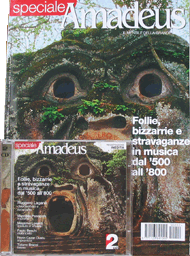
  10. Laganà, Ruggero (fortepiano) 'Follie, bizzarrie e stravaganze in musica, dal '500 all '800'
    • Title: Partite sopra Folia, per clavicembalo (1615-6)
    • Released 2005 by Amadeus Darp, Milano, Italy double compact disc AMS 092-2 DP together with a magazine special devoted to the Folia Theme (April 2005)
    • Duration: 6'37"
    • Recording date: August 18-19 and November 15-19, 2004 in Chiesa di S. Maria Incoronata, Martinengo (Bg), Italy
    • All variations nicely indexed
    • See also the page Recommended Folia-recordings

  11. Leonhardt, Gustav (harpsichord) 'Frescobaldi: Works for harpsichord'
    • Title: Partite sopra Folia (1615)
    • Released 1991 by Philips compact dic 432 128
    • Duration: 5'38"
    • Recording date: September 1990 in the Doopsgezinde Kerk, Haarlem The Netherlands
    • Harpsichord: Bom (1987)
  12. Musicali, Affetti (harpsichord)
    • Title: Partita no 6 sopra L'aria di Follia
    • Released by Ricercar RIC 003
    • Recording date: June 1980
  13. Praetorius, Lisedore (harpsichord)
    • Title: Partita sopra l'Aria di Folia
    • Released c. 1950 by Impromptu LP SC 93402
    • Duration: 7'16"
    • Recording date: not mentioned
  14. Ricercar Consort
    • Title: Partita no 6 sopra L'aria di Follia
    • Released by Ricercar compact disc RIC 93001
  15. Stephen Stubbs (chitarra spagnola) and Maxime Eilander (arpa doppia) 'Sonate Al Pizzico'
    • Title: Partite sopra Folia from Libro Primo di Toccate e Partite .... Roma, 1615
    • Released 2004 by Atma Classique compact disc 22056 22722
    • Duration: 4'24"
    • Recording date: December 7-8, 2000 and Mai 27-28, 2002 in Eglise St-Augustin, St-Augustinde Mirabel, Québec, Canada Col San Martino Italy
  16. Tamminga, Liuwe (organ) 'Basilicata, a musical journey in the provinces of the Kingdom of Naples'
    Liuwe Tamminga wrote for the slipcase (translation by Gina Psaki):

    Frescobaldi's Partite sopra Follia (from the First book of Toccate e Partite d'intavolatura di cimbalo, Rome 1615), in six parts of fifteen measures each, are actually, despite the title, based on a schema which seems an entirely different dance from the Follia - the Fedele. This is a melody for improvisations which is typical of Naples and parallel to the Ruggiero (perhaps derived from the Neapolitan variant of the Ariosto verse 'Ruggier qual sempre fui' (Faithful as I always was). This latter pattern blended in the popular imagination with the mythical personage of a sixteenth-century cantastorie and improvisor, the 'Master Ruggiero' alluded to by Basile.

    • Title: 6 Partite sopra l'Aria di Follia
    • Released 2002 (although not indicated) by Accent as compact disc ACC21147
    • Duration: 4'12"
    • Recording date: October 28 and 29, 2001 in the S. Maria Maggiore, Miglionico, Italy
    • Organ built by Giuseppe Rubino of Puglia, restaured by Fratelli Ruffatti di Padova 1993
  17. Teghillo, Cesare (organ)
    • Title: Partita sopra L'aria di Follia
    • Released by Excelsa Musica compact disc SAOTC101
    • Recording date: 1986
  18. Vartolo, Sergio (harpsichord) 'Girolamo Frescobaldi, toccate e Partite d'Intavolaturs di Cimbalo et Organo, libro primo' cover cd Vartolo, 15kB
    • Released 1990 by Tactus 3-set compact disc TC 58060760
    • Duration: 10'20"
    • Recording date: March 25-28, 1987 Bologna, Sala del vasari Ortopedici Rizzoli
    • Harpsichord: B. Formentelli built after an instrument kept in Ca Rezzonico, Venice

  19. Wagler, Dietrich (organ) 'Die beiden Silbermann-Orgeln im Dom zu Freiberg' cover cd Wagler, 15kB
    • Released 1998 by Motette compact disc CD 12451
    • Duration: 8'32"
    • Recording date: unknown

  20. Wolfe, Paul (pedal-harpsichord) 'When they had pedals Volume 1' cover cd Paul Wolfe, 15kB
    • Title: Partita 6 sopra l'aria di Follia (1615)
    • Re-released 1998 by Lyrichord compact dic LEMS-8033
    • Duration: 6'59"
    • Recording date: 1957
    • Harpsichord: Pleyel pedal harpsichord built in 1907

  21. Yates, Sophie (harpsichord) 'Romanesca - Italian Music for Harpsichord'
    • Title: Partite 6 sopra l'Aria di Follia (1615)
    • Released 1997 by Chandos Chaconne compact disc 0601
    • Recording date: Augustus 1996
    • Harpsichord: Ransom & Hammett (1994) after a range of single manual Italians, c.1600


Jiménez, José (Ximénez, Joseph) (c.1601-1678)
Folías con 20 diferencias (c. 1670?).
Music in Barcelona, Biblioteca de Cataluna M751, nr. 21 p. 315, with the title 'Folias con veinte diferencias' by Ximenez and also in Real Monasterio El Escoral, Archivo (without signature) folio 267.
Jiménez Folias con 20 diferencias (Folia with 20 variations) is one of the few variations found in Spanish organ music of the 17th century. This rarity is all the more remarkable since the 'Obras de musica' by Antonio de Cabezon, the great organ composer of the 16th century contains no less than nine variations (from the introduction of Willi Apel).

Duration: 9'26", 18 kB.
Sequenced by Paco Villanueva and used with permission
The midi archive of Paco Villanueva (Early Spanish music) is located at http://classicalmus.hispeed.com/paco/

Opening of Folías by the Antología de Organistas Españoles del siglo XVII, Tomo I
Opening of Folías by Jimenez, 16 kB
  1. Anglés, Higinio (editor)
    • Title: Antología de Organistas Españoles del siglo XVII, tomo I, transcription y estudio
    • Published 1965 by Bibliotheca central, publicaciones de la sección de música XX, Barcelona
    • In this publication the year Jiménez was born is indicated as 1654 and the year he died 1672
  2. Apel, Willi (editor)
    • Title: Joseph Jiménez, collected organ compositions
    • Published 1975 by the American Institute of musicology, Hänssler-Verlag as part of the series 'Corpus of early keyboard music'
    • In this publication the year Jiménez was born is not indicated but the year he died is indicated as 1678. In 1654 he was appointed to a new job as organist in this publication
  3. Ma i Bonet, Josep M.(organ) 'La cançó i la dansa en la música Hispanica d'orgue' cover cd Josep M. Mas i Bonet 15 kB
    Josep M. Mas i Bonet wrote for the slipcase:

    Jusepe Ximénez (1601-1672) was a pupil of S. Aguilera de Heredia, who he succeeded as organist at the Seo (Cathedral) in Zaragoza. In this way, he became the second in the lineage of organists of this renowned Aragonese organ school. The 'Folias con 20 diferencias' are a succession of variations with a ternary rhythm on the Follia bass, made up of 16 bars and subdivided in 2 sections of 8 bars each.

    • Folías con 20 diferencias
    • Released 2005 by la mà de guido compact disc LMG 2069
    • Duration: 6'57"
    • Recording date: May 6 and 7, 2005 organ of santa Maria de Cadaqués, Spain

  4. Stella, Carlo and Vinay, Vittorio (editors)
    • Title: Diferencias sobre Las folias de 1. tono. in: Musiche organistiche inedite del barocco spagnolo
    • Published 1976 by Edizioni musicali Discantica, Milano
    • In this publication the year Jiménez was born is not indicated but the year he died is indicated as 1678.
    • Score: 41 p. 24 x 31 cm
    • Publishers No. ABH8297
  5. Torrent, Montserrat (organ) series: 'órganos históricos en Aragón, anthologia de organistas aragoneses del siglo XVII'
    • Title: Fólias con 20 diferencias
    • Released by unknown label and year of release unknown
    • Organ built by Sánches, Bartholomé in 1734
    • Duration: 7'54"
    • Recording date: unknown at the organ of the Church of Zaragoza Spain de Nuestra Señora de la Asunción de Cariñena
    • Source: Edición number 2240 de la Institución 'Fernando el Católico' (KPD/PM-10.4014)

Kapsberger, Girolamo (c.1566-1638)
Partite sulla folia for chitarrone (Venice, 1604) in: Libro primo d'intavolatura di chitarrone

Duration: 1'36", 03 kB.
Theme as indicated in the sheet music below and the first two partitas

Opening of Folia for chitarrone by Hudson, Vol I, p. 1
Opening of Folia by Kapsberger, 08 kB
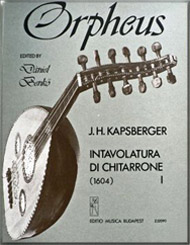
  1. Benkö Dániel 'Johann Hieronymous Kapsberger, Intavolatura di Chitarrone (1604)'
    cover sheet music Benkö 18kB These are guitar transcriptions of the original music for Chitaronne (11 strings) in both modern notes and tablature. A disadvantage is that in the entire book (the first part of Intavolature di Chitaronne of 1604) the G string is lowered to F-sharp.
    Dániel Benkö wrote in the preface:

    The orthography of the ordinal number of the movements has been unified. The so-called Partita movements which correspond, in fact, to variations are among repeat signs. For the repetition of movements it is necessary to introduce (1 and (2. They have naturally been taken over in the guitar transcription as well. Should no repetition be played the end of the movements must be rounded off in the course of performance.
    The Folia-variations begin for example with upbeat as a result of which the last bars ought to be incomplete. To avoid this Kapsberger added a rest sign to the beginning of the bars. heading the movements. In the interest of accuracy these rests have been included in the transcription as well. If performed continiously the lowest bar of the movements must be tied over the opening of the hnew movement (variation).

    • Title: Folía
    • Published 1983 in the series Orpheus by Editio Musica Budapest order nr. Z12090
    • Volume 5 in the Orpeus series
    • 16 pages for theme and 19 variations

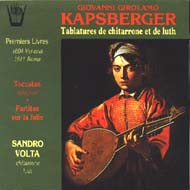
  2. Volta, Sandro
    Sandro Volta wrote about the piece: cover cd Kapsberger performed by Volta, 07kB

    The cycle of partitas (variations) on 'la folia' shows with what spirit of inventiveness Kapsberger tackles one of the most common themes in the lute tradition, comprising thematic and harmonic material that were much used and developed by the previous instrumental culture. Kapsberger goes beyond the essentially decorative nature of alio modo (sort of variation), the 'division', and the 'diferencia', and conveys the affetti in their most extreme expression. Each partita thus becomes a ground that is conducive to contrast and diversification, the unifying function of the tactus (beat), which for centuries had conditioned the musical discourse, being dropped.

    • Released 1993 by Arion compact disc ARN 68253
    • Duration: 13'11"
    • Recording date: 1993 in Montevarchi, Italy
    • Instrument: an 11-course chitarrone, inspired by organological and iconographical sources dating from the early 17th century built by Pascal Goldshmidt, Florence, 1990


Kulp, Jonathan (1970- )
rosetree follies, 2000 (for alto, tenor, recorder, flute and guitar) (commissioned by La Follia Austin Baroque as a chamber work based on a poem by e.e. cummings).
The composition starts off with a mixture of the later (tempo) and early Folia (chord progression) theme, but turns into quite another direction after this brief statement and the bridge to the vocal part. The original early Folia theme is quoted once more halfway the composition for solo guitar (4'46"). Stephanie Prewitt (alto), Dell Hollingsworth (recorder)
and composer and guitarist Jonathan Kulp - 13 kB

Duration: 1'23", 1,3 Mb.( 128kB/s, 44KHz)
Fragment of a live performance in 2000 as played
by La Follia Austin Baroque and guests
© J. Kulp & La Follia Austin Baroque, used with permission


Jonathan Kulp wrote for the playbill of this composition:

When Dell Hollingsworth, the founder of La Follia Austin Baroque ensemble, approached me in late 1999 and asked if I would write a new work for La Follia to include in their "Millenium Concert," I was thrilled with the idea. I had wanted to write for this ensemble for a long time but had not as yet had the opportunity. She said I could use everyone in the ensemble except the keyboard players, who already had their hands full with the rest of the music on the program. I asked her to choose a text, and she sent me "rosetree, rosetree" by e.e. cummings, a strange and enigmatic verse, and one that posed a considerable challenge in setting it to music. Since I was writing for La Follia, I also wanted to pay tribute to them somehow in the music, so I decided to use the famous "Folias de España" theme, from which the group takes its name. The piece thus became "rosetree follies," a setting of the cummings poem in theme-and-variation form using the La Follia melody as its structural basis. It is scored for alto and tenor voices, baroque flute, baroque tenor recorder, and guitar.
What I enjoyed most about writing and rehearsing rosetree was seeing how the members of La Follia slowly took over the piece and made it their own. What began as a tentative reading through a brand new work in an unfamiliar idiom soon became an enthusiastic and confident performance of a work that was entirely theirs. They did the same thing with my score that they have done with hundreds of baroque scores--they brought it to life by experimenting with (and arguing over) tempos and articulation, by adding baroque-style ornaments to the melodies, and by using their extremely critical ears to hone it into a finished work. rosetree follies belongs as much to La Follia as it does to me.

  1. La Follia Austin Baroque and guests (Stephanie Prewitt, alto; Christopher LeCluyse, tenor; Dell Hollingsworth, recorder; Marcus McGuff, flute; Jonathan Kulp, guitar)

Labyrinto (ensemble)
  1. Labyrinto: Paolo Pandolfo (viola da gamba, direction), Giorgio Paronuzzi (harpsichord, organ), Thomas Boysen (lute, guitar), Andrea de Carlo (violin), Håkan Stene (percussion)
    • Title: Improvisation, two Improvisations on 'La Folia' & 'Passamezzo moderno'
    • Broadcasted by BBC radio 3 November 26, 2006
    • Duration: 4'22"
    • Recording date: November 14, 2003 at the Kulturzentrum, Hernem Germany during a live concert performance

Martinez, Rodrigo (?) (15th Century)
Folia, improvisation after le le villancico du CMP (c. 1490)
  1. Savall, Jordi and Hesperion XX 'La Folia 1490-1701
    • Title: Folia
    • Released 1998 by Alia Vox compact disc AV 9805
    • Duration: 5'10"
    • Recording date: July 31 and August 1/2 1998 in Studio Fondation Tibor Varga in Sion Switserland
  2. Savall, Jordi and Hesperion XX 'Harmonie Universelle'
    • Title: Folia
    • Released 1998 by Alia Vox compact disc AV 9810
    • Duration: 5'31"
    • Recording date: unknown

Mendoza, Juan Andres de(?) (16th Century)
Diferencias de folías (c. 1590) as part of the vihuela tablature collection The Ramillete de Flores (c. 1593).
As indicated in the slipcase of Wilson, only the name 'Mendoza' is mentioned without any dates related to this piece and Mendoza is a fairly common name.
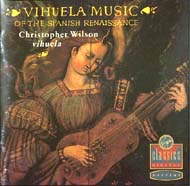
  1. Wilson, Christopher (vihuela) 'Vihuela Music of the Spanish Renaissance'
    cover cd Wilson - 10 kB Mr. Wilson offers these details in the liner notes:
    The Ramillete de Flores, probably collected around 1593, contains a number of unique pieces by otherwise unknown vihuelists, including Mendoza and Lopez...Mendoza may have been the Aragonese nobleman Juan Andres de Mendoza who is known to have played the vihuela well. The term folias had already appeared in literary sources early in the 16th c., but Mendoza's Differencias de folias is the earliest appearance of a set of variations on this harmonic progression. While these differencias generally follow the idiomatic style used by the authors of the vihuela books, some of the melodic turns and the way in which small motives are imitated seem to prefigure the variation techniques used by 17th c. guitarists. This could place the date of composition of Mendoza's folias at roughly the same time as the compilation of the Ramillete, and may therefore make him one of the last vihuelists.

    • Title: Diferencias de folías
    • Released 1990 by Virgin Records compact disc Virgin Veritas VC 7 91136-2
    • Duration: 3'48"
    • Recording date: 29-31 August 1989 in Forde Abbey, Chard, Somerset England

Milanuzzi
Secondo Scherzo delle Ariose vaghe, 1625

Milanuzzi
Follie & Ciaconne in: Terzo Scherzo, 1623

Milioni
Follie & Ciaconne in: I/III Libro d'Intavolatura, 1627/37

Montesardo, Girolamo
title in: Nuova inventione published by C. Marescotti, Florence, 1606

Moulinié, Estienne (1599-1676) cover cd Mouliné 15kB
Espagnol, je te supplie ...
  1. Le Poème Harmonique directed by Vincent Dumestre 'l'Humaine Comedie'
    In the slipcase is written:

    Sometimes the poetry takes on a mocking tone, as in Guédron's 'Si tu veux apprendre les pas à danser' or Moulinié's 'Espagnol je te supplie'. The latter dialogue conveys most admirably the foolish arrogance and crudeness of the Spaniard, whose speech is contrasted with the refined, metaphorical language of the French coquette: she is expert in the art of ridicule and, moreover, has a very sure aim! The stupid vanity of the garlic-reeking Spaniard and the scornful cruelty of the French lady give rise to a sketch that is both highly colourful and realistic.

    • Title: Espagnol, je te supplie ...
    • Released 2000 by Alpha compact disc Alpha 005
    • Duration: 5'06"
    • Recording date: 1999 in chapelle de l'Hôpital Notre Dame de Bon Secours, Paris, France


Mudarra, Alonso de (c. 1510-1580)
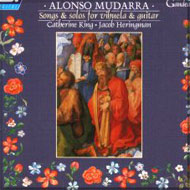
Pavana Italiana in: III libros de musica, 1546
cover cd Heringman 15kB
  1. Heringman, Jacob 'Alonso Mudarra, songs & solos for vihuela & guitar'
    • Title: Pavana as part of Pieces for four course guitar
    • Released 1997 by AS&V Gaudeamus compact disc CD GAU 162
    • Duration: 1'37"
    • Recording date: December 6-7, 1995 in St Andrew's Church, Toddington, Gloucestershire, England


Ortiz, Diego (c.1525-after 1570)
Recercada quarta (4) sobre la folia (1553) & Recercada ottava (8) sobre la folia (1553) in:
Trattado de glosas sombreclausulas y otros generos de puntos en la musica de violones nuevamente puestos en luz'
  1. Belladonna: C. Galhano (recorder), M. Humphrey (baroque violin), R. Humphrey (baroque cello), B. Weiss (harpsichord) 'Folias Festivas'
    • Title: Recercada quarta la Gamba
    • Released 1999 year of release not indicated at all or it should be the small inprint on the cd itself 'bella99cd' indicating the year 1999, a 'production of The Schubert Club, Ten Thousend lakes' compact disc without ordernr. barcode 6 0197199032 3
    • Duration: 1'23"
    • Recording date: November 1998 at St. Bernard's Church in Saint Paul, Minnesota USA
  2. Capella Virelai, director Jordi Requant 'Music at the courts of the cat' cover cd Capella Virelai size 15 kB
    • Title: Recercada ottava sobre La folia
    • Released November 1999 by Lmg compact disc ASIN: B000031X2T
    • Duration: 1'23"
    • Recording date: unknown

  3. Flanders Recorder Quartet and friends (Joris van Goethem, Paul Van Loey, Han Tol and bart Spanhove: recorder, Ewald Demeyere : harpsichord, Philippe Malfeyt: lute, Chris Joris: Percussion) cover cd Diego Ortiz, Flanders 
Recorder Quartet size 15kB
    • Title: Ricercada primera sobre el passamezzo antiguo & Recercada ottava sobre la folia
    • Released: Opus 111 OPS 30-272
    • Duration: 5'52"
    • Recording date: October 1999, Keizerszaal, Sint-Truiden, Belgium

  4. Savall, Jordi (Viole de gambe [basse]), Lislevand, Rolf (vihuela de mano), Behringer, Michael (harpsichord) 'La Folia, 1490-1701'
    • Title: Recercada Quarta sobre la Folia
    • Released 1998 by Alia Vox compact disc AV 9805
    • Duration: 1'31"
    • Recording date: July 31/August 1-2, 1998
    cover cd Diego Ortiz, Recercadas del trattado de glosas, 1553
size 15kB
  5. Savall, Jordi (basse de viole), Lislevand, Rolf (vihuela), Koopman, Ton (harpsichord) 'Recercadas del Trattado de Glosas'
    • Title: Recercada quarta sobre la 'folia'
    • Released 1990 by Astrée compact disc E 8717
    • Duration: 1'49"
    • Recording date: April 1989 in La Pieve de S. Martino
  6. Savall, Jordi (Viole de gambe [basse]), Lislevand, Rolf (vihuela de mano), Behringer, Michael (harpsichord) 'La Folia, 1490-1701'
    • Title: Recercada Ottava sobre la Folia
    • Released 1998 by Alia Vox compact disc AV 9805
    • Duration: 1'47"
    • Recording date: July 31/August 1-2, 1998
  7. Savall, Jordi (basse de viole), Lislevand, Rolf (vihuela), Koopman, Ton (harpsichord) 'Recercadas del Trattado de Glosas'
    • Title: Recercada ottava sobre la 'folia'
    • Released 1990 by Astrée compact disc E 8717
    • Duration: 1'45"
    • Recording date: April 1989 in La Pieve de S. Martino
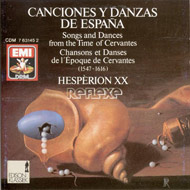
  8. Savall, Jordi (basse de viole), Hesperion XX (with Hopkinson Smith and Coin) 'Canciones y danzas de España'
    • Title: Recercada ottava sobre la 'folia'
    • Released 1977 by EMI LP EMI CDM 7 63145 2.
    • Duration: 1'45"
    • Recording date: September 1976 in the church of Séon, Zwitserland
  9. Watillon, Sophie (viola bastarda) Devaere, Hannelore (harp) Leertouwer, Detmar (cello) Liegeois, Frank (bass viola da gamba) Noiri, Shizuko (lute) Stinders, Herman (harpsichord) Stryckers, Piet (bass viola da gamba) Valetti, Pablo (violin) Laethem, Katelijne van (soprano) 'L'art de la viola bastarda - le chant et la danse'
    • Title: Recercada sobre 'La Folia'
    • Released December 1994 by Ligia compact disc 106020
    • Duration: 1'40"
    • Recording date: August 1994 in the Franc-Waret Church, Namur Belgium

Pandolfo, Paolo (? - )
Quattordici (Foliandalus) (2005)
Improvisando by Paolo Pandolfo 15Kb

Fragment of Quattordici by Pandolfo, Morini, Boysen, De Carlo, Garrido and Gelis
Duration: 0'58", 892 Kb.( 128kb/s, 44KHz)
© 2006 by Glossa Music, used with permission

Paolo Pandolfo wrote for the slipcase:

Although the genuine meaning of improvisation clearly lies in not ever being the same, in not becoming fixed or crystallised in inalterable signs, we have allowed Glossa, and its producer Carlos Céster in particula, to persuade us to record a few of our improvisation sessions, to entrust to an inalterable supportsomething that by its very nature is constantly alterable. So what we propose here is an atypical CD, improvised from the first to the last note. It is a journey - with the odd detour that is inevitable with improvisation - through mainly late Renaissance musical structures, from the ground basses of dance (Pass'e mezzi, Folías, Canarios, Vacas) to the Fantasies for solo instruments, from the improvisations on a cantus firmus (La Spagna) to those alla bastarda, based on polyphonic compositions (Anchor che col partire, Doulce Mémoire).

  1. Pandolfo, Paolo (viola da gamba), Morini, Guido (harpsichord), Boysen, Thomas (theorbo and vihuela), De Carlo, Andrea (violin), Garrido, Álvaro (percussion), Gelis, Marie (organ) 'Improvisando'
    • Title: Quattordici (= 14) (Foliandalus)
    • Released 2006 by Glossa Music compact disc OCD P30409
    • Duration: 7'32"
    • Recording date: November 2005 at Église de Franc-Waret, Belgium


Pesori of Mantua, Stefano
Galeria musicale, 1648

Piccinini, Alessandro (1566-c.1638)
Partite variate sopra la folia aria Romanesca in: Intavolatura di liuto et di chitarrone, Libro primo (1623, Bologna)

Duration: 2'04", 18 kB.
The complete Partite variate sopra la folia aria Romanesca
© Alain Veylit 2004, used with permission

Transcription for lute in tablature, 2 pages in pdf-format, 40 kB
© Alain Veylit 2004, used with permission
For his plucked string-music http://cbsr26.ucr.edu/wlkfiles/Publications/Publications.html

Transcription for guitar in E, 2 pages in pdf-format, 40 kB
© Alain Veylit 2004, used with permission

Transcription for keyboard, 3 pages in pdf-format, 41 kB
© Alain Veylit 2004, used with permission

To hear an excellent acoustic performance in mp3-format (2,5 Mb) of the piece visit the page of the luteplayer Sven Schwannberger at http//www.schwannberger.com/lute.htm
Opening of Partite variate sopra la Folia by Hudson, Vol I, p. 23
Opening of Partite variate sopra La Folia by Piccinini, 07 kB
  1. Contini, Alessandro (chitarrone)
    • Title: Partite variate sopra la folia aria Romanesca (1623 edition)
    • Released 1988? by Tactus compact disc TC 56160101
    • Duration: unknown
    • Recording date: July 1988 in Eremo di Ronzano, Bologne, Italy

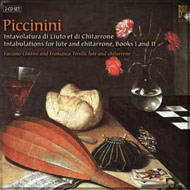
  2. Contini, Alessandro (chitarrone) 'Alessandro Piccinini Tablature de luth et de chitarrone (Livre I & II)' cover cd Piccinini Jacobs
    • Title: Partite variate sopra la folia aria Romanesca (1623 edition)
    • Released 2007 by Brilliant Classics 2 cd-set BRIL93353
    • Duration: unknown
    • Recording date: July 1988 in Eremo di Ronzano, Bologne, Italy

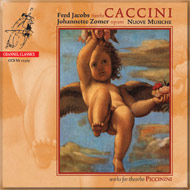
  3. Jacobs, Fred (theorbo) 'Giulio Caccini (1551-1618) Nuove Musiche Alessandro Piccinini (15660ca 1638) Works for theorbo' cover cd Piccinini Jacobs
    • Title: Partite variate sopra la folia aria Romanesca
    • Released 2005 by Channel Classics compact disc CCS SA 21305
    • Duration: unknown
    • Recording date: unknown

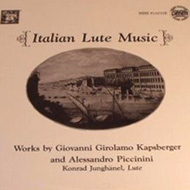
  4. Junghänel, Konrad (13-course chitarrone) 'Italian lute music, G.G. Kapsberger - A. Piccinini' cover lp Piccinini Konrad Junghaenel cover cd Piccinini Konrad Junghaenel
    • Title: Partite variate sopra la folia aria Romanesca
    • Released 1980 by Accent LP ACC 8016 (in the US: MHS Stereo 912035F Musical heritage Society, 1980) and later as compact disc ACC 8016 D
    • Duration: 2'02"
    • Recording date: June 1980
    • Chitarrone built by Jacob van der Geest, 1973


  5. The King's Consort, conductor Robert King 'Lo Sposalzio The Wedding of Venice to the Sea' cover cd Piccinini King's Consort 15kB
    • Title: Variazioni sopra La Folia after Alessandro Piccinini (1566-c1638)
    • Released 1998 by Hyperion compact disc CDA67048
    • Duration: 1'09"
    • Recording date: February 22-25, 1998 in St Jude-on-the-Hill, Hampstead Garden Suburb, London

  6. Les Libertins (Pascal Monteilhet - theorbo, Monica Pustilnik - renaissance guitar, Jean-Marc Aymes - organ, although the organ is not to be heard on the Partite-track) 'Piccinini, Qui comincia la intavolatura di chitarrone'
    cover cd Piccinini by Les Libertins Jean-Baptiste Apéré wrote for the slipcase (translated by Charles Johnston):
    The variation is at the core of four sweepingly panoramic pieces, the Romanesca the Chiaccona and the two Partite, all of them based on a melodic/harmonic formula that lends itself to metamorphosis. It also governs several correnti (I, V, VI, VII) and gagliarde (I, III, IV) whose structure is inherited from the forms with embellished repeats found in the Renaissance. Piccinini permits himself a great deal of licence in specifying repeats in the tablature. Such liberties have prompted Pascal Monteilhet to invent new variations (as in the Chiaccona in partite variate, which originally contained only nine) and to make arrangements for an accompanying instrument (guitar or organ).

    • Title: Partite variate sopra la folia aria Romanesca
    • Released 2004 by Zig-Zag Territoires compact disc ZZT 040201
    • Duration: 3'39"
    • Recording date: June 9-15, 2003 l'Eglise St. Luc de Ménerbes

  7. Lislevand, Rolf (theorbo) 'Altre Follie'
    cover cd Hespèrion XXI 'Altre Follie' 15kB Rui Vieira Nery wrote for the slipcase:

    In the seventeenth century several influential Italian composers left us sets of Folia variations: the lutenist Alessandro Piccinini (1566-1638) in his Intavolatura di Liuto (Bologna, 1623), for chitarrone; yet another lutenist, Andrea Falconieri (1585/6-1656), in his Il Primo Libro di Canzone (Naples, 1650) for two violins and continuo; the organist Bernardo Storace in his Selva di Varie compositioni (Venice., 1664), for keyboard; the guitarist Francesco Corbetta (d.1681), in his La Guitarre Royale (Paris, 1671), for his own instrument.

    • Title: Partita sopra La Follia
    • Released 2005 by Alia Vox compact disc AV 9844
    • Duration: 3'31"
    • Recording date: February 28-March 3 and June 6-9, 2005 in the Collégiale of the Château de Cardona, Catalogne
    • See also the page Recommended Folia-recordings

  8. North, Nigel (14-course chitarrone) 'Alessandro Piccinini, Intavolatura di liuto et di chitarrone, Libro Primo' cover cd Piccinini Nigel North - 30kB
    • Title: Partite sopra La folia aria Romanesca
    • Released 1994 by Arcana Michel Bernstein Editeur compact disc A6
    • Duration: 4'21"
    • Recording date: May 23 and 27, 1994
    • Chitarrone built by Klaus T. Jacobsen Londres 1985, after Matteo Sellas, c.1630

  9. Pianca, Luca (lute) 'Per un bacio, cantates et madrigaux du XVIIe siècle italien' cover cd Piccinini Luca Pianca 15 kB
    • Title: Partite sopra La folia aria Romanesca
    • Released 2005 by Harmonia Mundi France compact disc B0007ULBIS
    • Duration: 2'12"
    • Recording date: unknown
    • Lute built by Luc Breton, Vaux sur Morges, 1990

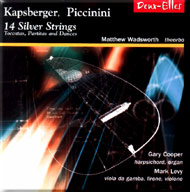
  10. Wadsworth, Matthew (theorbo) 'Kapsberger, Piccinini, 14 silver strings' cover cd Kapsberger - Piccinini Wadsworth
    • Title: Partite variate sopra la folia aria Romanesca
    • Released 2003 by Deux-Elles compact disc DXL 1044
    • Duration: 4'52"
    • Recording date: December 2001 and June 2002 in the National Centre for Early Music, York, England
    • Recorded with the kind support of the Elizabeth Eagle-Bott Memorial Fund
    • Theorbo built by Klaus Jacobsen


Pisador, Diego (c.1509-1557)
Pavana sobre La Folia (1552) in: Libro de musica de vihuela, Salamanca, Spain, 1552
  1. Lonardi, Massimo (vihuela) 'Follie, bizzarrie e stravaganze in musica, dal '500 all '800'
    • Title: Pavana sobre La Folia, per vihuela (1552)
    • Released 2005 by Amadeus Darp, Milano, Italy double compact disc AMS 092-2 DP together with a magazine special devoted to the Folia Theme (April 2005)
    • Duration: 2'03"
    • Recording date: August 18-19 and November 15-19, 2004 in Chiesa di S. Maria Incoronata, Martinengo (Bg), Italy
    • All music nicely analyzed and indexed
    • See also the page Recommended Folia-recordings


Renaissonics (Renaissance Dance Band) cover cd Renaissonics, 14kB
Improvisations on La Folia (1995)
  1. Renaissonics, Renaissance Dance Band 'dance!'
    • Title: Improvisations on La Folia
    • Released 1995 by Titanic compact disc Ti-232
    • Duration: 3'58"
    • Recording date 1995 at Pamela Emerson's Music Room, Cambridge, MA US using a Schoeps stereo microphone in X-Y configuration


Rodrigo, Joaquín (1901-1999) cover cd Rodrigo, 15kB
Pavana (Enriquez de Valderrábano)
  1. Pizarro, Artur 'Joaquín Rodrigo, Piano Music Vol. 1'
    • Title: Pavana
    • Released 2004 by Naxos compact disc 8.557272
    • Duration: 3'12"
    • Recording date February 3-5, 2003 at Potton Hall, Suffolk, UK


Romero, Matheo(?-1647) cover lp Romero, 15kB
Folia: A la dulce risa del Alva
  1. Hesperion XX (with Hopkinson Smith and Coin) 'Canciones y danzas de España' directed by Jordi Savall 'Canciones y danzas de España' and in the collection box CD 7 'Canciones y danzas de España' (1547-1616)'
    • Title: Folia: A la dulce risa del Alva
    • Released 1977 by EMI LP CDM 7 63145 2. and released 2001 by España Antigua, EMI Records Ltd/Virgin Classics compact disc 561 9642 (8cd's, cd 7 )
    • Duration: 2'11"
    • Recording date: September 1976 in the church of Séon Zwitserland
Romerico florido (Folía à 2)
  1. Laurens, Guillemette (soprano) Kaori Uemura (basse de viole), Herman Stinders (harpsichord) 'Matheo Romero, Musique à la cour d'Espagne'
    • Title: Romerico florido (Folía à 2)
    • Released (without indication of year) by Musique en Wallonie
    • Duration: 3'05"
    • Recording date: Mai 26-27, and July 6-7, 1985 without indication of place


Roy, Adrian le (Ardien Le Roy, Adrien LeRoy) (1520-1598)
Mes pas semez in 'Segond livre de guiterre' (1556)
cover cd La Rocque 'n' Roll, 20kB Celebrated French lutenist, composer and music publisher. With his brother-in-law composer Robert Ballard established the firm 'Le Roy & Ballard' and after death of Pierre Attaignant took over and virtually monopolized the publishing business in France. Our knowledge of French music of the time is largely due to the efforts of those two men.
  1. The Baltimore Consort 'La Rocque 'n' Roll, popular music of Renaissance France'


      Text of the opening couplets:
      French text English translation
      Mes pas semez and loing allez
      Par diuers solitraireslieux:
      Sont de pensers entremellez,
      Qui rendent humides mes yeux,
      Et tant plus i'ay ma voix haucée,
      Tant mois ie me sens exaucée
      Et si ne scay quand i'aurai mieux

      le n'ai tenu mes pas si chers,
      Ny mon esprit tant endormy,
      Que par montaignes and rochers
      Le n'aye cherche mon amy:
      L'oeil au guet, l'aureille ententiue
      La parolle prompte and naifue,
      Mais de luy n'ay mot ne demy.
      My steps, wandering and scattered
      Through many lonely places,
      Are mingled with thoughts
      That wet my eyes with tears.
      And the more I've called out,
      The less I've felt I was heard.
      Yet I do not know when I shall have things better.

      I have never found my steps so precious,
      Nor my mind so benumbed,
      As in this searching among mountains and boulders
      For my beloved.
      My eyes watchful, my ears alert,
      My tongue ready and open
      But not a word or syllable of him.
    • Title: Mes pas semez (1555 indicated as year of origin in the slipcase)
    • Released 1995 by Dorian Recordings compact disc DOR-90177
    • Duration: 5'34"
    • Recording date: September 1992, at the Troy Savings Bank music hall in Troy, New York

Russell, George (and Schwendener, Ben) (? - )
La Folia, The Roccella Variations
  1. George Russell's Living Time Orchestra 'The London Concert Volume One' cover cd Russell, 23kB
    • commissioned in 1989 by the 'Associazione Culturale di Roccella Ionica Antonio de Rosa'. Roccella Ionica is a little italian town, where a Jazz Festival is organized every year.
    • Released 1993 by Stash Records, Inc. compact disc ST-CD-560
    • Duration: 7'06"
    • Recording date: 28-31 August, 1989 live in Ronnie Scott's Club, London

  2. George Russell's Living Time Orchestra 'The London Concert Volume One' cover cd Russell, 15kB
    • commissioned in 1989 by the 'Associazione Culturale di Roccella Ionica Antonio de Rosa'. Roccella Ionica is a little italian town, where a Jazz Festival is organized every year.
    • Released by Bleu, compact disc LBLC 6527/8
    • Duration: 10'21"
    • Recording date: 28-31 August, 1989 live in Ronnie Scott's Club, London


Sabatini, Pietro Paolo (c.1600-after 1657)
Dodici Chitarre spostate, 1643

Salinas, Francisco (1513-1590)
Vulgares quas Lusitani Follias vocant, per soprano solo (1577)
in: 'Francisci Salinae burgensis abbatis Sanctis Pancratii de Rocca Scalegna in regno, neapolitano, et in Academia Salmanticensi musicae professoris', De Musica. libri septem in quibus eius doctrinae veritas tam quae ad harmoniam, quam quae ad rhythmum pertinet, iuxta sensus ac rationi, Salamanca, Matthias Gast, 1577.
  1. Pennicchi, Marinella (soprano) 'Follie, bizzarrie e stravaganze in musica, dal '500 all '800'
    • Title: Vulgares quas Lusitani Follias vocant, per soprano solo (1577)
    • Released 2005 by Amadeus Darp, Milano, Italy double compact disc AMS 092-2 DP together with a magazine special devoted to the Folia Theme (April 2005)
    • Duration: 0'27"
    • Recording date: August 18-19 and November 15-19, 2004 in Chiesa di S. Maria Incoronata, Martinengo (Bg), Italy
    • See also the page Recommended Folia-recordings

Schmelzer von Ehrenruef, Johann Heinrich (? - ?) cover cd Schmelzer, 16kB
Giga per entrata de i Salatori e per molte altre figure (Balleto a Cavallo)
  1. Armonico Tributo Austria/Duftschmid, Lorenz 'La Margarita, musique pour la cour a Vienne & Prague'
    • Released 1996 by Arcana compact disc A33
    • Duration: 1'20"
    • Recording date: June 27-30 and September 10-11, 1995


Stefani, Giovanni (probably first half 17th century) cover double cd Ruggero 15kB including magazine
Aria della Follia (1622)in: Scherzi amorosi, canzonette ad una voce sola, poste in musica da diversi, raccolte da G. Stefani, con le lettere dell'alfabeto per la chitarra alla spagnuola ....Libro secondo. Nouamente corretti & ristampati, Milan, Appresso Fillippo Lomazzo, 1621 (Venezia 1622)
Source in: Civico museo bibliografico musicale, Bologna, Italy
  1. Pennicchi, Marinella (soprano) and Lonardi, Massimo (archlute) 'Follie, bizzarrie e stravaganze in musica, dal '500 all '800'
    • Title: Partite di Donna Amata, Aria della Folia, per sopranista e arciliuto (1622)
    • Released 2005 by Amadeus Darp, Milano, Italy double compact disc AMS 092-2 DP together with a magazine special devoted to the Folia Theme (April 2005)
    • Duration: 1'24"
    • Recording date: August 18-19 and November 15-19, 2004 in Chiesa di S. Maria Incoronata, Martinengo (Bg), Italy
    • All verses nicely indexed
    • See also the page Recommended Folia-recordings


Storace, Bernardo (17th century)
Follia (1664).
Published in the 'Selva di varie Composizioni d'Intavolature per cimbalo ed organo' (miscellany of various compositions, intabulated for harpsichord and organ) in the city of Venice, Italy in the year 1664

Duration: 0'31", 02 kB.
The theme as indicated below

Opening of Follia edited by Barton Hudson in CEKM no. 7
Opening of sheet music Follia, 14 kB
  1. Behringer, Michael (harpsichord) 'Altre Follie'
    cover cd Hespèrion XXI 'Altre Follie' 15kB Rui Vieira Nery wrote for the slipcase:

    In the seventeenth century several influential Italian composers left us sets of Folia variations: the lutenist Alessandro Piccinini (1566-1638) in his Intavolatura di Liuto (Bologna, 1623), for chitarrone; yet another lutenist, Andrea Falconieri (1585/6-1656), in his Il Primo Libro di Canzone (Naples, 1650) for two violins and continuo; the organist Bernardo Storace in his Selva di Varie compositioni (Venice, 1664), for keyboard; the guitarist Francesco Corbetta (d.1681), in his La Guitarre Royale (Paris, 1671), for his own instrument.

    • Title: Follia
    • Released 2005 by Alia Vox compact disc AV 9844
    • Duration: 3'58"
    • Recording date: February 28-March 3 and June 6-9, 2005 in the Collégiale of the Château de Cardona, Catalogne
    • See also the page Recommended Folia-recordings

  2. Belladonna: C. Galhano (recorder), M. Humphrey (baroque violin), R. Humphrey (baroque cello), B. Weiss (harpsichord) 'Folias Festivas'
    • Title: Folias
    • Released 1999 (?) year of release not indicated at all or it should be the small inprint on the cd itself 'bella99cd' indicating the year 1999, a 'production of The Schubert Club, Ten Thousend lakes' compact disc without ordernr. barcode 6 0197199032 3
    • arranged by Barbara Weiss
    • Duration: 4'02"
    • Recording date: November 1998 at St. Bernard's Church in Saint Paul, Minnesota USA

  3. Bravo, Francesco (organ) 'Opus Joseph Bonatti Xni 1713'
    • Title: Follia
    • Released 2003 by Phoenix Classics compact disc 03912
    • Duration: 4'47"
    • Recording date: April 28 and 29, 2003 at Santuario della Beata Vergine di Valverde, Rezzato, Italy
    • Organ built by Giuseppe Bonatti 1713, restored by Giorgio Carli in 2002
  4. Cera, Francesco (spinet) 'Bernardo Storace, Selva di varie compositioni d'intavolatura per cimbalo ed organo, parte prima' cover cd Francesco Cera - 15 kB
    • Title: Follia
    • Released 2000 by Tactus compact disc TC.601901
    • Duration: 4'42"
    • Recording date: January 2000 in Seminario Arcivescovile, Ivrea, Italy
    • Spinet built by Fanciullacci in 1998 after Onofrio Guarracino 1663
    • More about Francesco Cera at his homepage http://www.francescocera.it

  5. Hudson, Barton
    • Title: Bernardo Storace, Selva di varie compositioni d'intavolatura per cimbalo ed organo
    • Published 1965 by the American Institute of musicology, Hänssler-Verlag as part of the series 'Corpus of early keyboard music, no 7'
  6. Rouet, Pascale (organ) 'Danses à l'orgue autour de Bernardo Storace' cover cd Rouet - 15 kB
    • Title: Follia
    • Released 1999 by Pavane compact disc ADW 7415 (5 410939 741526)
    • Duration: 4'37"
    • Recording date: July 2-3, 1998 Moucherel-Formentelli de l'Abbatiale N.-D. de Mouzon

  7. Sonatori de la Gioiosa Marca (Gianpietro Rosato: harpsichord) 'Follie all'italiana, sonatori de la Gioiosa Marca'
    • Title: Partite sopra la Folia
    • Released 2001 Erato Disques, Paris, France compact disc 8573 85775-2
    • Coproduction Erato and Westdeutscher Rundfunk Köln
    • Duration: 4'19"
    • Recording date: June 11-14, 2000 Chiesa di S. Vigilio, Col San Martino Italy

  8. Tamminga, Liuwe (organ) 'Basilicata, a musical journey in the provinces of the Kingdom of Naples' cover cd Storace by Tamminga, 14kB Liuwe Tamminga wrote for the slipcase (translation by Gina Psaki):
    The follia was originally a pattern derived from ancient dance songs, or vocal improvisational formulas, and only towards the end of the seventeenth century did it become a stable schemea of basso ostinato for variation, widespread among baroque composers of instrumental music.

    • Title: Follia (18 partite)
    • Released 2002 (although not indicated) by Accent as compact disc ACC21147
    • Duration: 5'23"
    • Recording date: October 28 and 29, 2001 in the S. Maria Maggiore, Miglionico, Italy
    • Organ built by Giuseppe Rubino of Puglia, restaured by Fratelli Ruffatti di Padova 1993

  9. Vincenzi, Marco (harpsichord) 'Selva di varie compositioni, volume 1' cover cd Storace by Vincenzi, 17kB
    • Title: Follia
    • Released 1998 by Rainbow Classics as compact disc RW 98200
    • Duration: 8'05"
    • Recording date: January 20-23, 1998
    • Harpsichord built by Carlo Grimaldi, messinese after Alberto Colzani, Milano 1697


Torre, Francisco de la (c.1460-1505)
Danzas del renacimiento (s.XVI).
  1. Pro Música Hispaniarum. Zais, vihuela, Roberto Pla director
    • Released by HISPAVOX (EMI) CDM 5 65726
    • Duration: unknown
    • Recording date: unknown

Adorámoste, Señor
  1. Grupo Sema, Pepe Rey director 'Cancionero musical de palacio'
    • Released 1993 by RTVE compact disc M-8458 SGAE: AME 007-65022
    • Duration: 3'01"
    • Recording date: February and June 1990 in the Studio Música-1 de la Casa de la Radio, Madrid, Spain
  2. Orlando Consort: Robert Harre-Jones (countertenor); Angus Smith (tenor); Charles Daniels (tenor); Donald Greig (baritone) 'The Toledo Summit' cover cd Orlando Consort, 15kB
    • Released 2003 by Harmonia Mundi USA compact disc 907328
    • Duration: 2'17"
    • Recording date: October 25-28, 2002 at St. Mary’s Parish Church, East Lothian, Scotland

  3. Piffaro 'Gregorianik bis Frührenaissance, 1000-1500' cover cd Piffaro, 15kB
    • Released 2001 by Deutsche Grammophon, a division of Universal Classics compact disc 465 321 2 [18]
    • Duration: 1'37"
    • Recording date: 1997, location not indicated for Deutsche Grammophon GmbH, Hamburg

  4. Pro Música Hispaniarum. Zais, vihuela, Roberto Pla director 'History of Spanish Music: Volume XXIII Renaissance Dances'
    • Title: Folia 'Adorate Senor'
    • Released by Musical Heritage Society MHS Stereo LP 3103
    • Duration: unknown
    • Recording date: unknown


Valderrábano, Enríquez de ( - )
Pavana (1547)
In the manuscript of Silva de Sirenas together with some later additions, copy of the manuscript in the national library of Austria, Vienna
Joaquín Rodrigo made a piano transcription of this piece.

Duration: 3'28", 08 kB.
All four diferencias sequenced by Manuel Ferre and used with permission
The midi archive of Manuel Ferre (lots of guitar-tunes) is located at http://www1.tip.nl/~t249768/

Manuscript opening of pavana 22kB
Opening of Pavana in Libro de música de vihuela
edited by Emilio Pujol, 1965
Opening of Pavana by Valderrabano, 11kB
In bar 11 a slight adaption was made to interchange the value
of the first two notes originally B-flat 4 quarter notes and G 6 quarter notes
  1. Martinez, Kurt (guitar) 'Folías' cover cd Martinez 15kB
    • Title: Pavana
    • Released without indication of year (but it is 2003) by martinezkurt@cs.com without order number
    • Duration: 3'18"
    • Recording date: not mentioned in the slipcase
    • See also the page Recommended Folia-recordings

  2. Pujol, Emilio (transcriptión y estudio)
    • Title: Pavana in Libro de música de vihuela, intitulado Silva de Sirenas, Vol. II
    • Published 1965 by Consejo Superior de investigaciones científicas, Instituto Español de musicología
    • 4p., size 21 x 29
    • (p. 65-68)
  3. Rivera, Juan Carlos (vihuela) 'Tañer de Gala, Música para vihuela de mano'
    In the slipcase José Carlos Cabello (English version revised by Christopher Price) wrote:

    The seventh book of Silva de Sirenas includes some of his most ambitious works, such as the four Diferencias sobre la Pavana (track 17). Polyphonic transparency is one of Valderrábano's features, and it can be fully appreciated in the first two diferencias, while the fourth stands out for its fast ornamented scales and the subtle and idiosyncratic way in which the composer combines rapid passagework with polyphonic chords which are, by the way, very difficult to play.

    • Title: Cuatro diferencias sobre la Pavana
    • Released 2002 by Cantus compact disc C9631
    • Duration: 3'51"
    • Recording date: July 2000 at Antigua Iglesia de San Miguel, Cuenca, Spain
    • Vihuela built by Francisco Hervás, Granada, Spain in 1991
    • More about the oeuvre of Juan Carlos Rivera at http://www.juancarlosrivera.com
  4. Rivera, Juan Carlos (vihuela) and Armoniosi Concerti 'Valderrábano, Silva de Sirenas'
    cover cd Rivera 15kB John Griffiths wrote for the slipcase:
    Valderrábano's variation sets are his most approachable original compositions. Many of them, including both his versions of the 'Pavana' and the less flamboyant 'Siete diferencias sobre Guárdame las vacas' begin simply and become increasingly complex and virtuosic with each repetitionof their harmonic schemes.

    • Title: Tres diferencias sobre la Pavana (C,G) / Cuatro diferencias sobre la Pavana (G)
    • Released 2005 by Harmonia Mundi Ibèrica compact disc HMI 987059
    • Duration: 3'39" / 4'23"
    • Recording date: January 28, 30 and 31, 2005 in Estudio 'L'Auditorium' de Anacrusi s.l. Jafre (Girona)
    • Vihuela built by Francisco Hervás, Granada, Spain in 1991
    • More about the oeuvre of Juan Carlos Rivera at http://www.juancarlosrivera.com

top of page for navigation


best viewed at 800 x 600